Gypsum Powder Production Line
Gypsum Powder Manufacturing Plant: Process, Equipment and Capacity
2026-09-09 13:46:49
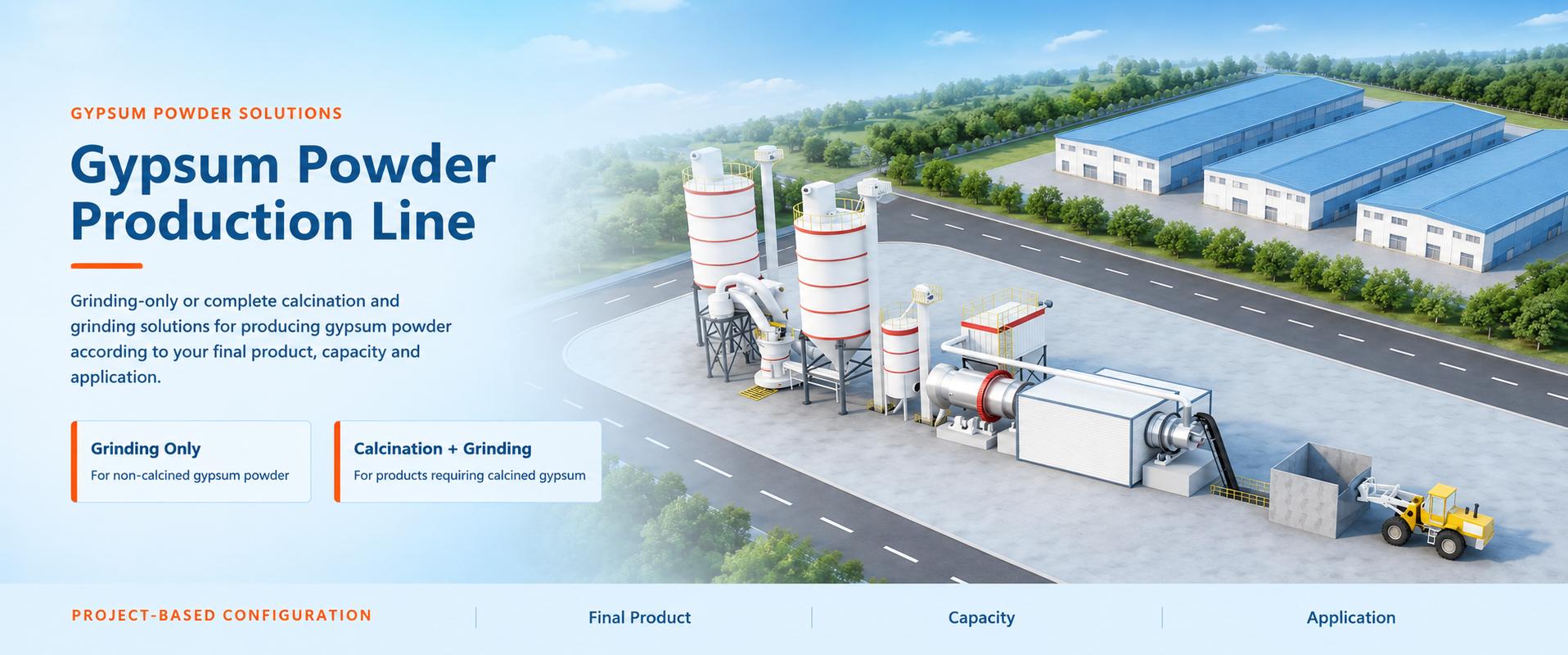
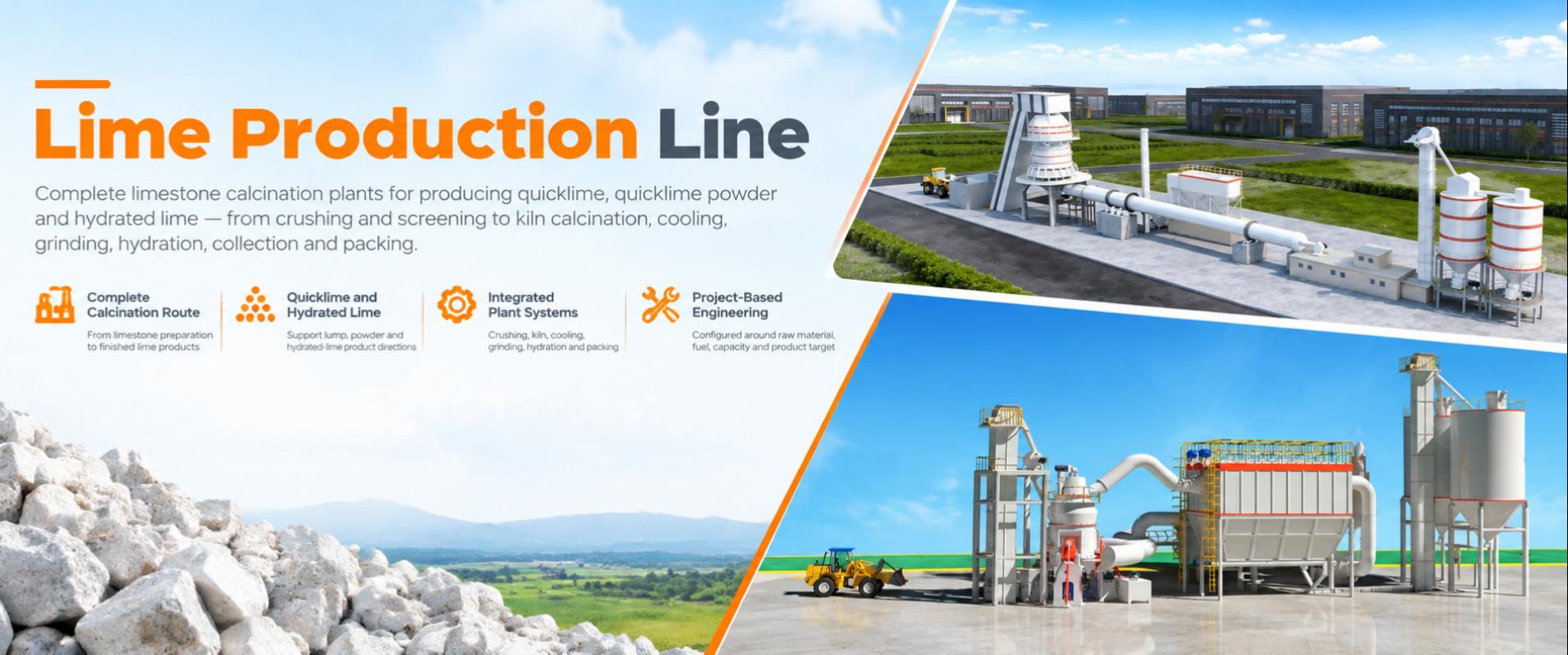
A gypsum powder manufacturing plant is built around the required finished product, raw gypsum condition, target production capacity and powder fineness. The process can be configured as a grinding-only line for ground natural gypsum powder, or as a complete calcination and grinding line for products that require calcined gypsum.
A complete plant may include raw material receiving, crushing, storage, controlled feeding, calcination when required, grinding, classification, dust collection, conveying, finished-product storage and packing. The equipment should be selected as a connected system because the capacity and operating condition of one section directly affect the next section.
Two Main Gypsum Powder Plant Routes
The first decision in a gypsum powder manufacturing project is whether the finished material requires calcination. This determines the overall process layout and the required equipment.
| Plant Type | Typical Process Route | Suitable Product Direction |
|---|---|---|
| Gypsum Grinding Plant | Raw Gypsum → Crushing → Grinding → Classification → Dust Collection → Packing | Ground natural gypsum powder and non-calcined gypsum materials |
| Gypsum Calcination and Grinding Plant | Raw Gypsum → Crushing → Calcination → Grinding → Classification → Dust Collection → Packing | Construction gypsum, gypsum plaster, Plaster of Paris and related calcined gypsum products |
A grinding-only plant reduces natural gypsum to the required particle size without thermal conversion. A calcination and grinding plant adds controlled heating before downstream powder processing. The correct route depends on the intended application rather than on the name of the raw material alone.
Typical Gypsum Powder Manufacturing Process
Although equipment configurations vary, most gypsum powder plants follow a sequence that prepares the raw material, converts it when necessary, controls powder size and delivers the finished product in a suitable form.
Raw gypsum receiving and storage
Crushing and feed-size reduction
Material conveying and buffer storage
Calcination when calcined gypsum is required
Cooling, transfer or intermediate storage after calcination
Grinding to the required powder fineness
Classification for particle-size control
Dust collection and air handling
Finished powder conveying and storage
Packing or bulk loading
1. Raw Gypsum Receiving and Storage
Raw gypsum may be supplied as mined natural gypsum, industrial gypsum or another gypsum-bearing material. Before the material enters the main production line, its size, moisture, impurity level and storage condition should be checked.
Stable raw material handling is important for plant operation. Large variations in moisture, lump size or feed composition can affect crushing performance, calcination stability and mill output. A receiving hopper and storage area help manage material delivery, while a controlled feeder helps provide a steady flow to the crusher or the next processing stage.
Raw Material Information Required for Plant Design
Type and source of gypsum raw material.
Maximum feed size and particle-size distribution.
Free moisture content and seasonal moisture variation.
Impurity level, including clay, soil, metal and other foreign materials.
Required final gypsum powder type.
Target finished powder fineness.
Required daily, hourly or annual production output.
Available plant area, building height and material-storage space.
2. Crushing Section
The crushing section prepares raw gypsum for calcination or grinding. Raw gypsum is normally delivered in lumps or rocks that are too large for direct mill feeding. Crushing reduces the material to a suitable size and supports more stable operation in the downstream process.
A crushing section may include a hopper, vibrating feeder, crusher, belt conveyor, magnetic separator, screen and transfer chute. The final crusher discharge size should match the feed requirement of the calcination system or grinding mill.
Uniform crusher output is beneficial because it supports stable feeding. Large pieces may reduce grinding efficiency or receive different thermal treatment during calcination. Excessively variable feed size can also increase fluctuations in mill loading and product quality.
3. Calcination Section for Calcined Gypsum
Calcination is included when the plant produces calcined gypsum powder. During this stage, raw gypsum is heated under controlled conditions to remove part of its chemically combined water. The resulting material has different properties from ground natural gypsum and can be used for gypsum plaster, construction gypsum, Plaster of Paris and other gypsum-based products.
Natural gypsum is primarily calcium sulfate dihydrate, CaSO4·2H2O. Controlled thermal treatment converts it into calcined gypsum, which commonly includes calcium sulfate hemihydrate, CaSO4·½H2O. The calcination condition must match the required finished product.
A continuous calcination system may include feeding equipment, thermal processing equipment, air-handling equipment, dust collection, discharge conveying and cooling or storage equipment. A rotary kiln can be integrated into a complete calcination and grinding line where continuous material processing is required.
What Affects Calcination Stability?
| Condition | Effect on the Calcination Process |
|---|---|
| Feed rate | Changes material residence time and thermal load. |
| Feed size | Influences how evenly the material receives heat. |
| Free moisture | Increases the heat required and can affect material flow. |
| Raw gypsum variation | Can change thermal behavior and calcined material condition. |
| Material discharge | Determines the stability of cooling, storage and mill feeding. |
| Airflow and dust collection | Affect heat balance, dust recovery and process cleanliness. |
4. Cooling, Conveying and Intermediate Storage
After calcination, gypsum is transferred to the grinding section. Depending on the plant design, the material may need cooling, enclosed conveying or temporary storage before it enters the mill.
This section should maintain stable material flow. If calcined gypsum accumulates in hoppers, absorbs moisture during storage or enters the mill at an unstable rate, downstream grinding performance can be affected. Conveyors, elevators, transfer chutes and storage bins should be selected according to the material condition and the required plant capacity.
Intermediate storage can serve as a buffer between calcination and grinding. It allows the upstream thermal stage and downstream grinding stage to operate with greater flexibility. The storage capacity should be sufficient to manage short-term changes without causing frequent interruptions.
5. Gypsum Grinding Equipment
Grinding is the main powder-making stage. The mill reduces crushed natural gypsum or calcined gypsum to the required finished size. Equipment selection depends on feed size, required fineness, capacity, moisture condition, operating mode and final application.
Different mills are suitable for different gypsum powder manufacturing conditions. A moderate-capacity plant producing conventional powder may use a different configuration from a large continuous line or a plant producing finer gypsum powder.
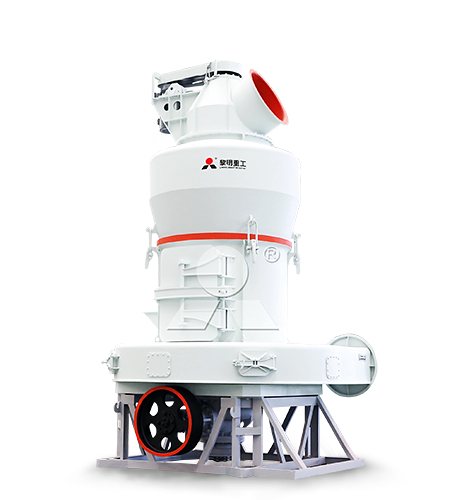
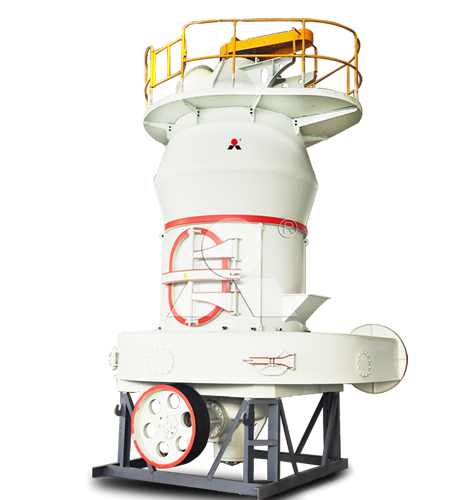
R Raymond Mill
An R Raymond mill can be used for conventional gypsum powder production where capacity and fineness requirements are within a moderate range. It is suitable for grinding prepared gypsum material into commonly used industrial powder grades.
The complete system may include a feeder, mill, classifier, blower, dust collector, conveying equipment and finished-product storage. Stable feed size and controlled material flow are important for maintaining consistent powder output.
MTW European Grinding Mill
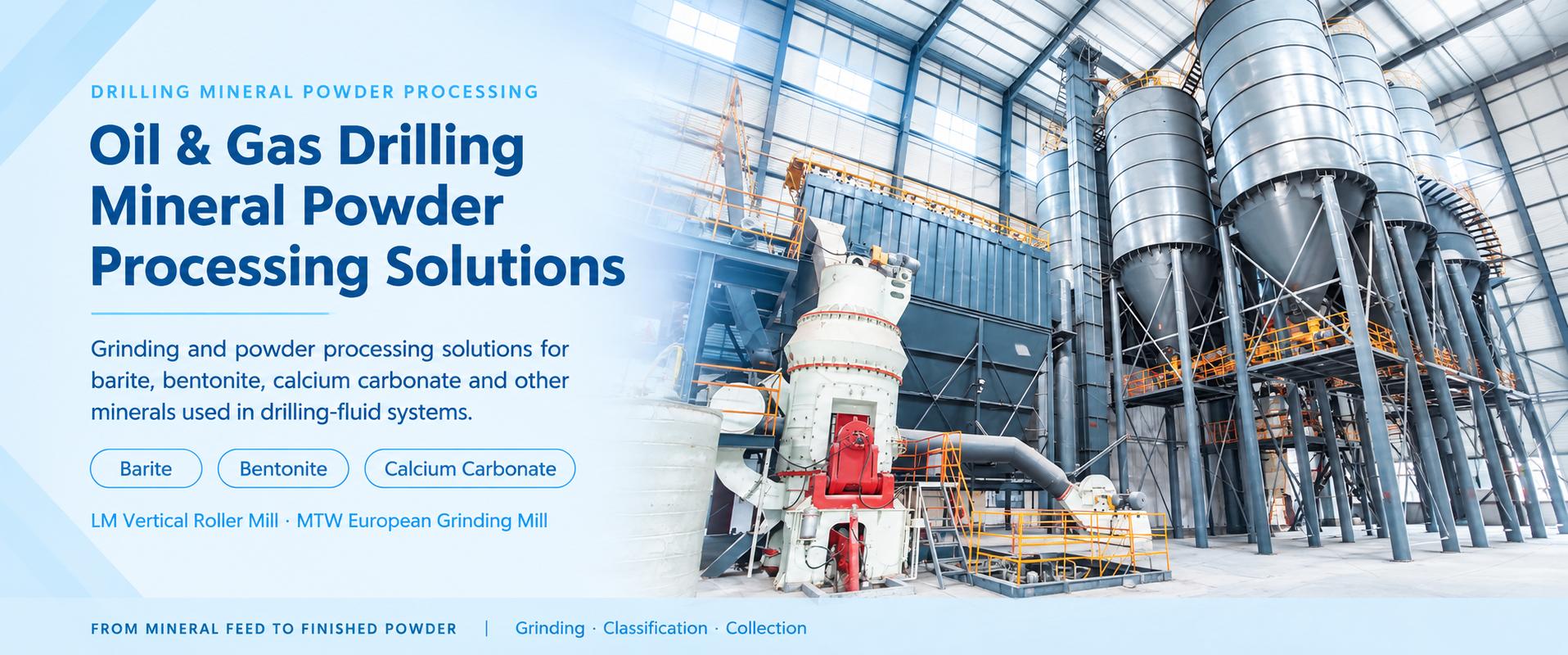
An MTW European grinding mill is suitable for conventional industrial gypsum powder manufacturing with a broad range of fineness requirements. It can be used in grinding-only lines and in calcination and grinding lines after the thermal stage.
The system can be configured around the required output, target powder fineness and material condition. The grinding mill, classifier, air system and dust collector should be considered together to maintain stable powder quality and continuous operation.
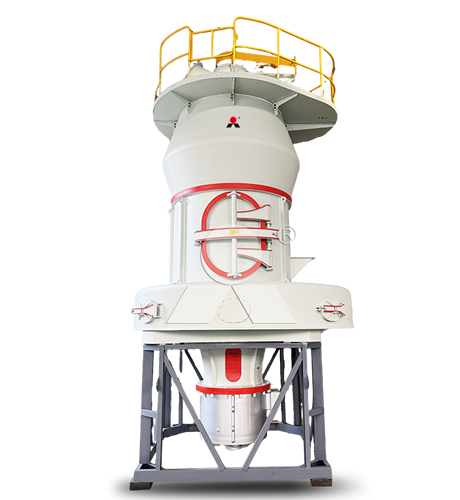
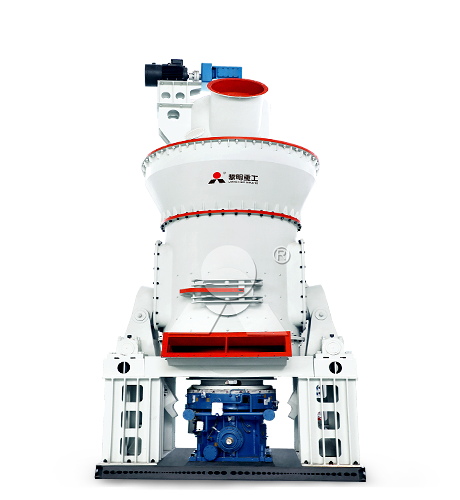
LM Vertical Grinding Mill
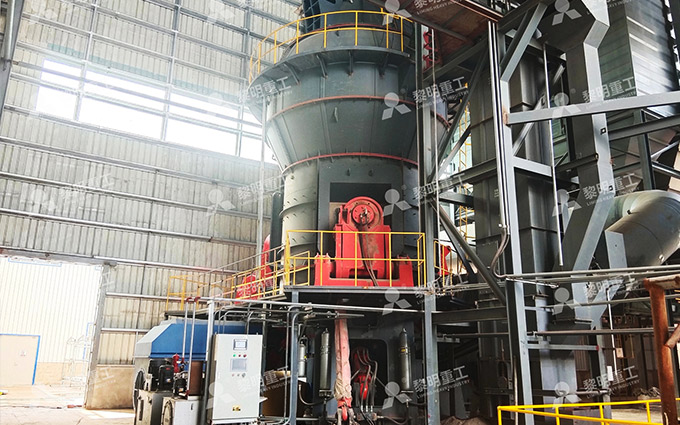
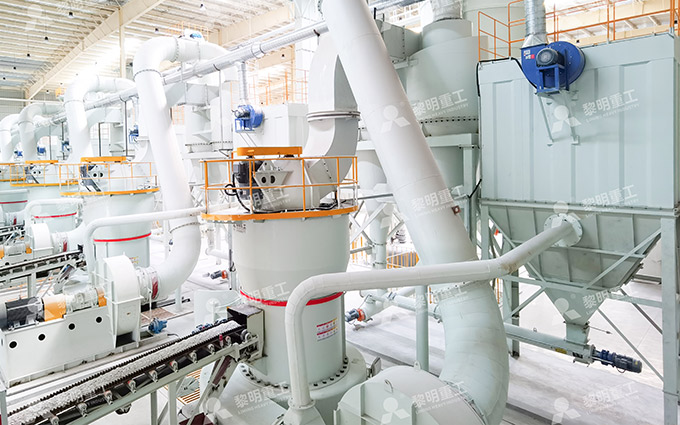
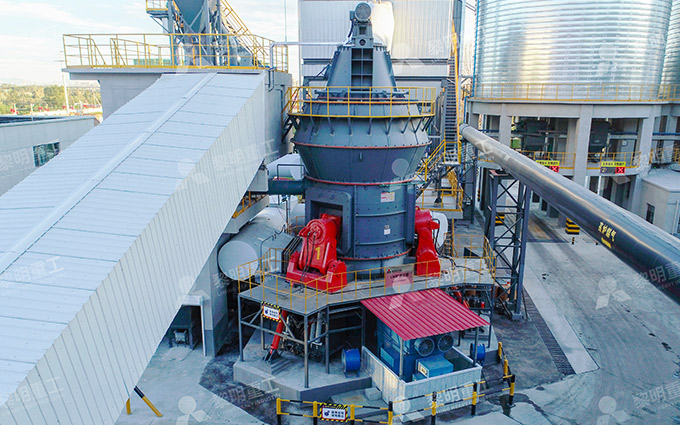
An LM vertical grinding mill can be considered for larger gypsum powder manufacturing plants requiring continuous production. It is suitable for integrated systems that combine feeding, grinding, classification, air handling, dust collection, powder conveying and storage.
For larger-capacity projects, the upstream crushing or calcination section should provide a stable supply of material to the LM vertical grinding mill. A balanced plant layout helps prevent material shortages, product accumulation and unnecessary production interruptions.
LUM Ultrafine Vertical Mill
A LUM ultrafine vertical mill is suitable for gypsum powder applications requiring finer finished material and more precise particle-size control. It can be selected when conventional gypsum powder grades are not sufficient for the required application.
Fine powder processing depends on the interaction between grinding and classification. Qualified particles are collected as finished product, while coarser particles return for further grinding. The classifier setting and airflow balance are particularly important in this type of system.
6. Classification System
Classification controls the particle size of the finished gypsum powder. After material is ground, the classifier separates particles that meet the target condition from particles that remain too coarse. Coarser particles return to the mill, while qualified powder moves to the collection system.
Classification is essential because a grinding mill produces particles in a range of sizes. Without effective separation, the finished powder may contain too much coarse material or show unnecessary variation from one production period to another.
| Classification Condition | Possible Result |
|---|---|
| Classifier setting too coarse | More oversized particles may enter the finished powder. |
| Classifier setting too fine | More material may circulate back to the mill, reducing output. |
| Unstable feed rate | Particle-size distribution may fluctuate. |
| Airflow imbalance | Powder transport and separation efficiency may change. |
| Worn grinding components | Less material may reach the required fineness during each pass. |
7. Dust Collection and Air System
Fine gypsum particles are generated during crushing, calcination, cooling, grinding, classification, conveying and packing. Dust collection equipment is required to recover powder, maintain controlled airflow and reduce dust release from the production line.
The dust collection system may include dust hoods, ducts, filters, fans, discharge equipment and sealed transfer points. In a grinding plant, airflow is also part of the material-handling process. It carries fine powder through the system and supports classification, so airflow balance should be checked together with dust collection performance.
Air leakage, damaged seals, blocked filters or unsuitable fan operation can affect both dust control and finished powder consistency. Routine inspection of ducts, filter elements, fans and transfer points helps maintain stable plant operation.
8. Finished Product Storage and Packing
After classification and dust collection, qualified gypsum powder is conveyed to finished-product storage or packing equipment. Storage bins should be designed to maintain powder flow and avoid unnecessary material buildup. The final product should be protected from excessive moisture exposure during storage and delivery.
Common finished-product arrangements include bag packing, valve-bag packing, open-mouth bag packing, bulk loading and direct transfer to a downstream mixing system. The selected arrangement should match the production capacity and the way the finished powder will be used.
Packing capacity should be coordinated with grinding capacity. If the packing section cannot handle the powder produced by the mill, finished-product storage may become full and the grinding system may need to slow down or stop.
Typical Capacity Levels for Gypsum Powder Plants
Gypsum powder plants can be configured for different capacity levels. The required output influences the selection of crushing equipment, calcination equipment, grinding mill, dust collector, conveyor size, storage capacity and packing arrangement.
| Reference Plant Scale | Typical Production Direction | Process Configuration Focus |
|---|---|---|
| 100 TPD | Small and medium gypsum powder production | Compact process layout, stable feeding, conventional grinding and packing |
| 300 TPD | Medium-scale continuous production | Balanced crushing, calcination when required, continuous grinding and finished-product handling |
| 500 TPD | Larger integrated gypsum powder production | Continuous process coordination, larger material storage, integrated grinding and conveying systems |
These capacity levels are reference plant scales rather than fixed equipment packages. Actual plant capacity depends on raw gypsum properties, final powder fineness, calcination requirement, operating hours, equipment configuration, site conditions and product-handling requirements.
How Capacity Affects Equipment Selection
Plant capacity is not determined by the grinding mill alone. Every process section must be sized to support the required output. If the crusher is too small, the mill may not receive enough feed. If the storage capacity is insufficient, the calcination section and grinding section may interrupt one another. If the dust collector or packing system is undersized, the plant may not operate continuously at its intended rate.
| Plant Section | Capacity Planning Consideration |
|---|---|
| Raw material receiving | Must handle delivery volume and provide enough storage for stable production. |
| Crushing | Must supply prepared gypsum at a rate equal to or higher than downstream demand. |
| Calcination | Must match the required output of calcined gypsum when thermal processing is included. |
| Grinding | Must produce the target fineness at the planned material throughput. |
| Classification | Must control the required powder size without excessive circulating load. |
| Dust collection | Must maintain airflow balance and collect dust at all major transfer points. |
| Finished-product storage | Must buffer output between the grinding system and packing or loading system. |
| Packing | Must handle the finished powder volume without creating a production bottleneck. |
Plant Layout Considerations
A practical gypsum powder manufacturing plant layout should make material movement clear and continuous. Raw gypsum should move from receiving to crushing, then to calcination or grinding with as few unnecessary transfers as possible. Finished powder should move from collection to storage and packing without returning through the raw-material area.
Plant layout should also account for equipment maintenance, dust collector access, storage-bin discharge, truck loading, power distribution, material flow direction and safe operating space. Vertical space can be important because mills, classifiers, elevators, storage bins and dust collectors may require different installation heights.
Keep raw material handling separate from finished powder storage where practical.
Provide buffer storage between major process stages.
Allow access for maintenance of crushers, mills, classifiers, fans and filters.
Design transfer points to reduce material spillage and dust leakage.
Match conveyor capacity to the actual plant throughput.
Provide sufficient finished-product storage before packing or bulk loading.
Common Manufacturing Plant Problems
Unstable Powder Fineness
Check raw material variation, mill feed stability, classifier setting, airflow balance and grinding component wear. Particle-size changes often result from a combination of feed and system conditions.
Low Plant Output
Check whether crushing capacity, calcination output, mill performance, dust collection resistance, powder discharge or packing capacity is limiting the line. The bottleneck may occur outside the grinding mill.
Material Buildup in Hoppers
Check raw gypsum moisture, calcined gypsum temperature, hopper design, material flow characteristics and discharge equipment. Material buildup can interrupt feed stability and reduce plant output.
Dust Leakage Around Equipment
Inspect equipment seals, transfer chutes, duct connections, fan operation and filter condition. Dust leakage can indicate poor enclosure or an airflow imbalance within the system.
Frequent Production Stops
Review the coordination between raw material supply, crushing, calcination, grinding, finished-product storage and packing. Insufficient buffer capacity between sections can cause one interruption to stop the whole line.
Conclusion
A gypsum powder manufacturing plant can be configured as a grinding-only line or a complete calcination and grinding line. The correct process depends on the required final product, raw gypsum properties, target powder fineness and production capacity.
Crushing, calcination when required, grinding, classification, dust collection, conveying, storage and packing should be designed as one connected process. R Raymond mills, MTW European grinding mills, LM vertical grinding mills and LUM ultrafine vertical mills can be selected for different capacity levels and powder requirements. A balanced configuration helps maintain stable material flow from raw gypsum to finished powder.