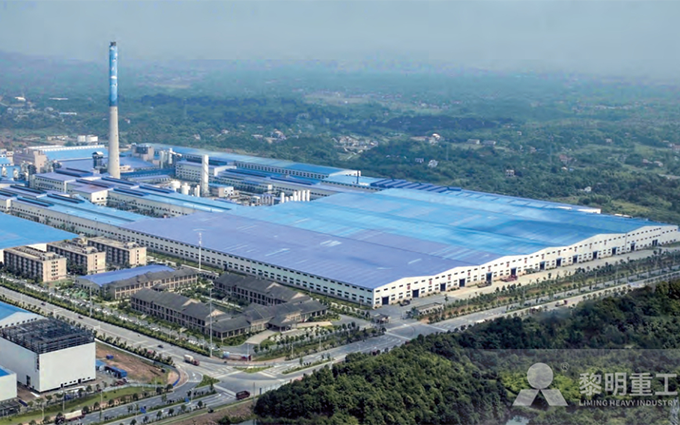
Limestone Grinding Plant
What Is Limestone Grinding and How Is Limestone Powder Produced?
2026-09-25 14:40:36
We are Liming Heavy Industry, a manufacturer of various types of industrial crushers, such as Raymond Mill, Trapezoidal Mill, Vertical Mill, Ultrafine Mill, Ball Mill, etc.
Our mills can process the following minerals:
limestone, quicklime, kaolin, talc, barite, bentonite, calcium carbonate, dolomite, coal, gypsum, clay, carbon black, slag, cement raw materials, cement clinker, etc.
If you need a mill to process stone or minerals into powder, please feel free to contact me (WhatsApp: +8615333807511). Thank you.
Limestone grinding is the process of reducing natural limestone into fine powder with a controlled particle size for industrial use. Depending on the application, limestone can be processed into coarse powder, fine powder, or ultrafine powder. The required fineness, production capacity, feed size, moisture, and final product quality all influence the design of a limestone grinding plant.
Limestone powder is widely used in cement production, construction materials, dry-mix mortar, plastics, rubber, paints and coatings, agriculture, animal feed, environmental applications, and other industries. A suitable grinding system therefore needs to provide not only the required fineness, but also stable production and consistent product quality.
From Limestone Rock to Limestone Powder
Natural limestone is normally extracted from a quarry in the form of large rocks or irregular lumps. Most industrial applications, however, require limestone in a much smaller and more uniform particle size. The material therefore passes through several processing stages before it becomes finished limestone powder.
A typical limestone grinding plant may include:
Raw limestone receiving and feeding
Primary or secondary crushing when the feed is too large for the grinding mill
Grinding to the required particle size
Classification of ground material
Dust collection and air separation
Finished powder conveying and storage
Packaging or bulk loading, depending on the application
The exact configuration depends on the characteristics of the limestone and the specifications of the final product.
Why Limestone Needs to Be Ground
Crushed limestone and limestone powder serve different purposes. Large pieces of limestone are suitable for some aggregate and construction applications, while fine limestone powder provides a much larger surface area and can be incorporated more easily into industrial products.
For example, limestone powder may be used as a mineral filler in plastics and rubber, as a raw material in cement production, as an ingredient in dry-mix products, or as a neutralizing material in agricultural applications. Each application can require a different particle size and powder quality.
This is why a limestone grinding plant should be designed around the intended application rather than simply selecting a mill based on the raw material.
What Happens During Limestone Grinding?
After crushing, limestone is fed into the grinding system. Inside the grinding mill, mechanical forces break the particles into progressively smaller sizes. The ground material is then separated according to particle size.
Coarser particles that do not meet the required specification can return to the grinding zone for further processing, while qualified fine particles are carried out of the mill and collected as finished powder.
This continuous grinding and classification process allows the plant to maintain a relatively consistent product size while operating at a stable capacity.
Choosing the Right Grinding Mill for Limestone
The grinding mill is one of the most important components of a limestone powder production line. The appropriate equipment depends mainly on the required fineness and production capacity.
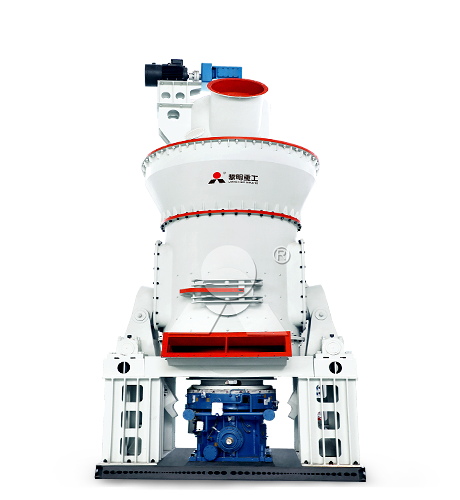
LM Vertical Grinding Mill
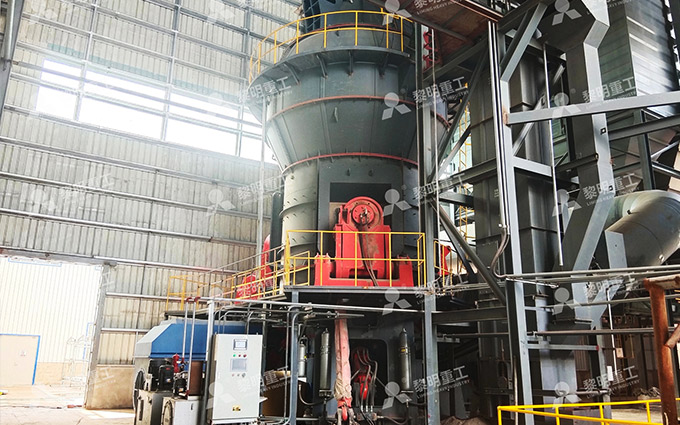
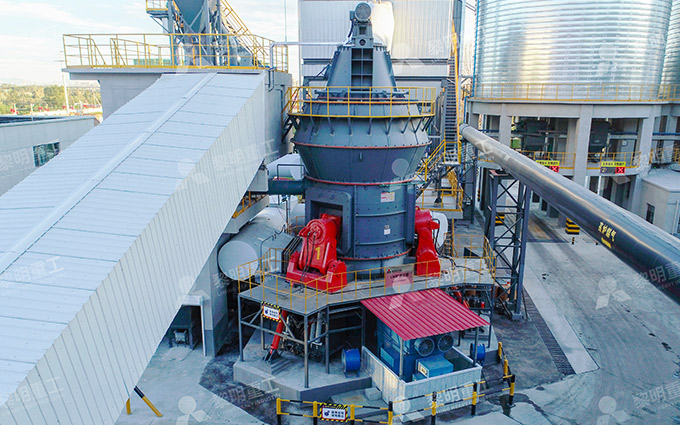
The Liming Heavy Industry LM Vertical Grinding Mill is designed for large-scale powder production and can be used for limestone processing where relatively high capacity and stable operation are required. It integrates grinding, drying, powder separation, and conveying functions within a compact system, making it suitable for many large limestone powder projects.
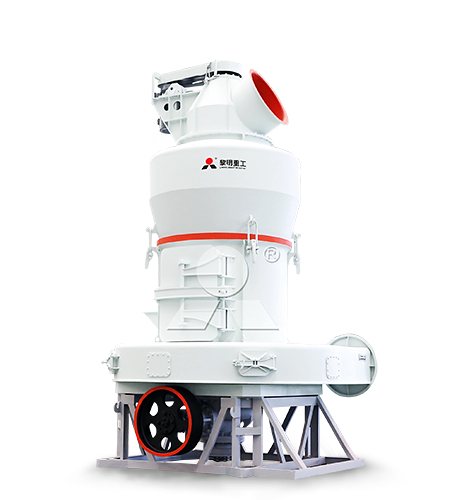
MTW European Grinding Mill
The Liming Heavy Industry MTW European Grinding Mill is suitable for limestone powder production across a broad range of applications. It is particularly suitable for projects requiring fine limestone powder with flexible capacity requirements. Its integrated classification and conveying system helps simplify the overall grinding process.
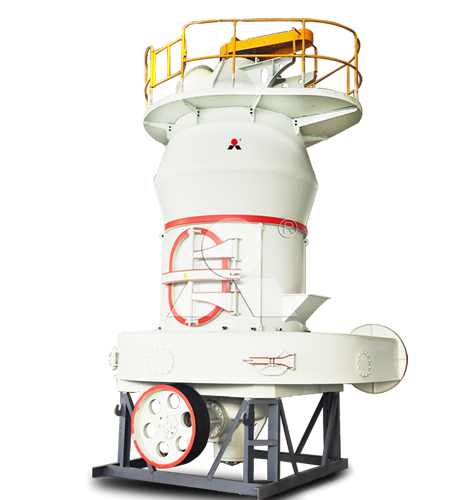
MW Micro Powder Mill
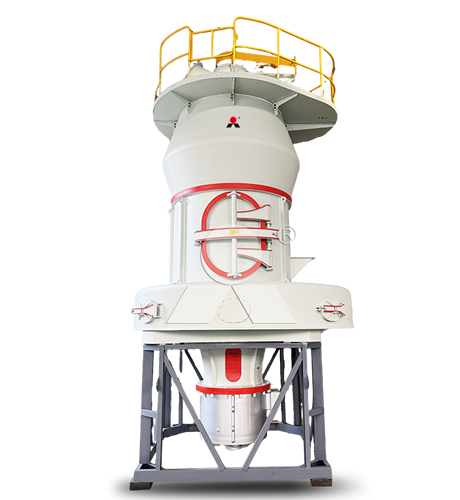
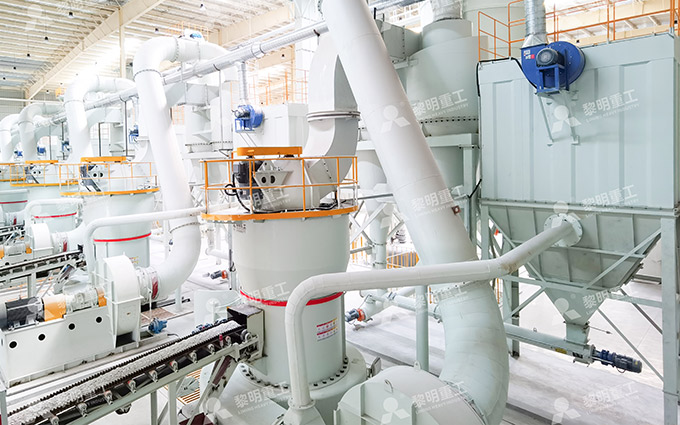
When a limestone application requires finer powder, the Liming Heavy Industry MW Micro Powder Mill can be considered. It is designed for ultrafine powder processing and can be used when the final product requires a much smaller particle size than conventional limestone grinding.
LUM Ultrafine Vertical Grinding Mill
For demanding ultrafine limestone applications, the Liming Heavy Industry LUM Ultrafine Vertical Grinding Mill provides a solution for producing very fine powder with controlled classification. It is suitable for applications where limestone powder fineness and particle distribution are particularly important.
How Limestone Fineness Affects the Production Process
Limestone does not have one standard grinding fineness. The required particle size is determined by the final use of the powder.
Construction materials may require relatively moderate fineness, while mineral fillers, specialty products, and some chemical or industrial applications may require considerably finer powder. As the required fineness becomes higher, the grinding and classification system needs to provide more precise control of the final product.
For this reason, two limestone projects with the same raw material and the same nominal capacity may still require different grinding equipment and process configurations.
What Determines Limestone Grinding Capacity?
Several operating conditions affect the actual capacity of a limestone grinding plant. The most important considerations include:
Feed particle size
Required finished product fineness
Hardness and grindability of the limestone
Moisture content
Required product quality
Continuous operating conditions
Selected grinding mill and classifier configuration
In particular, finer products generally require more intensive grinding and classification. A capacity quoted for coarse limestone powder should therefore not automatically be applied to a much finer product.
When Is a Crusher Required Before the Mill?
Grinding mills are designed to accept a certain maximum feed size. Limestone arriving from a quarry is often much larger than this range, so crushing is normally required before grinding.
A crusher reduces the limestone to a suitable feed size, after which a belt conveyor, bucket elevator, or other conveying equipment transfers the material to the grinding system.
If the limestone is already supplied in a suitable particle size, the crushing stage may be simplified or omitted. The actual arrangement should be determined according to the feed material received by the plant.
A Typical Limestone Powder Production Flow
For many projects, the basic process can be arranged as:
Limestone → Crushing → Feeding → Grinding → Classification → Dust Collection → Finished Powder
After classification, qualified limestone powder can be transported to a storage silo or finished-product system. Depending on the customer's requirements, the final powder may then be packed into bags or loaded in bulk.
Large-scale projects may also incorporate automatic control systems, multiple feeding points, auxiliary equipment, and centralized dust collection to match the required production conditions.
Grinding Limestone for Different Applications
The same limestone deposit can be processed into different products depending on the target market. Limestone powder for cement raw materials does not necessarily require the same fineness as limestone used as a filler, agricultural material, or ingredient in dry-mix products.
For this reason, the first question when planning a limestone grinding plant should be the intended application and required finished powder specification. Once these parameters are established, the grinding system can be selected according to the required capacity and fineness.
What Information Is Needed to Design a Limestone Grinding Plant?
A practical limestone grinding project normally requires several basic technical parameters before the equipment can be selected accurately. These include the type and characteristics of the limestone, feed size, moisture content, required production capacity, finished product fineness, and intended application.
The project location and operating conditions can also affect the selection of auxiliary equipment, electrical configuration, dust collection system, storage, and material handling equipment.
Providing these details at the beginning helps establish a grinding system that matches the actual production requirements rather than relying on a general-purpose configuration.
Conclusion
Limestone grinding transforms quarried limestone into controlled fine powder suitable for a wide range of industrial applications. A complete production line may involve crushing, feeding, grinding, classification, dust collection, conveying, storage, and packaging, depending on the project.
Liming Heavy Industry provides limestone grinding solutions using equipment such as the LM Vertical Grinding Mill, MTW European Grinding Mill, MW Micro Powder Mill, and LUM Ultrafine Vertical Grinding Mill. The appropriate configuration depends on the required capacity, feed size, limestone characteristics, and final powder fineness.
For a specific limestone powder project, the key starting information is the raw limestone feed size, required capacity, target fineness, moisture content, and intended application. These parameters provide the basis for determining the appropriate grinding process and equipment configuration.