Mineral Grinding for Paints & Coatings
Calcium Carbonate Powder for Paints and Coatings: Fineness and Processing
2026-10-23 13:27:19
Calcium carbonate powder helps paint manufacturers control surface finish, film build, rheology, and formulation cost. However, a powder that performs well in a matte wall paint may not suit a smooth industrial topcoat. The difference is not simply whether the material is described as “fine” or “ultrafine.” Its particle-size distribution, coarse-particle content, purity, and dispersion behavior all influence the finished coating. Particle-size control is particularly important because it affects viscosity, dispersion stability, opacity, and tinting strength.
For a calcium carbonate processing plant, the practical starting point is therefore the customer's coating specification—not the finest powder the mill can produce. The objective is to manufacture a consistent ground calcium carbonate grade that meets the required finish and processing conditions without unnecessary grinding.
Start with the Coating, Then Define the Powder
Ground calcium carbonate, commonly called GCC, is produced by mechanically grinding suitable natural minerals such as calcite, marble, or limestone. Different deposits can produce noticeably different powders, even when their nominal fineness is similar. Selecting the mineral and defining the particle-size requirements should be treated as connected decisions.
| Coating application | What matters in the calcium carbonate | What to verify in a formulation trial |
|---|---|---|
| Matte interior wall paints | A particle-size distribution suited to the required finish, loading level, and application viscosity | Hiding, roller application, sheen uniformity, and scrub resistance |
| Smooth decorative coatings | Fine particles with controlled coarse residue and consistent whiteness | Surface smoothness, gloss or sheen, dispersion, and color consistency |
| Primers and undercoats | A balance between filling ability, particle packing, and binder demand | Sandability, adhesion, film build, and compatibility with the topcoat |
| High-build or textured coatings | A deliberately selected particle-size profile rather than maximum fineness | Texture consistency, sag resistance, application behavior, and storage stability |
These applications do not have a single universal fineness specification. Binder chemistry, pigment loading, film thickness, and the other minerals in the formulation can change the grade that performs best. A technically useful powder specification must therefore be supported by actual paint testing.
Why a Mesh Number Is Not Enough
Requests for “800-mesh calcium carbonate” or “1250-mesh calcium carbonate” are common in equipment discussions, but mesh descriptions alone are not a reliable basis for accepting a coating-grade powder. They do not adequately describe the distribution of particles, and commercial ultrafine mesh labels may not correspond to a consistently applied test method.
A more useful specification includes particle-size distribution, measured under an agreed procedure:
D50 describes the median particle size on the reported measurement basis. For a volume-based result, half of the measured particle volume lies below this size.
D97 describes the size below which 97% of the measured distribution falls. It helps characterize the coarse end, but it is not an absolute maximum particle size.
Coarse residue identifies material remaining above an agreed test threshold and helps detect oversize particles or contamination.
The complete distribution curve shows whether two powders with similar median sizes have different fine and coarse fractions.
Measurement conditions also matter. Results obtained with different dispersion procedures, instruments, or sample preparation methods should not automatically be treated as directly interchangeable. Supplier and customer should agree on how the powder will be tested before setting acceptance limits.
Finer powder is not automatically better paint
A finer grade can support a smoother coating surface, but it also introduces more particle surface that must be wetted and stabilized. Depending on the formulation, this can increase dispersant demand or make viscosity control more difficult.
Calcium carbonate should also not be treated as a direct, equal-performance replacement for titanium dioxide. Its contribution to hiding depends on the complete coating structure and formulation. Changes to calcium carbonate fineness or loading should be checked through paint drawdowns rather than judged from powder whiteness alone.
Raw Material Quality Sets the Processing Limits
A grinding mill reduces particle size; it does not remove every impurity or correct an unsuitable mineral deposit. Before selecting equipment, test representative material from the intended supply—not just a small, unusually clean sample.
Whiteness and undertone: Check whether the powder introduces a gray, yellow, or inconsistent cast into white and pastel coatings.
Mineral composition: Confirm calcium carbonate content and identify accessory minerals that could affect performance.
Hard impurities: Quartz and other abrasive components can increase equipment wear and complicate coarse-particle control.
Moisture: Variable feed moisture can disturb feeding, grinding, classification, and finished-powder handling.
Deposit consistency: Assess variation between quarry zones and deliveries so that blending can be planned where necessary.
For demanding white coatings, color consistency and contamination control may be just as important as achieving a finer median particle size.
From Mineral Feed to Coating-Grade Powder
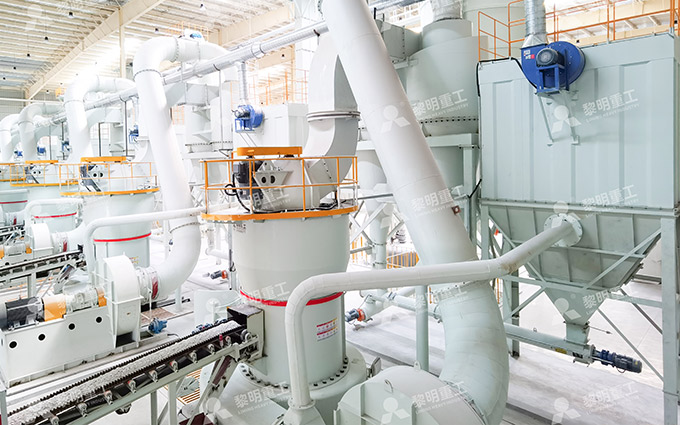
A practical dry-processing line combines controlled preparation, grinding, air classification, powder collection, and clean storage. Each stage influences whether the finished product remains consistent from one shipment to the next.
Prepare a stable feed
Crush and screen the mineral to meet the selected mill's feed requirements. Remove tramp metal and manage excessive moisture before grinding. A steady feed rate and consistent feed size help prevent avoidable changes in mill load and product quality.
Coordinate grinding with classification
The mill breaks down the mineral, while the classifier separates acceptable fine particles from material that needs further grinding. The two functions must work together: increasing grinding intensity alone does not guarantee a better finished powder.
Classifier speed, airflow, feed rate, and grinding conditions influence the final distribution. When the target becomes finer, the amount of material returning for additional grinding can increase. Capacity should therefore be assessed at the required product specification rather than at a broad catalog fineness range.
Preserve quality after the mill
Collect finished powder in a suitable filtration system and transfer it into clean, dry silos or packaging. Poor handling can introduce foreign particles, moisture pickup, or cross-contamination between grades. When a plant produces several products, changeover procedures and batch identification are essential.
Selecting a Liming Heavy Industry Grinding System
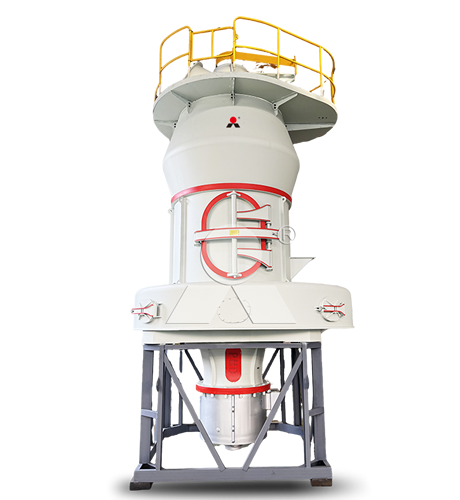
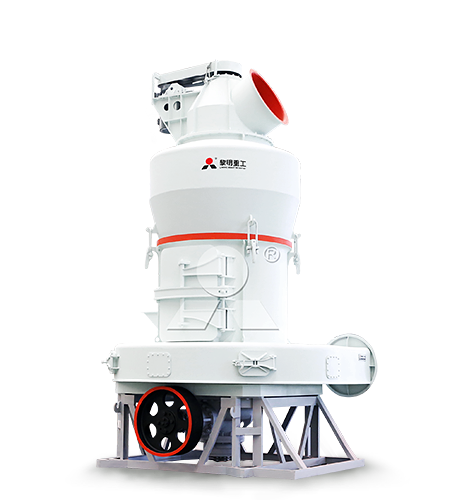
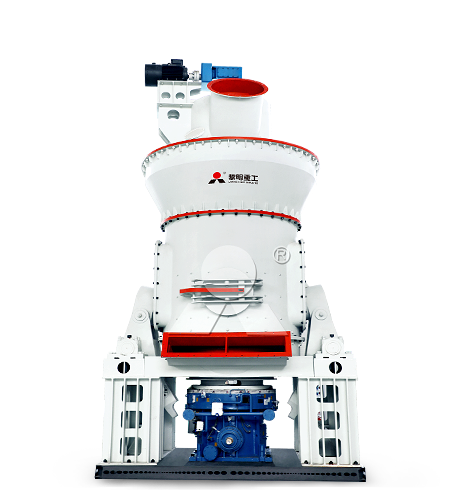
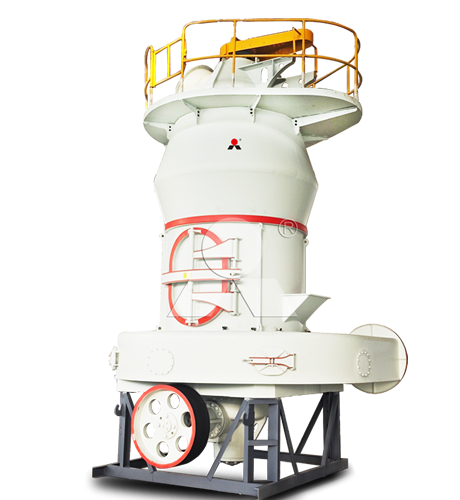
For fine and ultrafine dry calcium carbonate production, Liming Heavy Industry offers the LUM Ultrafine Vertical Mill and MW Micro Powder Mill. Both are options for mineral-powder processing, but the appropriate system depends on the required particle-size distribution, production rate, raw material, and operating arrangement.
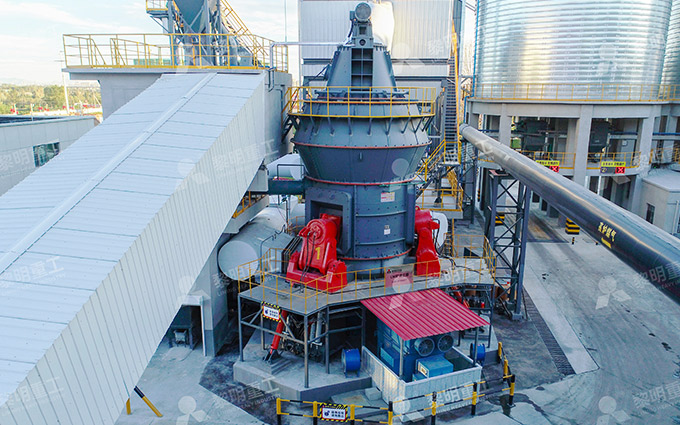
LUM Ultrafine Vertical Mill
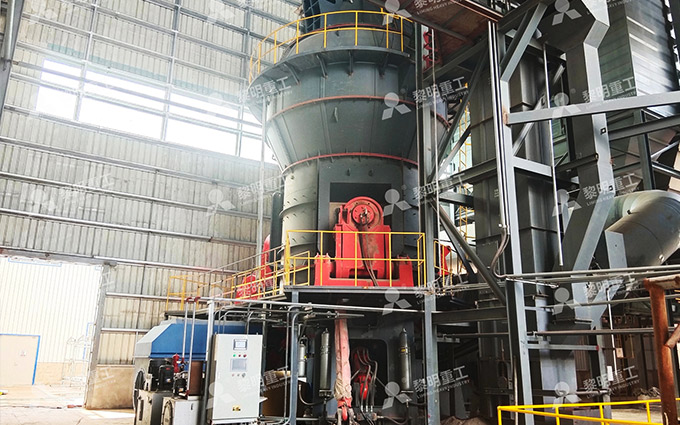
The LUM system is a candidate for projects requiring integrated grinding and classification of ultrafine calcium carbonate. Material is ground in the mill, acceptable fine powder leaves with the airflow, and coarse material returns for further grinding. This arrangement makes classification performance an important part of product control.
For a coating-powder project, evaluate a Liming Heavy Industry LUM configuration against the actual D50, D97, coarse-residue limit, and required output. A sample grinding test should establish whether those requirements can be achieved together.
MW Micro Powder Mill
The Liming Heavy Industry MW Micro Powder Mill is another option to assess for fine and ultrafine GCC production. Compare it with the LUM system using the same raw material and finished-product specification. The comparison should consider saleable output, power consumption per tonne, maintenance access, wear-part requirements, and grade-change procedures—not nominal fineness alone.
Neither equipment choice should be finalized from a mesh label. Require a proposed process arrangement and a performance basis tied to the intended coating-grade powder.
When the Powder Passes Inspection but the Paint Still Fails
| Observed problem | Possible powder-related cause | Practical check |
|---|---|---|
| Visible specks or a rough film | Oversize particles, foreign matter, or poorly dispersed agglomerates | Check coarse residue and examine the dispersed paint; distinguish hard particles from soft agglomerates |
| Unexpectedly high viscosity | Changed fine fraction, moisture variation, or unsuitable wetting and dispersion | Compare the full distribution curve and repeat the formulation under controlled mixing conditions |
| Inconsistent white shade | Raw-material variation or contamination during processing and storage | Compare powder color and paint drawdowns across retained batches |
| Lower-than-expected gloss | An unsuitable coarse fraction or incomplete dispersion | Review coarse-particle results, dispersion quality, and film preparation conditions |
| Settling or hard sediment | Particle-size variation interacting with an unsuitable dispersion or rheology system | Run storage tests in the actual coating rather than relying on powder measurements alone |
Define the Acceptance Standard Before Ordering the Line
A useful project brief should state the coating applications, raw-material characteristics, required hourly output, operating schedule, product-size distribution, coarse-residue limit, moisture requirement, and packaging method. Where several grades are planned, include the expected production split and changeover frequency.
Approval should combine powder testing with application testing. Confirm particle size, color, moisture, and coarse residue first, then evaluate dispersion, viscosity, surface appearance, hiding, and storage behavior in representative customer formulations.
For a new plant or capacity expansion, provide Liming Heavy Industry with a representative mineral sample and a clearly defined target powder. This gives the equipment selection a practical basis: producing the calcium carbonate grade the coating customer can use consistently, at the output the project actually requires.