Oil & Gas Mineral Processing
Barite Grinding for Drilling Fluids
2026-09-14 16:44:27
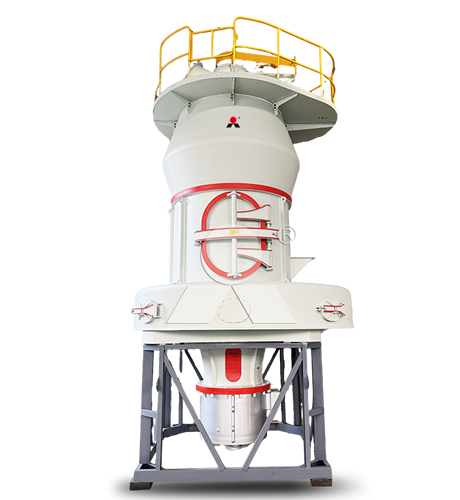
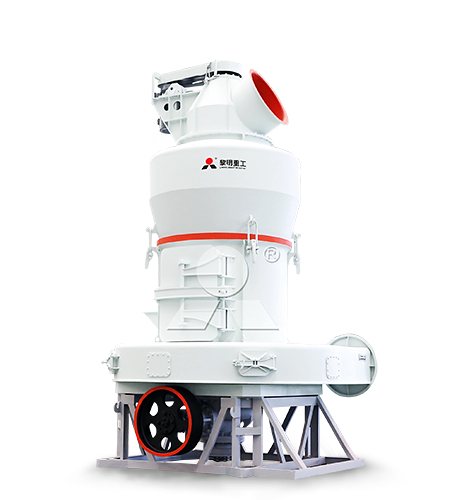
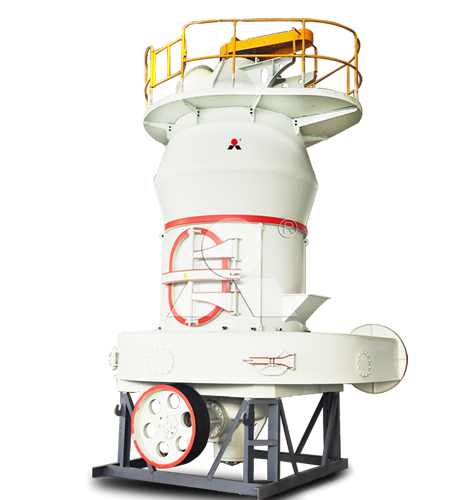
We are Liming Heavy Industry, a manufacturer of various types of industrial crushers, such as Raymond Mill, Trapezoidal Mill, Vertical Mill, Ultrafine Mill, Ball Mill, etc.
Our mills can process the following minerals:
limestone, quicklime, kaolin, talc, barite, bentonite, calcium carbonate, dolomite, coal, gypsum, clay, carbon black, slag, cement raw materials, cement clinker, etc.
If you need a mill to process stone or minerals into powder, please feel free to contact me (WhatsApp: +8615333807511). Thank you.
Barite is one of the most important weighting materials used in oil and gas drilling fluids. Primarily composed of barium sulfate (BaSO4), it has a high density, good chemical stability, and low solubility in water. After being ground to a controlled particle-size distribution, barite powder is added to water-based or oil-based drilling mud systems to increase fluid density and help balance formation pressure during drilling operations.
For drilling-fluid producers, barite grinding is not simply a size-reduction process. The finished powder must have stable density, controlled coarse-particle content, limited ultrafine material, and repeatable quality from one production batch to the next. A grinding plant designed around these requirements can help manufacturers produce drilling-grade barite powder with more reliable slurry performance, easier handling, and more consistent mud-weight control.
Why Barite Is Used in Drilling Mud
During drilling, the fluid circulating through the wellbore performs several tasks at the same time: it carries cuttings to the surface, cools and lubricates the drill bit, supports the borehole wall, and helps control pressure from underground formations. When formation pressure increases, the density of the drilling fluid must also be increased to maintain safe pressure balance.
Ground barite is used as a solid weighting agent because of its high specific gravity. Drilling-grade barite is commonly required to have a specific gravity of at least 4.20. This means that a relatively small volume of barite can substantially increase mud density. Compared with lower-density minerals, high-quality barite can achieve the target mud weight with a lower solids volume, helping operators manage fluid rheology and pumping conditions more effectively.
In practical drilling-fluid preparation, the barite powder must disperse evenly through the mud system and remain suspended as much as possible during circulation. Material that is excessively coarse may settle more easily, while too much ultrafine powder can increase viscosity and make the drilling fluid harder to pump. For this reason, the particle-size distribution is as important as the average fineness.
Key Requirements for Drilling-Grade Barite
Barite ore quality and grinding performance both determine whether the final product is suitable for drilling-fluid use. The raw material should have sufficient barium sulfate content, stable specific gravity, and impurity levels compatible with the required drilling-fluid specification.
| Quality Parameter | Typical Drilling-Grade Requirement | Importance in Drilling Fluids |
|---|---|---|
| Specific gravity | At least 4.20 g/cm³ for conventional 4.2-grade material | Determines the weighting efficiency of the barite powder. |
| Coarse-particle residue | No more than 3% retained above 75 μm | Helps prevent excessive settling and abrasive oversize particles. |
| Ultrafine fraction | No more than 30% below 6 μm | Helps avoid unnecessary increases in fluid viscosity and pump load. |
| Soluble alkaline-earth metals | Controlled to a low level | Supports compatibility with the drilling-fluid system. |
The commonly referenced API 13A parameters for traditional drilling-grade barite include a minimum specific gravity of 4.20, a maximum 3% mass fraction above 75 μm, and a maximum 30% mass fraction below 6 μm. These limits illustrate why a barite plant must focus on classification efficiency as well as grinding capacity.
From Barite Ore to Drilling Powder
A complete barite grinding line normally begins with raw-ore preparation. Run-of-mine barite may contain large lumps, clay, gangue minerals, moisture, and mixed particle sizes. Before fine grinding, the material should be inspected and prepared so that the mill receives feed with a stable size range and consistent quality.
A typical processing route can include the following stages:
1. Crushing and feed preparation. Large barite ore is reduced to a suitable mill-feed size. Stable feed size helps the grinding system operate smoothly and reduces fluctuations in output fineness.
2. Drying when necessary. If the raw barite contains excessive moisture, drying may be required before or during milling. Moist material can cause blockages, reduce classification efficiency, and affect the flow of finished powder in storage and packing systems.
3. Grinding and air classification. The ore is ground into powder, while the classifier separates qualified particles from oversized material. Coarse particles are returned for further grinding, allowing the plant to control the final particle-size distribution.
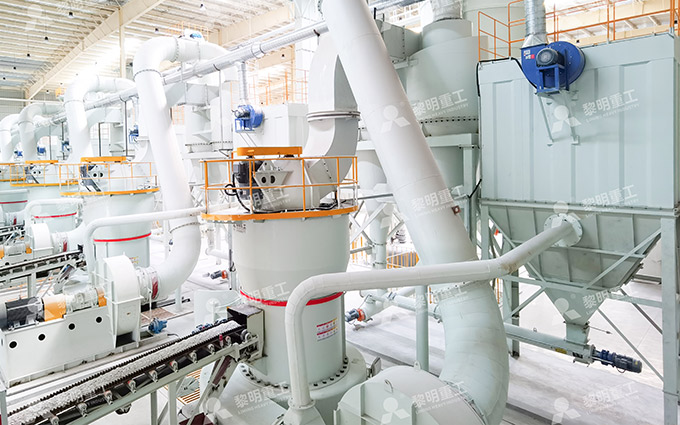
4. Dust collection and product conveying. Fine barite powder is collected by a high-efficiency dust-removal system and transferred to silos, bulk-loading stations, or bagging equipment. Enclosed conveying is particularly valuable because drilling-grade barite is a fine mineral powder that must be handled cleanly and consistently.
5. Quality inspection. Finished powder should be checked for density, moisture, particle-size distribution, screen residue, and other required physical or chemical properties before delivery.
Choosing the Right Grinding Equipment
The equipment selection should match the feed size, raw-material hardness, moisture condition, required powder fineness, target capacity, and the need for continuous production. For barite used in drilling fluids, the grinding system should provide steady output while allowing close control of coarse particles and excessive ultrafines.
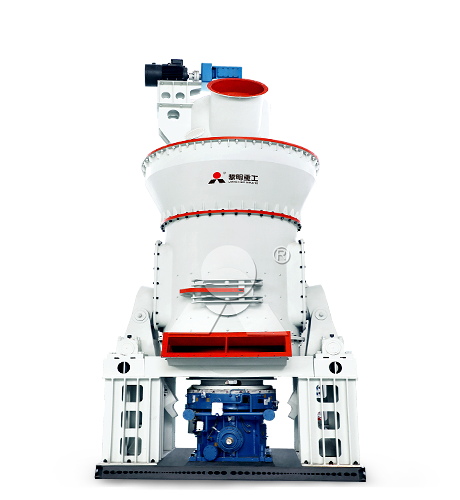
LM Vertical Roller Mill for Large-Scale Barite Production
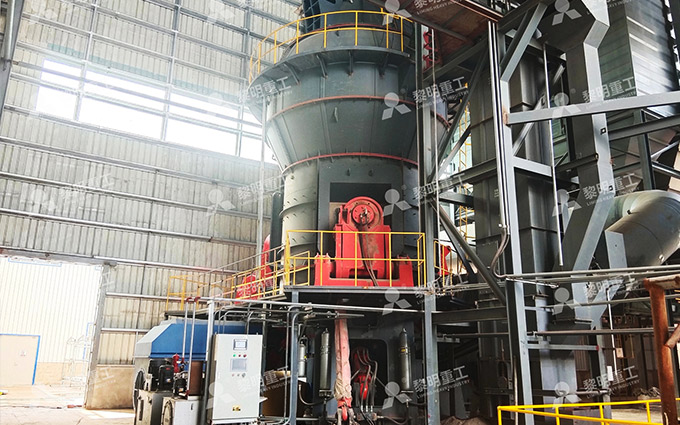
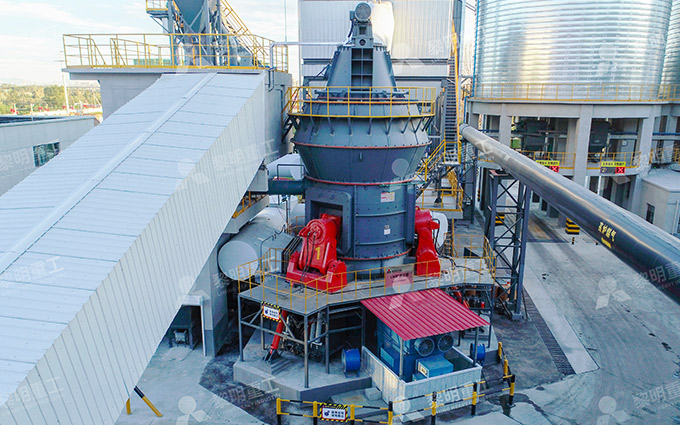
For large-capacity barite powder projects, the LM Vertical Roller Mill can be used as a central grinding unit in a dry-processing line. Its integrated design combines material grinding, drying, classifying, and conveying functions. This arrangement can reduce the number of process transfers and support a compact plant layout.
The vertical grinding principle allows barite to be ground under controlled pressure, while the internal separator adjusts the circulation of coarse and fine particles. Qualified powder moves with the air stream to the collection system, while unqualified coarse material returns to the grinding zone. This closed internal circulation supports continuous operation and helps maintain a stable product fineness.
The LM Vertical Roller Mill is especially suitable when the project requires:
High daily output of barite powder for centralized drilling-fluid supply.
Integrated drying and grinding for feed with variable moisture.
Continuous production with automatic control and centralized operation.
Reduced floor area compared with multiple separate processing units.
Convenient adjustment of the powder-separation process.
For a drilling-barite project, the separator setting and operating conditions should be optimized through production trials and particle-size testing. The goal is not simply to obtain finer powder. The goal is to reach a balanced distribution that meets the required coarse-residue and ultrafine limits.
MTW European Trapezium Grinding Mill for Flexible Barite Projects
The MTW European Trapezium Grinding Mill is a practical option for barite grinding plants requiring flexible capacity, reliable powder production, and convenient adjustment for different market grades. It is suitable for processing barite into fine powder for drilling-fluid applications and can be configured with supporting crushing, conveying, dust collection, storage, and packing equipment.
Its grinding chamber, transmission structure, air-flow system, and classification arrangement are designed for stable mineral-powder production. During operation, the feed material is ground by rollers and rings, then lifted by airflow to the separator. Fine powder meeting the target requirement is collected, while coarse particles are returned for regrinding.
This mill is well suited to producers that need to serve regional drilling-fluid markets, establish a new barite powder plant, or process more than one barite product grade. It can support production planning where the output requirement is moderate but product quality and operational stability remain essential.
Controlling Particle Size in Barite Milling
Particle-size control is the central technical task in drilling-grade barite production. A plant can produce powder that looks fine but still fails to perform properly if the powder contains too many particles larger than the specified upper limit or too much material in the ultrafine range.
For example, if a grinding system produces excessive coarse particles, the product may show a high residue on the 75 μm screen. In a drilling-fluid system, these larger particles can settle more readily and may contribute to unstable mud density. On the other hand, increasing mill pressure or classifier speed too aggressively may create too much fine material below 6 μm. That can increase the liquid demand of the mud and raise plastic viscosity.
A well-designed production line therefore relies on a combination of controlled feeding, stable mill loading, appropriate separator settings, efficient dust collection, and routine particle-size testing. Operators should establish standard operating parameters for each barite source because ore hardness, moisture, gangue content, and natural particle structure can vary from mine to mine.
Important Considerations for Plant Design
When planning a barite grinding line for drilling-fluid powder, the following points should be evaluated before equipment configuration:
Raw ore characteristics: Test specific gravity, barium sulfate content, hardness, moisture, impurities, and feed-size distribution before finalizing the process route.
Required production scale: Determine the hourly and annual powder demand, including allowance for maintenance, peak orders, and storage turnover.
Finished-product specification: Define the required particle-size distribution, density grade, moisture limit, and inspection standards in advance.
Moisture handling: Select a system with suitable drying capability if the mine supply has seasonal or variable moisture.
Environmental control: Use enclosed conveying and efficient dust-collection equipment to keep the workshop clean and recover valuable finished powder.
Storage and loading: Design finished-product silos and loading arrangements for the intended delivery method, such as bulk trucks, flexible intermediate bulk containers, or valve bags.
Laboratory support: Include practical testing capability for screen residue, particle-size distribution, density, and moisture so that each shipment can be verified.
A Reliable Barite Powder Supply Starts with Process Control
The value of drilling-grade barite lies in its ability to provide predictable weighting performance in a demanding fluid system. That performance depends on more than the mineral itself. It also depends on how the ore is prepared, ground, classified, collected, stored, and tested.
A barite grinding plant equipped with an LM Vertical Roller Mill or an MTW European Trapezium Grinding Mill can be configured according to the capacity, feed condition, and finished-powder requirements of the project. With stable operation, efficient classification, and disciplined quality control, producers can manufacture barite powder suitable for consistent drilling-fluid preparation.
Before final equipment selection, representative barite samples should be analyzed and tested. A process solution based on the actual ore properties and required finished-powder specification provides a more dependable foundation for long-term drilling-barite production.