Oil & Gas Mineral Processing
Bentonite Grinding for Drilling Fluids
2026-09-14 17:27:16
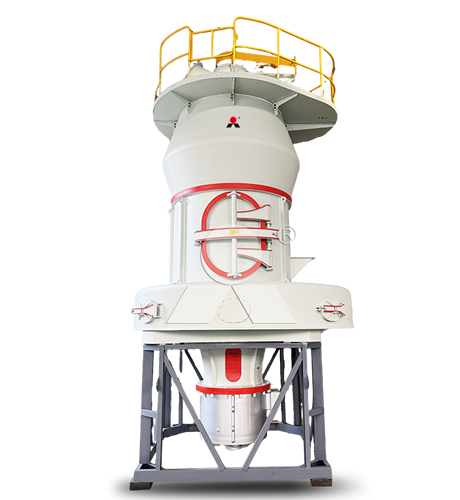
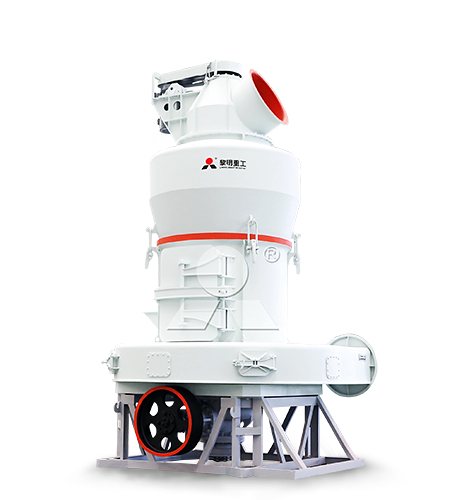
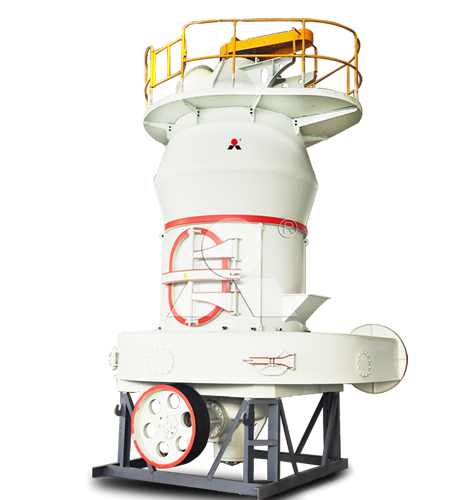
We are Liming Heavy Industry, a manufacturer of various types of industrial crushers, such as Raymond Mill, Trapezoidal Mill, Vertical Mill, Ultrafine Mill, Ball Mill, etc.
Our mills can process the following minerals:
limestone, quicklime, kaolin, talc, barite, bentonite, calcium carbonate, dolomite, coal, gypsum, clay, carbon black, slag, cement raw materials, cement clinker, etc.
If you need a mill to process stone or minerals into powder, please feel free to contact me (WhatsApp: +8615333807511). Thank you.
Bentonite grinding for drilling fluids is a controlled mineral-processing operation that prepares clay powder for mud systems used in oil, gas, water-well, horizontal directional drilling, and foundation projects. The finished powder must disperse rapidly in water, develop useful viscosity, suspend cuttings, reduce fluid loss, and help stabilize the borehole.
Grinding fineness matters, but it is only one part of bentonite quality. A dependable drilling-grade product also depends on the mineral’s montmorillonite content, sodium or calcium form, swelling behavior, moisture level, particle-size distribution, and laboratory-measured fluid performance. The grinding line must protect these properties while producing dry, uniform powder that is easy to store, transport, and mix into drilling fluid.
Why Bentonite Is Used in Drilling Fluids
Bentonite is a clay mineral dominated by montmorillonite. When suitable bentonite contacts water, its layered particles hydrate, swell, and disperse to form a thixotropic suspension. This behavior gives drilling fluids the ability to carry cuttings during circulation while maintaining enough gel strength to suspend solids when pumping stops.
In a water-based drilling fluid, properly processed bentonite can contribute to viscosity, suspension, filtration control, and wellbore-wall support. The hydration and swelling properties of montmorillonite are central to its effectiveness in drilling operations.
| Drilling-Fluid Function | Contribution of Bentonite Powder | Processing Requirement |
|---|---|---|
| Cuttings transport | Creates sufficient viscosity and gel structure to carry drilled solids toward the surface. | Uniform fineness and effective dispersion in water. |
| Suspension during static periods | Helps keep drill cuttings and added weighting minerals suspended when circulation slows or stops. | Stable clay performance and controlled particle-size distribution. |
| Filtration control | Helps form a filter cake on the borehole wall and reduces fluid loss into permeable formations. | Fine, properly hydrated clay particles with consistent mineral quality. |
| Wellbore stability | Supports the borehole wall and helps reduce sloughing or collapse in suitable formations. | Reliable hydration, gel strength, and low contamination. |
| Lubrication and cooling support | Contributes to a stable fluid system that assists bit cooling and reduces friction. | Consistent powder quality and predictable slurry behavior. |
Not every bentonite deposit is equally suitable for drilling-fluid production. Sodium bentonite generally has stronger swelling and hydration capacity in fresh water than calcium bentonite. Calcium bentonite may require activation or other treatment when it is intended for demanding water-based drilling-fluid applications. Raw-clay selection should therefore be based on laboratory performance testing, not visual appearance alone.
Key Quality Targets
Drilling-grade bentonite is evaluated by functional performance in a prepared suspension as well as by physical powder properties. Typical tests examine rheology, filtrate volume, wet-screen residue, and moisture. The exact target should be agreed with the end user and verified against the applicable specification for the intended drilling application.
For untreated bentonite used in oil-well drilling fluids, commonly referenced API 13A targets include a minimum 600 rpm viscometer dial reading of 30, a yield-point-to-plastic-viscosity ratio of no more than 3, a filtrate volume of no more than 15.0 cm3, wet-screen residue above 75 μm of no more than 4.0% by mass, and moisture of no more than 12.0% by mass.
| Quality Parameter | Typical Drilling-Grade Target | Importance During Processing |
|---|---|---|
| 600 rpm viscometer reading | Minimum 30 for commonly referenced untreated drilling bentonite | Indicates the clay’s ability to develop viscosity in the test suspension. |
| Yield point / plastic viscosity ratio | Maximum 3 | Helps assess the flow and suspension behavior of the prepared fluid. |
| Filtrate volume | Maximum 15.0 cm3 | Measures the clay’s contribution to filtration control and filter-cake formation. |
| Residue above 75 μm | Maximum 4.0% by mass | Limits coarse particles that hydrate poorly and can reduce slurry uniformity. |
| Moisture content | Maximum 12.0% by mass | Supports stable storage, free powder flow, accurate dosing, and reliable packing. |
A mill can reduce particle size, but it cannot create swelling capacity in a low-quality clay. If the raw bentonite has insufficient montmorillonite content, weak hydration behavior, or unsuitable exchangeable cations, a finer powder alone will not deliver the required drilling-fluid performance.
Dry Processing Route
Dry processing is commonly used for suitable bentonite ore intended for drilling-fluid powder. The line is designed to reduce moisture, break down clay lumps, control final fineness, remove oversize material, and send the finished powder to storage or packing equipment without unnecessary contamination.
Raw bentonite receiving and sampling. The plant receives bentonite from the mine or stockpile and takes representative samples for moisture, mineral composition, swelling behavior, rheology, and filtration tests. Different clay layers or mine areas should be identified and stored separately until their performance is confirmed.
Natural drying or low-temperature drying. Bentonite often contains significant moisture and has a strong tendency to agglomerate. Suitable raw material can be sun-dried or treated with low-temperature drying before fine grinding. Controlled drying is important because excessive moisture may block material flow, while excessive heat can negatively affect clay properties.
Crushing and feed preparation. Dried bentonite lumps are crushed to a stable size suitable for mill feeding. A uniform feed helps maintain constant grinding conditions and reduces fluctuations in finished-powder fineness.
Grinding and air classification. The prepared material enters the grinding mill, where it is reduced into powder. Air classification separates qualified fine powder from coarse particles. Oversize material returns to the grinding zone, while finished powder moves to the collection system.
Powder collection and storage. A pulse dust collector recovers fine bentonite powder from the process air. The powder is transferred to a sealed finished-product silo before bulk loading, big-bag filling, or small-bag packing.
Batch testing and release. Each finished batch should be checked for moisture, residue, rheology, filtration behavior, and other agreed properties before dispatch. This is essential because bentonite performance depends on both mineral quality and the stability of the processing conditions.
For suitable sodium bentonite, Liming Heavy Industry describes a dry route based on low-temperature or natural drying, crushing, and grinding into 100–325 mesh powder.
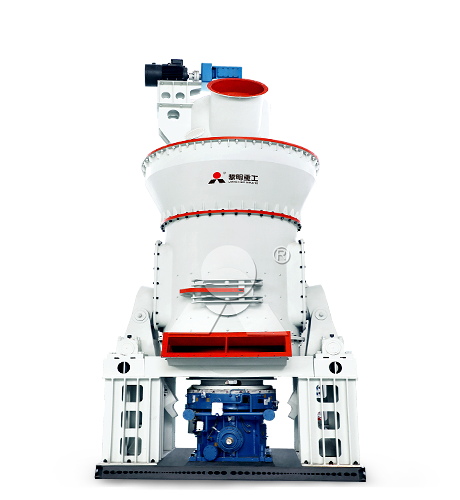
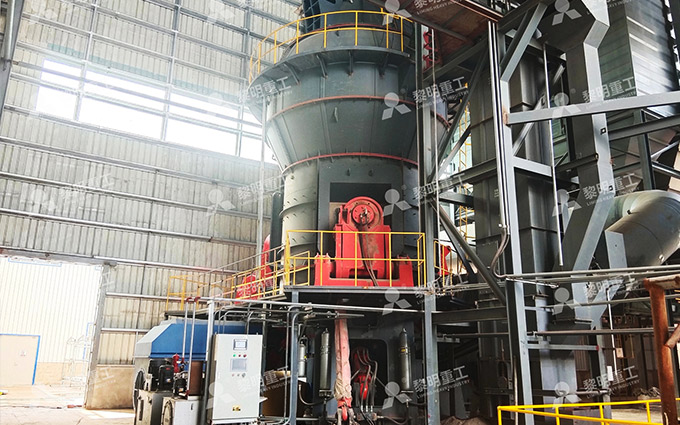
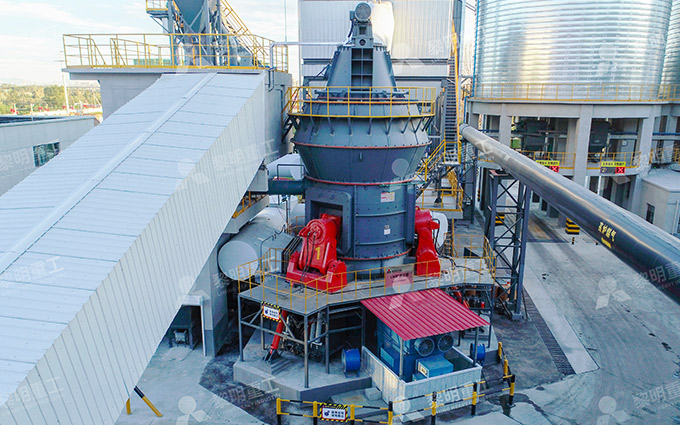
LM Vertical Roller Mill for Large Output
The LM Vertical Roller Mill is suitable for large-scale bentonite powder production where integrated drying, grinding, classification, and conveying are required. Bentonite can present handling challenges because it may contain moisture, form agglomerates, and include abrasive silica-bearing components. An integrated vertical-mill system can reduce intermediate transfers while providing controlled thermal and grinding conditions.
In this process, prepared bentonite is fed onto the grinding table. Rollers apply pressure to grind the material, while airflow carries the fine powder upward to the separator. Qualified powder proceeds to the collection system, and coarse material returns to the grinding zone for further processing. Hot air can be used to assist drying when feed moisture requires it.
The LM vertical-mill design integrates drying, grinding, powder selection, and conveying. It also provides a short material residence time, stable finished-product quality, and a narrow particle-size distribution under appropriate operating conditions.
For a high-capacity drilling-bentonite plant, the LM Vertical Roller Mill is particularly suitable when the project requires continuous production, a compact process layout, centralized control, and sufficient drying capability for variable raw-material moisture. Liming Heavy Industry has cited an LM22-2K bentonite project in Indonesia operating at 30 t/h with a 150–200 mesh finished-product target.
MTW European Grinding Mill for Flexible Production
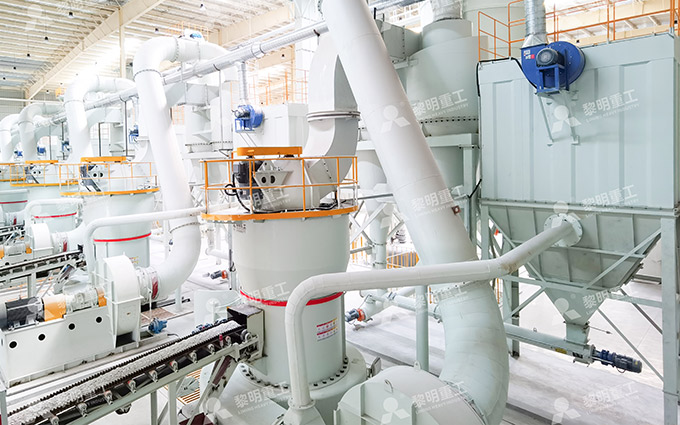
The MTW European Grinding Mill is suitable for bentonite plants requiring flexible production capacity and controlled fine-powder output. It uses a roller-and-ring grinding structure with an air-classification system. Prepared bentonite is fed evenly into the grinding chamber, ground between the rollers and ring, lifted by airflow, and separated according to the required fineness.
Fine powder passing through the classifier is collected by the dust-removal system. Coarse particles return to the grinding chamber for additional size reduction. This closed-circuit arrangement helps control the coarse fraction and supports more stable finished-product quality.
The MTW European Grinding Mill is appropriate for regional drilling-fluid powder plants, projects with moderate output requirements, or operations that need flexible scheduling for different bentonite grades. Its stated finished-powder range is 12–325 mesh, allowing the line to be configured for common drilling-bentonite fineness targets.
| Selection Factor | LM Vertical Roller Mill | MTW European Grinding Mill |
|---|---|---|
| Suitable production scale | Large-capacity, continuous bentonite powder production. | Flexible small-to-medium capacity production. |
| Process integration | Combines drying, grinding, classification, and conveying in one central system. | Combines roller-and-ring grinding with air classification and powder collection. |
| Feed-moisture handling | Suitable for projects requiring integrated drying capability. | Best suited to properly prepared feed; a hot-air system can be added as needed. |
| Plant arrangement | Suitable for centralized production with a compact integrated layout. | Suitable for practical regional plants with conventional crushing, milling, collection, and packing sections. |
| Main operating focus | Thermal balance, stable mill loading, airflow, and internal separation. | Feed uniformity, roller-and-ring condition, classifier setting, and air-volume balance. |
Protecting Bentonite Performance
Grinding conditions must be selected carefully because bentonite is not processed only for appearance or mesh number. The final powder must still hydrate effectively when mixed into water. A very coarse powder may hydrate slowly and leave excessive material on the wet screen. An excessively fine powder may increase water demand, create unnecessary viscosity, and make fluid control more difficult.
The operating target should therefore be determined through milling trials and drilling-fluid laboratory tests. The plant should test the powder’s actual suspension behavior rather than assuming that a finer product always provides better performance.
Control feed moisture: Maintain stable moisture before milling to prevent agglomeration, feeding problems, and inconsistent fineness.
Avoid raw-material mixing: Keep bentonite from different deposits or quality levels separate until blending ratios are verified by laboratory testing.
Use stable feed rates: Even feeding helps maintain consistent grinding pressure, mill load, airflow, and separator performance.
Monitor coarse residue: Wet-screen residue above 75 μm is a direct indicator of whether the grinding and classification system is controlling oversize material.
Prevent unnecessary overgrinding: Excessively aggressive grinding can increase ultrafine content and alter hydration behavior in the drilling-fluid formulation.
Manage process temperature: Use only the drying temperature needed to obtain free-flowing powder and avoid excessive heat exposure.
Maintain clean conveying: Enclosed transfer equipment, sealed silos, and efficient dust collection help prevent moisture pickup and cross-contamination.
Verify each batch: Test rheology, filtrate volume, moisture, and particle-size-related residue before product release.
A properly designed bentonite grinding line can produce drilling-fluid powder with stable fineness, controlled moisture, and dependable suspension performance. For high-output plants requiring integrated drying and grinding, the LM Vertical Roller Mill provides a suitable process route. For flexible-capacity projects requiring controlled fine powder, the MTW European Grinding Mill offers a practical solution.
The final equipment configuration should always be based on representative bentonite testing, expected production capacity, moisture conditions, required powder grade, and drilling-fluid performance results. This approach helps ensure that the processed bentonite performs reliably after it reaches the mixing tank and enters the drilling-fluid system.