Oil & Gas Mineral Processing
Particle Size in Drilling Mineral Powders
2026-09-14 17:29:26
We are Liming Heavy Industry, a manufacturer of various types of industrial crushers, such as Raymond Mill, Trapezoidal Mill, Vertical Mill, Ultrafine Mill, Ball Mill, etc.
Our mills can process the following minerals:
limestone, quicklime, kaolin, talc, barite, bentonite, calcium carbonate, dolomite, coal, gypsum, clay, carbon black, slag, cement raw materials, cement clinker, etc.
If you need a mill to process stone or minerals into powder, please feel free to contact me (WhatsApp: +8615333807511). Thank you.
Particle size is a critical quality parameter for mineral powders used in drilling fluids. It affects how readily a powder disperses, whether particles remain suspended during circulation, how much the fluid viscosity changes, and whether a material can bridge pores, fractures, or loss zones.
There is no single “best” fineness for drilling minerals. Barite, hematite, bentonite, and calcium carbonate each require a different particle-size distribution because they perform different functions in the drilling-fluid system. The right target is the distribution that delivers the intended weighting, suspension, filtration, or bridging performance under actual well conditions.
Why Distribution Matters
Average particle size alone does not describe a drilling mineral powder well enough. Two products can have the same nominal mesh value but behave differently because one contains too many coarse particles and the other contains too many ultrafines.
Coarse particles can settle more quickly, particularly in static fluid, low-shear zones, deviated wells, or extended-reach drilling sections. Excessive ultrafine particles have a larger total surface area and can increase liquid demand, plastic viscosity, gel strength, or chemical-treatment requirements. A controlled particle-size distribution balances these effects.
| Particle-Size Condition | Potential Effect in Drilling Fluid | Processing Response |
|---|---|---|
| Too coarse | More rapid settling, unstable mud density, poor dispersion, abrasive oversize particles, and uneven filter-cake formation. | Improve crushing, stabilize mill feed, inspect grinding parts, and increase classification efficiency. |
| Too fine | Higher surface area, increased viscosity, higher chemical demand, slower mixing, and possible rheology-control difficulties. | Avoid overgrinding; review separator settings, airflow, mill loading, and particle residence time. |
| Wide uncontrolled distribution | Inconsistent performance from batch to batch and reduced predictability in fluid formulation. | Use closed-circuit grinding, stable feeding, regular sampling, and routine particle-size testing. |
| Designed multi-grade distribution | Improved bridging and sealing performance in porous, fractured, or loss-prone formations. | Produce separate fine, medium, and coarse fractions, then blend them in controlled proportions. |
Barite Particle-Size Control
Barite is mainly used to increase drilling-fluid density. It must be fine enough to disperse well and remain suspended as effectively as possible, but it must not contain too much ultrafine material that would unnecessarily increase fluid viscosity.
For conventional drilling-grade barite, API Specification 13A limits the fraction retained above 75 μm to 3% by mass and limits particles below 6 μm to 30% by mass. This means that at least about 67% of the powder is typically within the useful 6–75 μm range.
| Barite Particle-Size Parameter | Typical Requirement | Meaning for Production |
|---|---|---|
| Particles above 75 μm | Maximum 3% by mass | The mill and classifier must prevent excessive coarse particles from reaching the finished-product silo. |
| Particles below 6 μm | Maximum 30% by mass | The plant must avoid excessive overgrinding and maintain a balanced fine fraction. |
| Useful main particle range | Approximately 6–75 μm | Provides a practical balance between dispersion, suspension, and drilling-fluid rheology. |
| Nominal market grade | Often described as 200 mesh or similar | A mesh label is not enough; the complete distribution must be verified by testing. |
A barite plant should not attempt to solve every coarse-residue problem by simply increasing grinding pressure or extending grinding time. That approach may reduce oversize particles but create too much powder below 6 μm. The better method is to control feed size, feed rate, grinding intensity, airflow, classifier setting, and coarse-material recirculation together.
Hematite Particle-Size Control
Hematite is a high-density iron oxide used as a weighting material when drilling-fluid systems require higher density or reduced solids volume. Because hematite is denser than barite, its particle-size distribution must be controlled carefully to limit settling while avoiding excessive ultrafines that may increase rheological demand.
Commonly referenced drilling-grade hematite limits include no more than 1.5% by mass above 75 μm, no more than 15% by mass above 45 μm, and no more than 15% by mass below 6 μm. These limits indicate that at least about 70% of hematite particles should fall within the 6–45 μm range.
| Hematite Particle-Size Parameter | Typical Requirement | Importance in High-Density Fluids |
|---|---|---|
| Particles above 75 μm | Maximum 1.5% by mass | Limits oversize particles with stronger settling tendency. |
| Particles above 45 μm | Maximum 15% by mass | Controls the upper section of the particle-size distribution more tightly than barite. |
| Particles below 6 μm | Maximum 15% by mass | Prevents excessive ultrafines from increasing viscosity and treatment demand. |
| Main working particle range | Approximately 6–45 μm | Helps balance weighting efficiency, suspension behavior, and manageable fluid rheology. |
Because hematite ore can be abrasive, wear of rollers, grinding rings, grinding-table liners, classifier components, and ductwork should be inspected regularly. Worn parts can change the grinding and classification balance, causing particle-size drift even when the operating settings remain unchanged.
Bentonite Particle Size and Hydration
Bentonite plays a different role from barite and hematite. It is used mainly to develop viscosity, gel strength, suspension capacity, and filtration control. For bentonite, the ability to hydrate and form a stable clay suspension is as important as the dry powder size.
Coarse bentonite particles hydrate more slowly and may leave too much residue in wet-screen testing. Excessively fine bentonite can hydrate very quickly and increase water demand or make fluid rheology more difficult to control. The correct fineness should therefore be established through drilling-fluid tests rather than by selecting the finest possible powder.
For commonly referenced untreated drilling-grade bentonite, the wet-screen residue above 75 μm is limited to 4% by mass. The standard also evaluates the performance of a prepared bentonite suspension through rheological and filtration tests, so particle-size control must be considered together with viscosity, yield point, and filtrate volume.
| Bentonite Processing Factor | Effect on Drilling Performance | Control Approach |
|---|---|---|
| Coarse residue above 75 μm | Can reduce dispersion speed and leave poorly hydrated material in the fluid. | Use effective grinding and classification while avoiding unnecessary overprocessing. |
| Very fine fraction | Can increase hydration speed, surface area, fluid viscosity, and water demand. | Establish the target through laboratory rheology and filtration testing. |
| Moisture before milling | High moisture can cause agglomeration, unstable feeding, and uneven product fineness. | Use controlled low-temperature drying and maintain stable feed conditions. |
| Mineral quality | Montmorillonite content and sodium-calcium balance strongly influence hydration behavior. | Test raw clay before grinding and separate different ore grades. |
Calcium Carbonate Size Grades
Calcium carbonate is used differently from weighting minerals. It is commonly used as an acid-soluble bridging material for seepage-loss control, filter-cake building, lost-circulation treatments, reservoir drilling, completion fluids, and workover fluids. Its particle-size distribution should match the size of pores, fractures, or voids that need to be sealed.
Fine calcium carbonate fills smaller pores and spaces between larger particles. Medium material supports bridging across moderate openings. Coarse calcium carbonate creates the initial bridge across larger fractures and vugs. In many drilling programs, these grades are blended to create a denser and more effective loss-control structure.
| Calcium Carbonate Grade | Typical D50 Range | Typical Application |
|---|---|---|
| Ultra-fine | Approximately 1–8 μm | Fine pore sealing and very fine filter-cake applications. |
| Extra-fine | Approximately 10–30 μm | Fine bridging and packing between larger particles. |
| Fine | Approximately 40–60 μm | Seepage-loss control and fine bridging in permeable formations. |
| Medium | Approximately 130–170 μm | Bridging of medium-sized pores and fractures. |
| Coarse | Approximately 250–350 μm | Initial bridging across larger openings and loss zones. |
| Very coarse | Approximately 450–550 μm or more | Large fractures, vugs, and severe lost-circulation conditions. |
Commercial calcium carbonate drilling grades may range from about 35 μm to 550 μm, with custom grades available for specific loss-control applications. Some suppliers describe fine grades around 40–60 μm D50, medium grades around 130–170 μm D50, and coarse grades around 250–350 μm D50.
Unlike fine barite or hematite, medium and coarse calcium carbonate should not be overground. Their larger particle sizes are necessary for bridging. A calcium carbonate plant should therefore use crushing and screening to produce coarse and medium grades, while fine powder is produced through controlled grinding and air classification.
Grinding and Classification Control
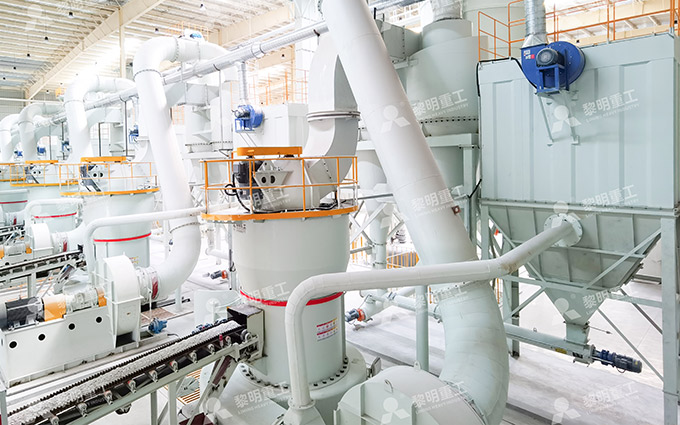
Particle size is controlled by the complete process, not by the grinding mill alone. The crusher establishes feed size, the feeder stabilizes mill loading, the grinding zone reduces particles, the classifier separates qualified material, the dust collector recovers fines, and storage systems protect each product grade from contamination.
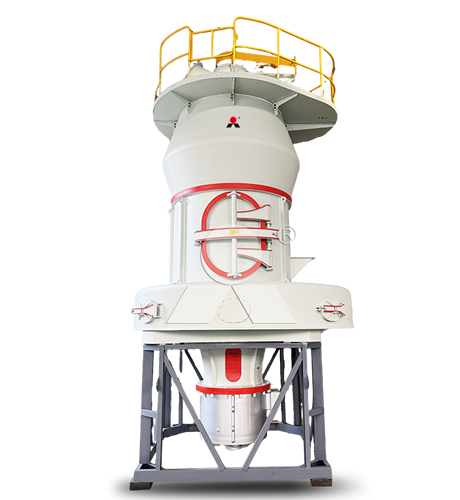
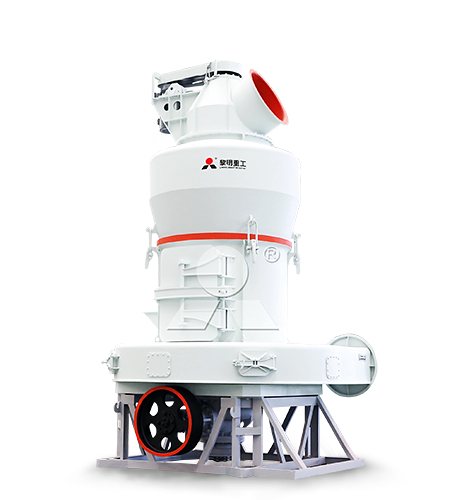
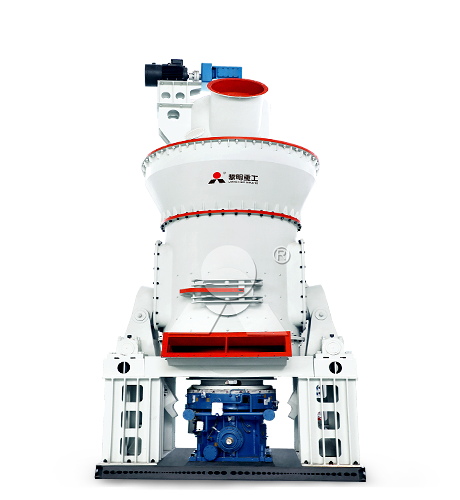
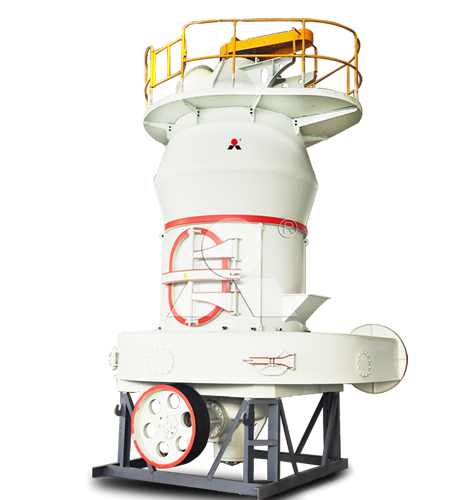
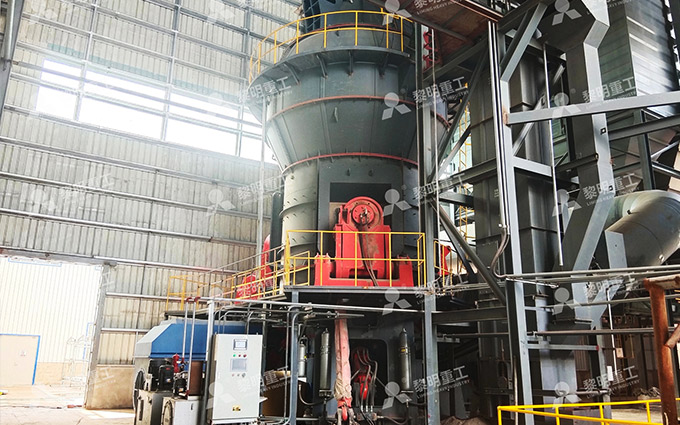
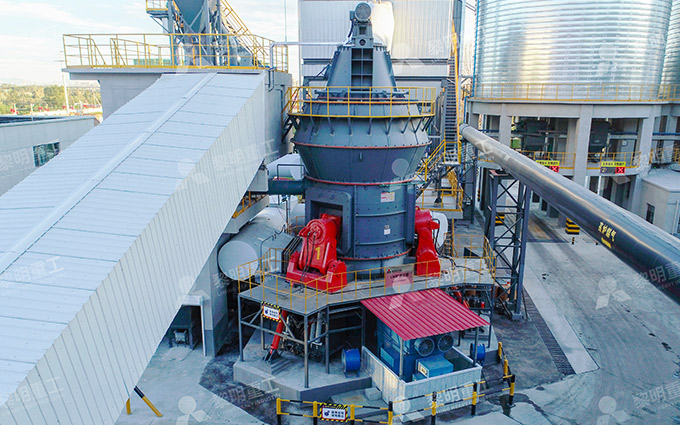
For fine drilling minerals such as barite, hematite, and bentonite, the LM Vertical Roller Mill and MTW European Grinding Mill can be configured with closed-circuit classification. In this arrangement, particles that meet the target size move to the finished-product collection system, while coarse particles return for further grinding.
The LM Vertical Roller Mill is suitable for large-scale lines requiring integrated drying, grinding, classification, and pneumatic conveying. The MTW European Grinding Mill is suitable for flexible-capacity projects requiring controlled fine powder through roller-and-ring grinding and air classification. For calcium carbonate, these mills should be used mainly for fine grades; medium and coarse drilling grades should be produced through dedicated crushing and screening circuits.
Use representative samples: Test raw mineral properties before finalizing the mill configuration and particle-size target.
Maintain stable feeding: A consistent feed rate helps stabilize grinding pressure, airflow, classifier performance, and finished-powder quality.
Control feed moisture: Moisture affects material flow, grinding efficiency, classification, dust collection, and product storage.
Adjust the classifier by test results: Use sieve analysis and particle-size data rather than nominal mesh labels alone.
Inspect wear parts: Worn grinding and classification components can increase coarse residue or create excessive fines.
Separate product grades: Store fine, medium, and coarse calcium carbonate in separate silos or packing lines.
Verify every batch: Measure the required coarse fraction, fine fraction, moisture, density, and functional properties before dispatch.
Correct particle-size control allows drilling mineral powders to perform their intended role: barite and hematite provide stable weighting, bentonite develops controlled hydration and suspension, and calcium carbonate creates effective acid-soluble bridging. The processing target should always be based on the mineral type, the drilling-fluid formulation, and the formation conditions rather than on mesh number alone.