Oil & Gas Mineral Processing
Barite vs Hematite for Drilling Fluid Weighting
2026-09-14 17:30:22
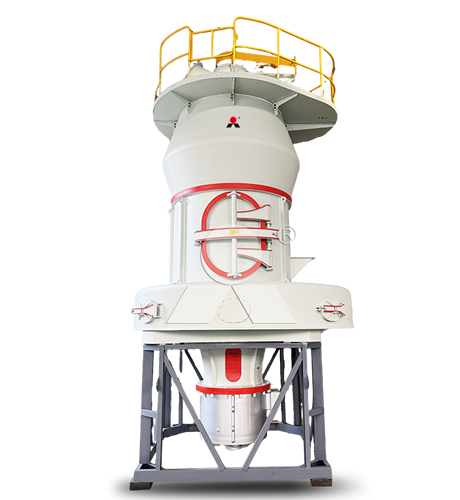
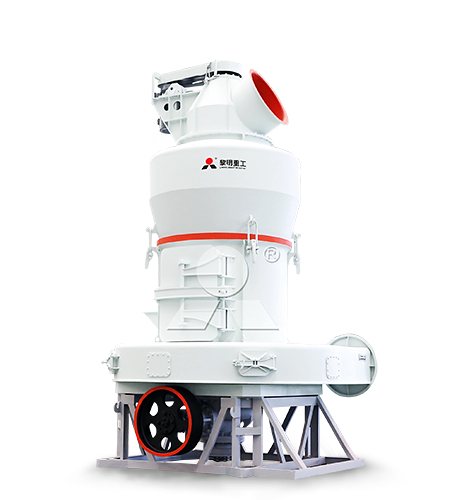
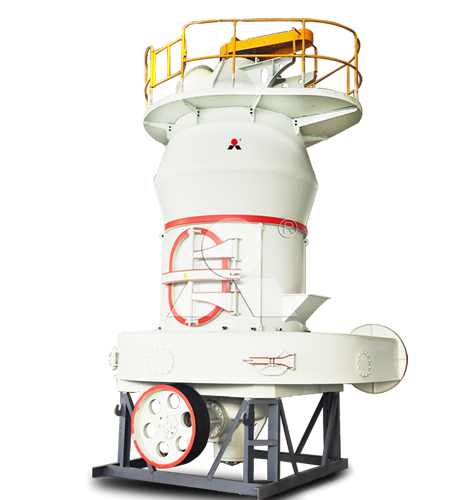
We are Liming Heavy Industry, a manufacturer of various types of industrial crushers, such as Raymond Mill, Trapezoidal Mill, Vertical Mill, Ultrafine Mill, Ball Mill, etc.
Our mills can process the following minerals:
limestone, quicklime, kaolin, talc, barite, bentonite, calcium carbonate, dolomite, coal, gypsum, clay, carbon black, slag, cement raw materials, cement clinker, etc.
If you need a mill to process stone or minerals into powder, please feel free to contact me (WhatsApp: +8615333807511). Thank you.
Barite and hematite are both used to increase drilling-fluid density, but they are not interchangeable. Barite is the standard weighting mineral for most drilling programs because it is widely used, less abrasive, and generally easier to manage. Hematite is selected when higher mud density is required with lower weighting-solids volume, particularly in demanding high-pressure and high-temperature wells.
The central difference is density: drilling-grade barite has a minimum specific gravity of 4.20 g/cm3, while hematite has a minimum specific gravity of about 5.05 g/cm3 under API and ISO references. Because hematite is denser, less material volume is needed to reach the same mud weight.
Quick Comparison
| Comparison Item | Barite | Hematite |
|---|---|---|
| Main mineral | Barium sulfate, BaSO4 | Iron oxide, Fe2O3 |
| Minimum specific gravity | 4.20 g/cm3 | About 5.05 g/cm3 |
| Primary role | Standard weighting material for routine drilling-fluid density control. | High-density weighting material for demanding mud-weight requirements. |
| Solids volume at the same mud weight | Higher solids volume is required because barite has lower density. | Lower solids volume is required because hematite is denser. |
| Rheology impact | Generally more familiar and predictable in conventional weighted mud systems. | Can reduce solids volume but may still require careful rheology management. |
| Abrasiveness | Usually less abrasive than hematite. | More abrasive; can increase wear on pumps, drillstring components, and solids-control equipment. |
| Typical use range | Most conventional weighted water-based and oil-based drilling fluids. | High-density, high-pressure, high-temperature, and selected oil-based fluid systems. |
| Process priority | Control particles above 75 μm and avoid excessive material below 6 μm. | Use tighter particle-size control, low moisture, and wear-resistant processing equipment. |
In a laboratory comparison using equal mass additions of weighting materials, 300 g of barite with a specific gravity of 4.3 occupied about 69.8 cm3, while 300 g of hematite with a specific gravity of 5.0 occupied 60 cm3. The hematite-weighted fluid reached 14.0 lb/gal, compared with 13.66 lb/gal for the barite-weighted fluid in that test.
When Barite Is Preferred
Barite is the practical first choice for most drilling-fluid weighting applications. It is the most common weighting material in drilling operations and is widely available in standardized drilling grades. Its established use means many drilling-fluid systems, field procedures, mixing practices, and quality-control methods are already built around barite.
Barite is especially suitable where the target mud density can be reached without excessive solids loading. It is commonly used in conventional water-based and oil-based mud systems because it provides effective density control with familiar fluid behavior.
Routine density control: Barite is generally suitable for normal and moderately weighted drilling fluids.
Established fluid programs: It works well where the drilling-fluid formulation, solids-control equipment, and field operating procedures are designed around barite.
Lower equipment wear: Compared with hematite, barite usually presents a lower abrasion burden on pumps and fluid-handling equipment.
Predictable supply planning: Barite is commonly used across the drilling industry and is available in standardized drilling-fluid grades.
Moderate mud weights: It is normally preferred where the required density does not create an unmanageable solids-volume fraction.
Barite remains the most common drilling-fluid weighting agent and has a minimum required specific gravity of 4.20 g/cm3.
When Hematite Is Preferred
Hematite becomes more attractive as the required mud density rises. Its higher density means that a smaller volume of hematite is needed to achieve the same mud weight. This can help reduce total weighting-solids volume, which is particularly important when high solids loading would otherwise increase plastic viscosity, equivalent circulating density, and pumping difficulty.
Hematite is therefore relevant in high-pressure formations, deep wells, high-temperature environments, and high-density oil-based mud systems. SLB notes that hematite is frequently used in high-density oil-base muds and that fluids weighted with its hematite product contain fewer solids by volume than comparable barite-weighted fluids.
High mud-weight targets: Hematite can support higher-density drilling fluids where barite would require excessive solids volume.
HPHT drilling: It is a relevant option for high-pressure, high-temperature wells requiring stronger hydrostatic pressure control.
Solids-volume reduction: A higher-density mineral can reduce the volume of weighting solids required to reach a given mud density.
Oil-based systems: Hematite is frequently used in high-density oil-based drilling fluids.
Specialized fluid design: It is suitable where the drilling-fluid program has been engineered specifically for hematite-based weighting.
A practical industry rule is that barite remains the usual choice at lower and moderate mud weights, while hematite becomes more useful as the target approaches the range where barite solids significantly increase viscosity and create operational limits. One recent field-oriented analysis places that transition broadly around 18–20 lb/gal and identifies hematite as especially advantageous above about 22 lb/gal; the exact point depends on fluid type, temperature, solids-control efficiency, and the required rheology.
Rheology and Operational Tradeoffs
Higher density does not automatically mean easier fluid management. Hematite can reduce the volume of weighting material required, but its particle characteristics and interaction with the base fluid can still affect rheology. The drilling-fluid formulation should be tested with the actual hematite product before field use.
In one experimental study, barite-weighted drilling fluid showed an apparent viscosity of 44.3 cP, while the hematite-weighted formulation showed 49.45 cP. The hematite system also recorded a higher plastic viscosity of 36.6 cP, compared with a 27–30 cP range reported for the barite, ilmenite, and Micromax formulations in that study. These results do not mean hematite always produces higher viscosity; they show why the complete fluid formulation and actual powder particle-size distribution must be evaluated together.
| Operational Factor | Barite Consideration | Hematite Consideration |
|---|---|---|
| Equivalent circulating density | May rise as greater solids volume is needed at high mud weights. | Lower solids volume can help manage the density contribution of weighting solids. |
| Plastic viscosity | Usually manageable in conventional formulations but can rise sharply at very high mud weights. | Must be tested carefully because powder properties and fluid chemistry can influence viscosity. |
| Settling and sag control | Requires correct particle-size distribution and fluid rheology, especially in deviated wells. | Higher-density particles require careful suspension design, particle-size control, and circulation management. |
| Equipment wear | Typically lower abrasive wear. | Higher abrasion can increase wear on pumps, valves, drillstring components, and solids-control equipment. |
| Fluid conversion | Commonly used as the original weighting material in standard mud programs. | Best planned as part of the original fluid design rather than added without full laboratory evaluation. |
Hematite’s higher density also increases the importance of particle-size control. Oversized particles settle more easily, while excessive ultrafines can increase surface area and treatment demand. Efficient solids control, stable rheology, and the correct particle-size distribution are essential in both barite- and hematite-weighted fluids.
Processing Requirements
Both minerals require dry grinding, classification, dust collection, and batch testing, but hematite processing typically demands greater attention to abrasion resistance. Hematite feed may contain quartz or other hard gangue minerals, which can accelerate wear of crushers, grinding components, classifiers, ducts, and conveying equipment.
| Processing Item | Barite Powder Line | Hematite Powder Line |
|---|---|---|
| Raw-material control | Confirm specific gravity, BaSO4 content, moisture, and impurity level. | Confirm specific gravity, Fe2O3 content, silica level, moisture, and abrasive gangue content. |
| Particle-size objective | Control coarse residue above 75 μm and excessive material below 6 μm. | Use a narrower controlled distribution to reduce settling and manage high-density powder behavior. |
| Wear protection | Important, particularly where quartz-bearing impurities are present. | Critical because iron oxide and associated gangue can be highly abrasive. |
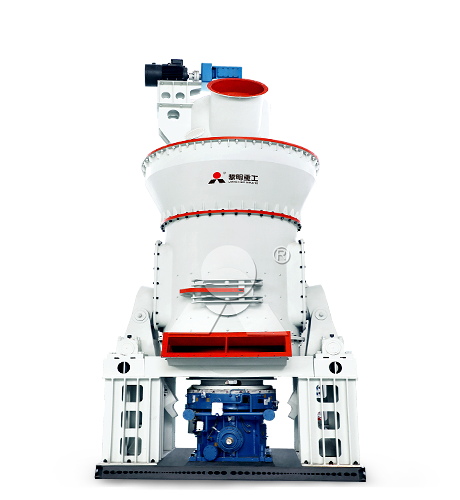
| Grinding equipment | LM Vertical Roller Mill for large-scale integrated production or MTW European Grinding Mill for flexible capacity. | LM Vertical Roller Mill for high-throughput integrated processing or MTW European Grinding Mill for flexible output, with wear-resistant configuration based on ore testing. |
| Final quality checks | Specific gravity, moisture, particle-size distribution, 75 μm residue, ultrafine fraction, and soluble components. | Specific gravity, Fe2O3 content, moisture, particle-size distribution, coarse residue, fine fraction, and soluble components. |
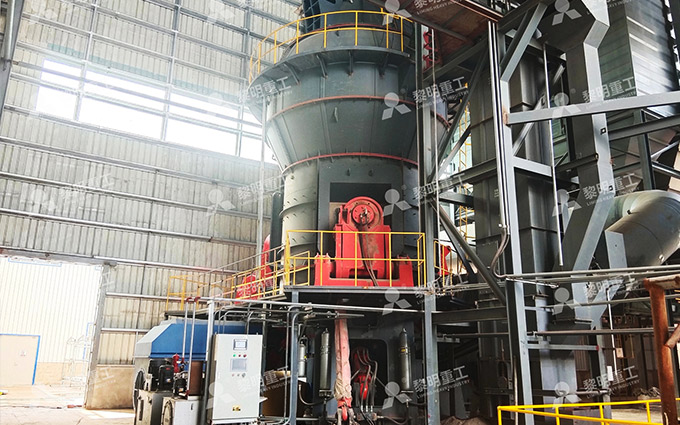
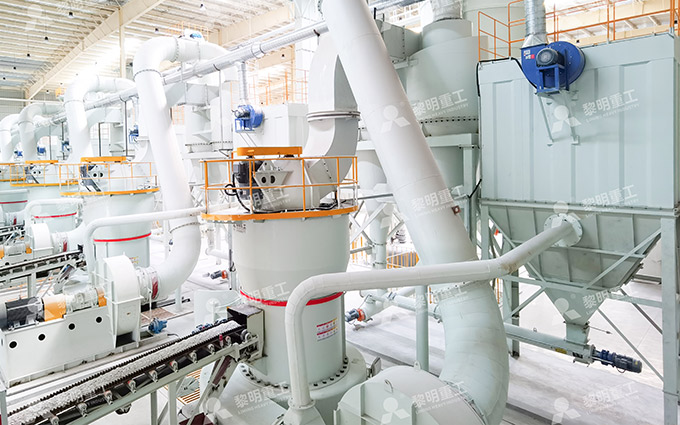
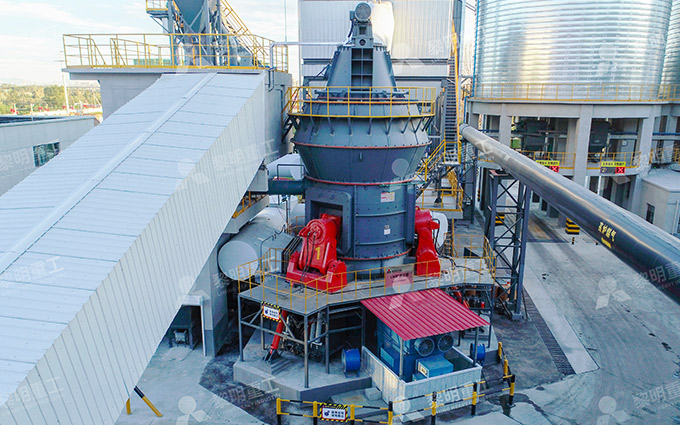
For high-output mineral powder plants, the LM Vertical Roller Mill can provide integrated drying, grinding, classification, and pneumatic conveying. For flexible-capacity production, the MTW European Grinding Mill provides roller-and-ring grinding with air classification and powder collection. In either case, the grinding and separator settings should be validated using representative ore samples and final drilling-fluid laboratory tests.
Selection Guidance
Choose barite when the drilling-fluid program requires standard weighting performance, manageable mud density, familiar rheology, and lower abrasive wear. It remains the preferred material for most conventional drilling operations.
Choose hematite when the target fluid density is high enough that barite would require excessive solids volume, or when the drilling-fluid design specifically prioritizes high-density weighting with reduced solids volume. Plan for more rigorous wear management, tighter particle-size control, and full laboratory testing of the complete fluid system.
The most reliable decision comes from a combined evaluation of target mud weight, base-fluid type, temperature, well trajectory, solids-control capacity, available weighting-material quality, required particle-size distribution, and the expected cost of fluid treatment and equipment wear. Barite is usually the baseline choice; hematite is the higher-density option for conditions where that additional density provides a clear operational advantage.