Oil & Gas Mineral Processing
Drilling Mineral Powder Production Line
2026-09-14 17:31:35
We are Liming Heavy Industry, a manufacturer of various types of industrial crushers, such as Raymond Mill, Trapezoidal Mill, Vertical Mill, Ultrafine Mill, Ball Mill, etc.
Our mills can process the following minerals:
limestone, quicklime, kaolin, talc, barite, bentonite, calcium carbonate, dolomite, coal, gypsum, clay, carbon black, slag, cement raw materials, cement clinker, etc.
If you need a mill to process stone or minerals into powder, please feel free to contact me (WhatsApp: +8615333807511). Thank you.
A drilling mineral powder production line converts selected ores and industrial minerals into controlled products for drilling, drill-in, completion, and workover fluids. The line may process barite for mud weighting, hematite for high-density fluids, bentonite for viscosity and filtration control, and calcium carbonate for acid-soluble bridging and lost-circulation treatment.
The right production line is built around the function of the finished mineral powder. A plant that only pursues high output or a nominal mesh number may not deliver stable drilling-fluid performance. The process must control mineral quality, density, particle-size distribution, moisture, impurities, packaging, and batch traceability from raw ore receiving to final dispatch. API Specification 13A covers physical properties and test procedures for drilling-fluid materials including barite, hematite, bentonite, attapulgite, and sepiolite.
Four Main Product Groups
| Mineral Powder | Main Function in Drilling Fluids | Key Production Priority |
|---|---|---|
| Barite powder | Raises drilling-fluid density and helps balance formation pressure. | High specific gravity, controlled fine-particle distribution, low moisture, and stable batch density. |
| Hematite powder | Provides high-density weighting for demanding mud-weight requirements. | High Fe2O3 content, high specific gravity, abrasion-resistant equipment, and narrow particle-size control. |
| Bentonite powder | Develops viscosity, gel strength, suspension capacity, and filtration control. | Montmorillonite quality, controlled drying, effective hydration performance, and limited coarse residue. |
| Calcium carbonate powder | Provides acid-soluble bridging and fluid-loss control in drilling and reservoir applications. | High acid solubility and separate fine, medium, and coarse particle-size grades. |
These minerals cannot be processed using exactly the same settings. Barite and hematite require controlled fine grinding for weighting applications. Bentonite requires fine grinding that preserves hydration and suspension performance. Calcium carbonate may require several size grades, so its production line must combine crushing, screening, fine grinding, and controlled blending.
Complete Process Flow
A drilling mineral powder production line normally includes the following process sections:
1. Raw material receiving and testing. Minerals are received from the mine, quarry, stockpile, or supplier and sampled before entering production. The laboratory should verify moisture, chemical composition, density, hardness, particle size, and relevant functional properties. For example, barite requires specific-gravity verification; bentonite requires rheology and filtration testing; calcium carbonate requires acid-solubility and particle-size testing.
2. Raw material storage and grade separation. Different ore sources should be stored separately when their quality differs. Barite from separate mine zones may have different density or barium sulfate content. Bentonite may vary in sodium content, swelling capacity, and moisture. Calcium carbonate may have different purity and acid-solubility performance. Controlled stockpiling makes blending more reliable and improves traceability.
3. Crushing and screening. Large mineral lumps are reduced to a stable size suitable for downstream equipment. Crushing should provide a uniform feed while avoiding unnecessary fines generation, particularly when producing medium or coarse calcium carbonate grades.
4. Drying and moisture control. Wet minerals can block hoppers, conveyors, classifiers, filters, silos, and packing machines. Drying is especially important for bentonite and moisture-bearing barite. The drying method should be selected according to feed moisture, required output, local fuel availability, and the thermal sensitivity of the mineral.
5. Grinding and air classification. Fine mineral powders are produced in a closed circuit. The grinding mill reduces particle size, while the classifier separates qualified powder from oversized particles. Coarse particles return to the mill for further grinding, and qualified powder proceeds to collection.
6. Powder collection and air treatment. A pulse dust collector recovers fine powder from the air stream. This section is essential for product recovery, stable airflow, clean operation, and controlled transfer to the finished-product storage system.
7. Product storage, blending, and dispatch. Finished mineral powders are stored in sealed silos or dedicated product bins. The plant may then load bulk tankers, fill big bags, pack valve bags, or prepare customized blends. Calcium carbonate grades may be blended in defined proportions for specific lost-circulation treatments.
8. Laboratory release and traceability. Each batch should be sampled and tested before delivery. Production records should link the finished product to the raw-material source, processing date, operating conditions, laboratory results, storage silo, and dispatch document.
Recommended Equipment Configuration
| Process Section | Main Equipment | Purpose |
|---|---|---|
| Receiving and storage | Receiving hopper, apron feeder, belt conveyor, raw-material yard, covered storage shed. | Receives mineral feed and maintains separate, traceable stockpiles. |
| Crushing | Jaw crusher, impact crusher, cone crusher, vibrating screen, transfer conveyors. | Reduces ore to the required mill-feed size and removes oversized material. |
| Feed control | Buffer hopper, belt feeder, screw feeder, electromagnetic feeder, weighing system. | Maintains stable and measurable feed to the grinding process. |
| Drying | Hot-air system, hot-blast stove, ductwork, temperature-control equipment. | Reduces feed moisture and supports stable grinding and powder handling. |
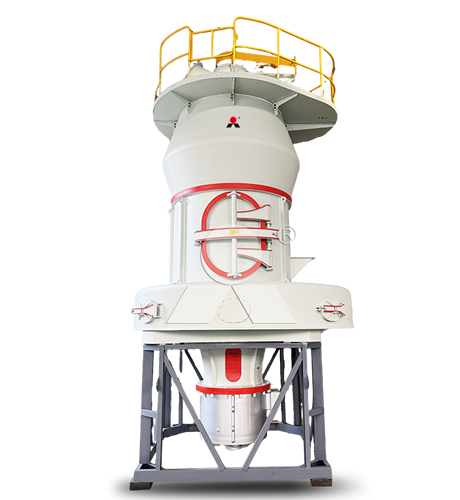
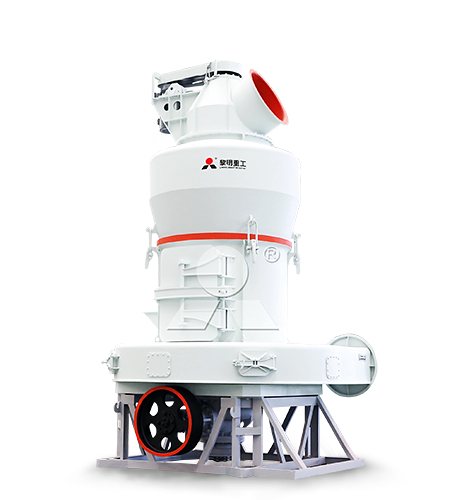
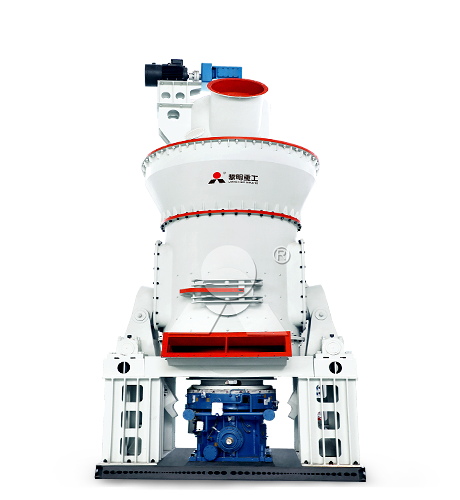
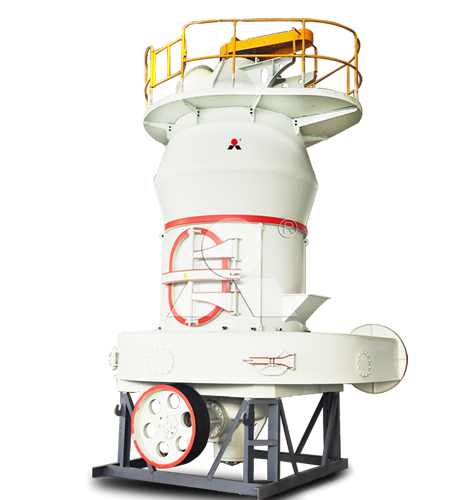
| Fine grinding | LM Vertical Roller Mill or MTW European Grinding Mill. | Produces controlled fine powder for barite, hematite, bentonite, or fine calcium carbonate grades. |
| Classification | Internal separator or air classifier, return-material circuit. | Separates qualified powder from coarse particles returned for regrinding. |
| Powder collection | Pulse dust collector, fan, ducts, rotary valve, screw conveyor. | Collects finished powder and maintains a stable airflow circuit. |
| Medium and coarse calcium carbonate | Crushing circuit, multi-deck vibrating screen, grade bins, conveyors. | Produces bridging grades without unnecessary fine grinding. |
| Finished product | Storage silos, big-bag filler, valve-bag packer, bulk tanker loading station. | Prepares powder for customer delivery and protects each grade from moisture and contamination. |
| Quality control | Sampling station, moisture analyzer, sieves, particle-size analyzer, density-testing equipment, rheology and filtration-testing equipment. | Verifies that finished products meet the required physical and functional properties. |
The final equipment selection should be based on the actual ore sample, not only the material name. Two barite deposits can have different moisture, hardness, density, and impurity content. Two bentonite ores can have very different swelling and rheology performance. The production line should therefore be sized and configured according to laboratory results and representative grinding trials.
LM Vertical Roller Mill Solution
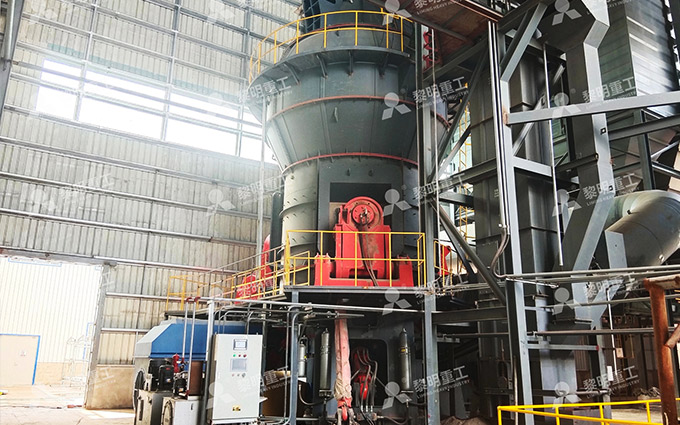
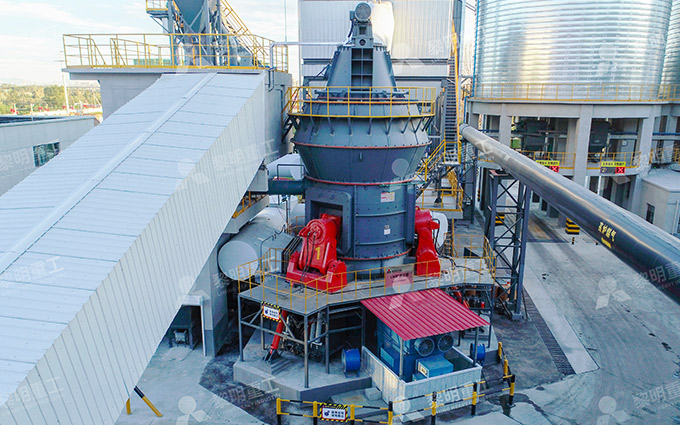
The LM Vertical Roller Mill is suitable for large-scale drilling mineral powder production where high output, integrated drying, continuous operation, and centralized control are required. It can combine grinding, drying, classification, and pneumatic conveying in one main process system.
In a typical LM Vertical Roller Mill line, crushed material enters the mill and is distributed across the grinding table. Rollers apply pressure to reduce the mineral into fine powder. Airflow lifts the ground material to the internal separator. Qualified powder enters the dust-collection system, while coarse particles fall back to the grinding table for additional grinding.
This integrated process is particularly valuable for high-capacity barite and bentonite plants. Barite production benefits from stable fine-particle control and the ability to manage feed moisture. Bentonite production benefits from controlled drying, short material residence time, and consistent particle-size distribution. Hematite production can also use the LM Vertical Roller Mill when high throughput and abrasion-resistant process design are required.
| LM Vertical Roller Mill Advantage | Value for Drilling Mineral Production |
|---|---|
| Integrated drying and grinding | Helps process moisture-bearing barite, bentonite, and other mineral feeds without separate handling between major stages. |
| Internal classification | Supports control of coarse residue and finished-powder fineness. |
| Large-capacity operation | Suitable for centralized powder production and bulk supply to drilling-fluid manufacturers. |
| Compact arrangement | Reduces intermediate transfer points by integrating several functions within one mill system. |
| Automatic control | Helps maintain stable feed rate, temperature, pressure, airflow, and classification conditions. |
The LM Vertical Roller Mill is best suited to projects that require continuous high-volume output of fine barite, bentonite, hematite, or fine calcium carbonate powder. For calcium carbonate, medium and coarse bridging grades should remain in a separate crushing and screening section rather than being sent through the fine-grinding circuit.
MTW European Grinding Mill Solution
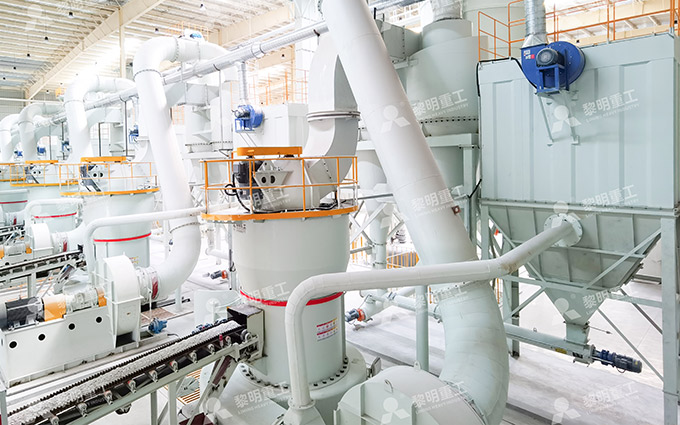
The MTW European Grinding Mill is suitable for flexible drilling-mineral powder projects with moderate output requirements. It uses a roller-and-ring grinding structure combined with air classification and powder collection, making it appropriate for regional barite, bentonite, hematite, and fine calcium carbonate production lines.
Prepared feed enters the MTW European Grinding Mill through a controlled feeder. The grinding rollers press the mineral against the grinding ring, reducing it into fine powder. Airflow carries the powder toward the separator. Qualified particles pass to the collection system, while coarse particles return to the grinding chamber for further processing.
The MTW European Grinding Mill can be combined with a crusher, elevator, feeder, hot-air system, pulse dust collector, finished-product silo, and packing equipment. This structure provides a complete and practical process route for a plant producing one or several drilling-mineral powder grades.
| MTW European Grinding Mill Advantage | Value for Drilling Mineral Production |
|---|---|
| Flexible production capacity | Suitable for regional markets, phased plant development, and production planning around customer demand. |
| Controlled fine grinding | Produces fine powder for barite weighting, bentonite drilling-fluid use, hematite processing, and fine calcium carbonate grades. |
| Air-classification circuit | Separates qualified powder and returns coarse material for regrinding. |
| Complete line compatibility | Can be integrated with crushing, drying, powder collection, storage, and packing systems. |
| Practical maintenance arrangement | Supports routine inspection of grinding rollers, rings, classifiers, conveyors, and dust-collection equipment. |
The MTW European Grinding Mill is suitable where raw feed is properly prepared and the project requires stable fine-powder output without the larger integrated capacity of a vertical-mill installation. It is especially practical for barite plants producing controlled drilling-grade powder and for bentonite or calcium carbonate plants serving regional drilling and civil-engineering customers.
Critical Quality Controls
Every drilling mineral has its own acceptance indicators. The laboratory should test the properties that affect the final drilling-fluid function rather than relying only on powder appearance or an average mesh value.
| Mineral | Primary Quality Checks | Main Production Risk |
|---|---|---|
| Barite | Specific gravity, BaSO4 content, particles above 75 μm, particles below 6 μm, moisture, and soluble components. | Low-density ore, excessive coarse residue, excessive ultrafines, and moisture pickup. |
| Hematite | Specific gravity, Fe2O3 content, particle-size distribution, moisture, soluble components, and silica content. | Excessive abrasiveness, low-density gangue, uncontrolled particle distribution, and wear-part failure. |
| Bentonite | Moisture, wet-screen residue, rheology, yield point, filtrate volume, swelling behavior, and mineral composition. | Poor hydration, unstable moisture, excessive coarse particles, and overgrinding. |
| Calcium carbonate | Particle-size distribution by grade, acid solubility, CaCO3 content, moisture, insoluble residue, and blend ratio. | Cross-contamination between grades, loss of coarse bridging particles, and insufficient acid solubility. |
For drilling-mineral powder production, the best line is the one that consistently produces the required mineral performance under real operating conditions. High capacity is valuable only when it is combined with stable feed preparation, effective drying, controlled grinding, accurate classification, efficient dust collection, separate product storage, and documented batch testing.
For large integrated projects, the LM Vertical Roller Mill provides a suitable route for high-output fine mineral powder production. For flexible-capacity projects, the MTW European Grinding Mill provides a practical fine-grinding solution. The final configuration should be determined through representative raw-material testing, target product specifications, annual capacity planning, and the required packing or bulk-delivery format.