Petroleum Coke Grinding & Processing Solutions
Green Petroleum Coke vs. Calcined Petroleum Coke
2026-10-25 13:29:09
Green petroleum coke and calcined petroleum coke are related materials, but they are not interchangeable. Green petroleum coke is the uncalcined carbon-rich material obtained from petroleum refining. Calcined petroleum coke is produced by heating suitable green coke to remove moisture and residual volatile matter and develop the properties required for specific carbon applications. The defining difference is calcination—not grinding, drying alone, or a change in particle size.
For a plant operator, this distinction affects more than the material name on a purchase order. It influences raw-material acceptance, thermal processing, powder preparation, and the suitability of the finished product for its intended use.
Green vs. Calcined Petroleum Coke: Key Differences
| Comparison | Green Petroleum Coke | Calcined Petroleum Coke |
|---|---|---|
| Common abbreviation | GPC | CPC |
| Processing condition | Uncalcined material from petroleum refining | Suitable green coke after controlled high-temperature treatment |
| Moisture | May contain appreciable moisture; delivery conditions matter | Low immediately after calcination, although subsequent handling can introduce moisture |
| Volatile matter | Contains residual hydrocarbons and other volatile components | Substantially reduced by calcination |
| Carbon structure and properties | Have not undergone the changes associated with calcination | Developed through heat treatment to achieve required density and conductivity |
| Typical application direction | Fuel use or feedstock for further processing, depending on grade | Qualified carbon applications, including aluminum-anode production |
| Important purchasing limitation | Not every green coke grade is suitable for demanding carbon applications | The CPC designation alone does not establish suitability for a particular product |
These are general distinctions, not guaranteed specifications. Final calcined-coke quality depends directly on the characteristics of the green feed and the conditions used during calcination.
What Actually Changes During Calcination?
Calcination does more than remove surface water. It combines drying, release of residual hydrocarbons, and densification in a controlled thermal process. Industrial calcination commonly involves coke temperatures of approximately 1,150–1,350°C or higher, depending on the required properties and process conditions.
Moisture is removed
Water leaves the material as it heats. This reduces the moisture carried into subsequent processing, but a dry material is not automatically a calcined material. A conventional drying step does not produce the full structural changes achieved during calcination.
Volatile matter is substantially reduced
Further heating releases residual hydrocarbons. This is a fundamental difference between green and calcined coke: two samples can have similar particle sizes while containing very different amounts of volatile matter.
Density and electrical properties develop
The high-temperature treatment changes the carbon material and develops the density and conductivity needed for carbon and graphite applications. Heating rate, final temperature, and operating conditions must therefore be controlled rather than treated as incidental process settings.
Two Distinctions That Prevent Costly Material Errors
“Green” does not mean “fuel-grade”
Green describes the processing state, not a single quality level. Some green petroleum coke is used as fuel; suitable grades are selected as feedstock for calcined products. Treating all green coke as fuel-grade overlooks the importance of feedstock quality in carbon-product manufacturing.
“Calcined” does not mean “free of impurities”
Calcination should not be treated as a universal purification process. Sulfur and metals still require specification and testing. Removing moisture and volatile matter can also increase the reported percentage of components that remain in the material, so a higher concentration after calcination does not necessarily mean those components were added during processing. Published green-to-calcined examples show that metals and ash do not simply disappear during heat treatment.
This is why purchasing unsuitable green coke and relying on calcination to correct every quality problem is an unreliable approach. Feed selection and thermal processing perform different roles.
Which Material Fits the Intended Application?
For industrial fuel preparation
Green petroleum coke may be the appropriate starting material when the objective is fuel use rather than production of a specialty carbon raw material. In that case, the project should be evaluated around the receiving combustion system and its fuel requirements—not around the assumption that calcination is always necessary.
The project specification should identify the required fuel analysis, permitted moisture, finished particle-size distribution, and delivery consistency. These requirements establish the basis for discussing preparation equipment.
For aluminum-anode production
Suitable calcined petroleum coke serves as an important raw material for aluminum anodes. Its suitability depends on the original green coke and the properties achieved during calcination; simply labeling a shipment “CPC” does not replace a detailed acceptance specification.
For graphite-related products
Specialized carbon products require more specific material selection. Needle coke, for example, is associated with demanding graphite-electrode applications. Ordinary calcined coke should not automatically be substituted for a qualified specialty grade.
How the Difference Affects a Grinding Project
Grinding and calcination solve different problems. Grinding controls particle size; calcination changes the material through heat treatment. A grinding mill cannot turn green petroleum coke into calcined petroleum coke merely by producing a finer powder.
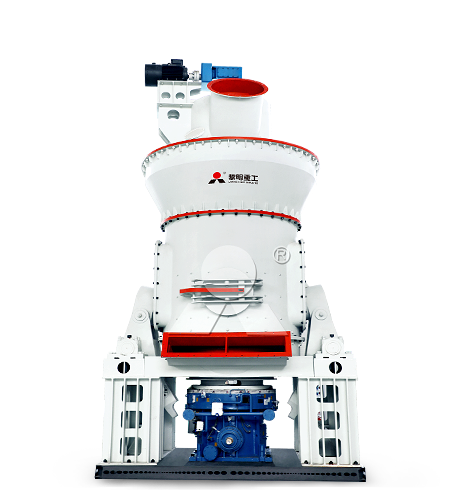
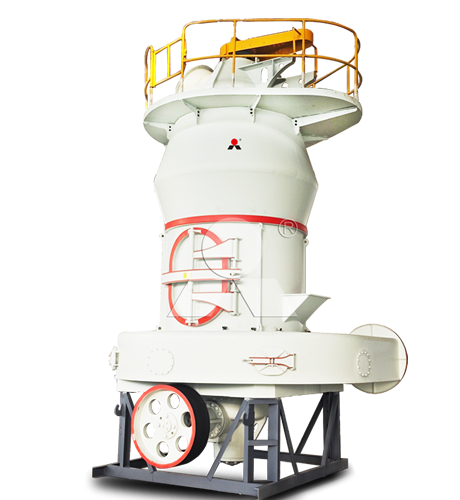
For a Liming Heavy Industry grinding-system proposal, the first step should be to define the feed and finished product clearly. Avoid selecting a mill solely from the description “petroleum coke powder.” A useful technical brief includes:
Material identification: green or calcined petroleum coke.
Representative feed samples and recent laboratory analyses.
Normal and maximum incoming particle size.
Moisture range across actual deliveries, not only a single sample result.
Required finished-powder particle-size distribution.
Required throughput under the stated feed conditions.
End-use restrictions, including contamination limits where applicable.
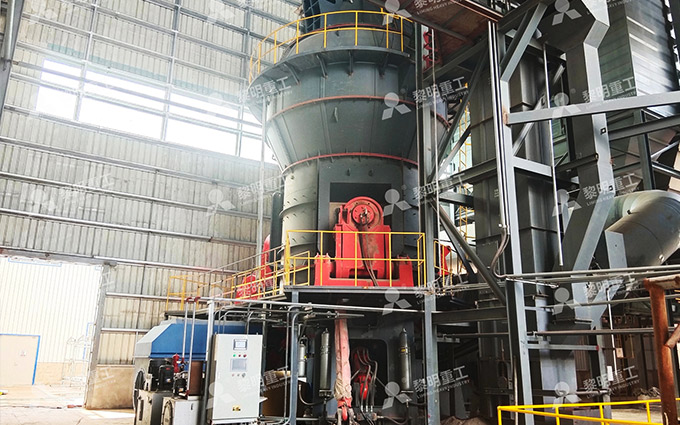
The Liming Heavy Industry mill configuration should then be evaluated against that brief. Feed preparation, any drying requirement, classification, collection, and product handling should be considered together rather than specified independently.
Compare Specifications on the Same Basis
Two laboratory reports are not necessarily directly comparable. Moisture affects the reported proportions of other components, while test methods and reporting conventions can differ. Before comparing suppliers, require a consistent reporting basis and clearly identified methods.
A practical purchasing specification should separate three groups of requirements:
Material identity and chemistry: processing state, sulfur, ash, volatile matter, and relevant metals.
Physical and application properties: particle size and, where required, density or other end-use acceptance criteria.
Delivery condition: moisture, fines content, packaging or bulk-handling arrangements, and batch traceability.
Numerical examples from a supplier or equipment brochure should not be adopted as universal limits. Published specifications distinguish between sponge and needle coke and show different green and calcined properties, illustrating why the acceptance criteria must match the actual material and application.
Choose by End Use, Then Define the Processing Route
Use green petroleum coke when its uncalcined properties meet the intended application or when it is the qualified feedstock for subsequent calcination. Use calcined petroleum coke when the application requires the properties developed by controlled high-temperature treatment. Neither material is universally “better”: the correct choice is the one that meets the end-use specification without relying on grinding or drying to perform the role of calcination.