Quicklime Powder Production Line
How to Choose a Quicklime Grinding Mill for Different Powder Requirements
2026-09-29 14:20:04
We are Liming Heavy Industry, a manufacturer of various types of industrial crushers, such as Raymond Mill, Trapezoidal Mill, Vertical Mill, Ultrafine Mill, Ball Mill, etc.
Our mills can process the following minerals:
limestone, quicklime, kaolin, talc, barite, bentonite, calcium carbonate, dolomite, coal, gypsum, clay, carbon black, slag, cement raw materials, cement clinker, etc.
If you need a mill to process stone or minerals into powder, please feel free to contact me (WhatsApp: +8615333807511). Thank you.
Choosing a grinding mill for quicklime is not simply a matter of selecting a machine with sufficient capacity. The right grinding system needs to match the properties of cooled quicklime, required powder fineness, production capacity and the final application.
Quicklime powder used for flue gas desulfurization, chemical processing, mineral processing and other applications can have different particle-size requirements. The grinding system should therefore be selected around the finished product rather than using the same mill configuration for every project.
Start with the Finished Powder Requirement
The first question is what kind of quicklime powder the plant needs to produce. A specification such as 80 mesh, 200 mesh or a finer powder represents different grinding and classification requirements.
For example, a project requiring 200-mesh quicklime powder with D90 needs a system capable of producing and consistently classifying powder around that specification. If the application requires a much finer product, the mill and classification system need to be evaluated accordingly.
The final application should also be considered. Quicklime powder for flue gas desulfurization may have different requirements from CaO powder used in chemical or mineral-processing operations.
Consider the Required Production Capacity
Capacity is another major factor in mill selection. A small quicklime powder plant and a continuous industrial grinding plant may require completely different equipment configurations even when the target fineness is similar.
Production capacity should be based on the required output of finished powder rather than simply the amount of raw quicklime entering the plant. Storage, feeding, grinding, classification and collection equipment should all be matched to the required production rate.
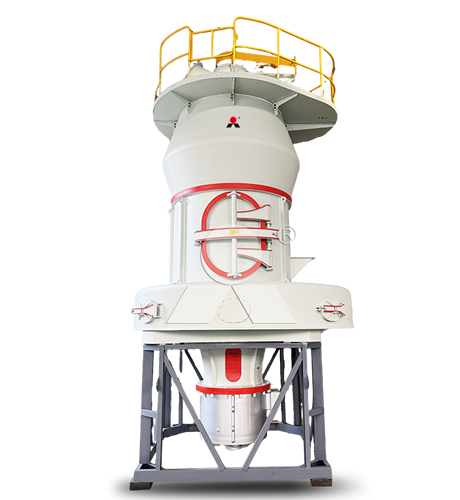
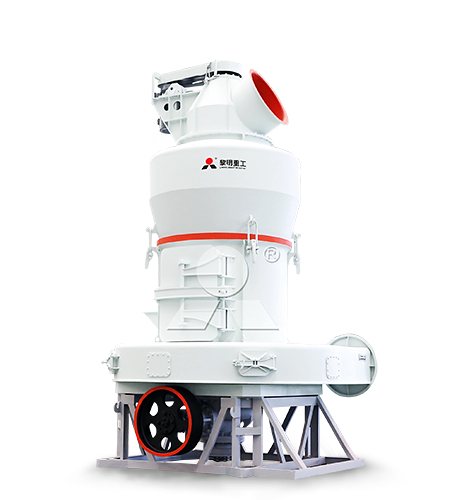
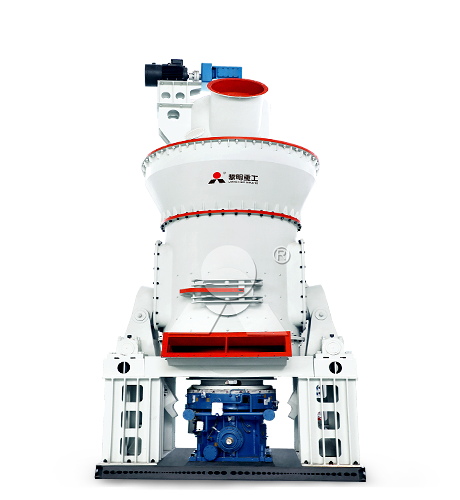
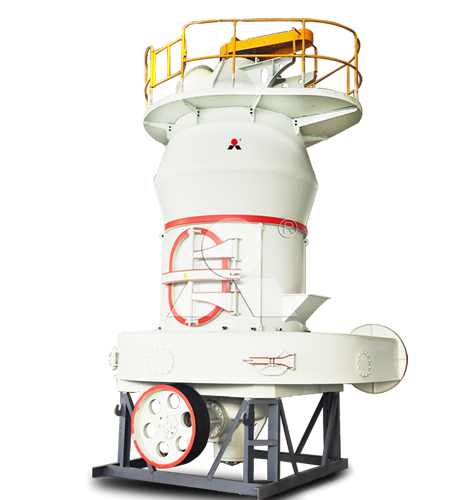
For large-scale quicklime powder production, the Liming Heavy Industry LM Vertical Mill is designed for continuous industrial grinding and can be configured according to the required capacity and finished-product specification.
Check the Feed Size of the Cooled Quicklime
Quicklime leaving the cooling section can contain lumps of different sizes. Before selecting the mill, the maximum feed size should be confirmed.
If the material contains oversized lumps, a pre-crushing stage may be required. Reducing the feed to a suitable size helps maintain stable mill operation and allows the grinding system to work efficiently.
When the incoming quicklime is already within the acceptable feed range of the selected mill, additional crushing equipment may not be necessary.
Match the Mill to the Required Fineness
Different powder requirements call for different grinding and classification arrangements. The finer the required product, the more attention needs to be given to classification performance and powder collection.
For common industrial quicklime powder requirements, the LM Vertical Mill can provide controlled grinding and classification in an integrated system. It is particularly suitable when the project requires continuous production and a stable finished-powder specification.
For applications requiring finer powders beyond the suitable operating range of a conventional vertical mill, the grinding system should be evaluated according to the actual fineness requirement rather than attempting to force a standard mill to produce an unsuitable product.
Quicklime Grinding for Different Applications
Quicklime Powder for Flue Gas Desulfurization
Flue gas desulfurization systems may use quicklime powder as a reactive material. The required fineness depends on the specific process, reaction conditions and system design.
For example, a requirement for 200-mesh powder with D90 should be treated as a complete product specification rather than simply stating “fine quicklime.” The grinding and classification system needs to be configured to produce a stable product within the required range.
Quicklime for Chemical Processing
Chemical applications can have different requirements for powder size, purity and production stability. The grinding system should therefore be selected together with the customer's downstream process rather than based on particle size alone.
Quicklime for Mineral Processing
In mineral-processing operations, quicklime may be used as a process material. The required powder characteristics can vary considerably depending on how the lime is introduced and how quickly it needs to react.
Why Classification Matters
A grinding mill does not determine finished powder quality by grinding force alone. The classifier plays an important role in separating qualified powder from coarse particles.
In a properly configured closed grinding system, fine qualified powder leaves the classification section while coarse material is returned for additional grinding. This arrangement helps maintain a more consistent product and reduces unnecessary grinding of already qualified particles.
For this reason, when comparing grinding equipment, it is useful to consider the complete grinding and classification system rather than looking only at the main mill.
Consider Quicklime Handling and Moisture Protection
Quicklime requires careful material handling because it can react with moisture. The storage, feeding and conveying sections should therefore be designed to limit unnecessary exposure to humid air and water.
Enclosed feeding and conveying systems can help maintain stable material flow while reducing dust during transfer. Finished powder should also be stored in suitable enclosed equipment after collection.
LM Vertical Mill for Quicklime Powder Production
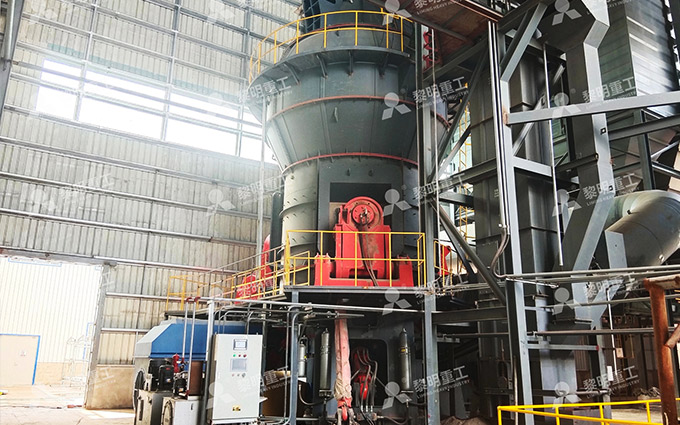
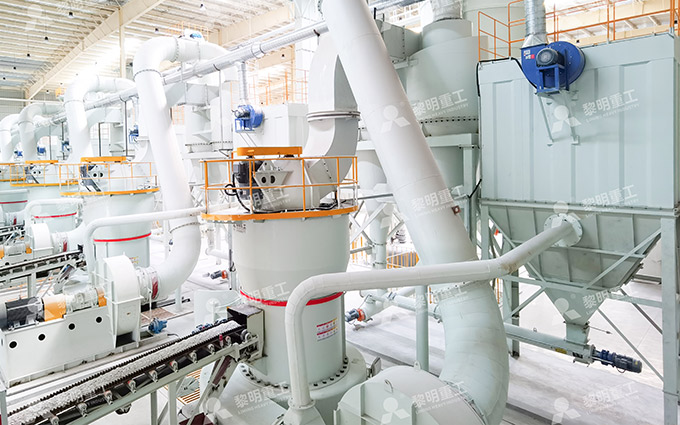
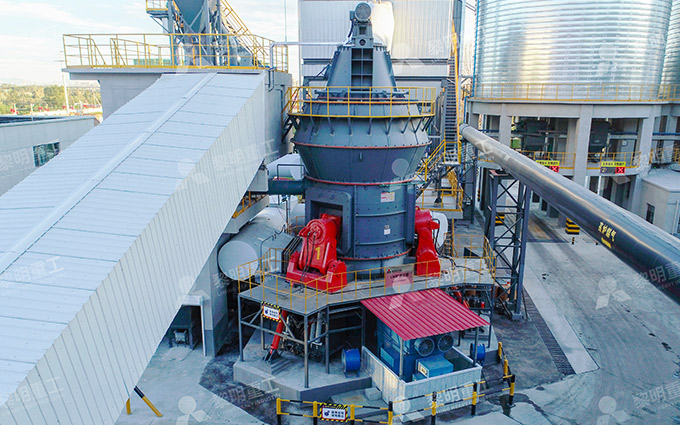
Liming Heavy Industry's LM Vertical Mill integrates grinding and classification into a continuous grinding system and can be combined with feeding, conveying, dust collection and finished-product storage equipment.
The mill can be considered for quicklime projects where the required capacity and powder fineness fall within its suitable operating range. Its configuration should be determined according to the actual feed size, quicklime characteristics, production target and finished-product specification.
A Practical Selection Checklist
Before choosing a quicklime grinding mill, it is useful to establish the following information:
Material: cooled quicklime with the required quality information
Feed size: maximum size of quicklime entering the grinding system
Capacity: required finished powder production per hour
Fineness: target mesh size and, where applicable, particle-size distribution
Application: such as flue gas desulfurization, chemical processing or mineral processing
Storage: required finished-powder storage capacity and method
Delivery: bulk loading, valve bags or jumbo bags
These parameters provide a much more reliable basis for equipment selection than choosing a grinding mill from capacity or fineness alone.
Choosing the Right Quicklime Grinding System
The most suitable quicklime grinding mill depends on the complete set of project requirements. Fineness determines the grinding and classification requirements, capacity determines the scale of the system, and feed size and material characteristics affect the upstream preparation and mill configuration.
For large-scale industrial quicklime powder production, the Liming Heavy Industry LM Vertical Mill can be used as the core grinding equipment when its operating range matches the required product specification. A complete system can then be configured around the mill for feeding, classification, powder collection, storage and final product delivery.