Agricultural Lime & Soil Amendment
Rock Phosphate Grinding for Mineral Fertilizer and Soil Amendment Blends
2026-10-14 14:17:48
Rock phosphate is an important mineral raw material used in the fertilizer industry and in selected soil amendment products. Before it can be incorporated into a fertilizer formulation or sold as a finely ground mineral product, the phosphate rock may need crushing, grinding, classification, and careful quality control.
For mineral processors and fertilizer manufacturers, the main challenge is to produce a consistent particle-size distribution while maintaining the required output and controlling processing costs. The appropriate grinding solution depends on the phosphate ore's mineral composition, hardness, moisture content, feed size, and intended application.
Liming Heavy Industry provides grinding equipment for non-metallic mineral processing. This article explains how to evaluate rock phosphate grinding requirements, configure a suitable production line, and select equipment for mineral fertilizer and soil amendment blends.
1. Why Grind Rock Phosphate?
Phosphate rock is a naturally occurring mineral material that contains phosphate-bearing minerals, commonly apatite, along with varying amounts of other minerals and impurities. Its composition and processing characteristics depend on the deposit and the beneficiation or preparation methods used.
Grinding reduces particle size and can improve the uniformity of the material before blending or further processing. However, the required fineness depends strongly on the final product and how the phosphate will be used.
Mineral fertilizer blends: Ground phosphate rock may be used as a raw material in formulations that combine different nutrient sources.
Direct application products: Some agricultural systems use finely ground phosphate rock, subject to soil conditions, crop requirements, local regulations, and the material's agronomic suitability.
Further industrial processing: Phosphate rock may require size reduction before subsequent chemical or physical processing.
Soil amendment blends: Phosphate-bearing minerals may be combined with other mineral materials according to the formulation and intended application.
Grinding does not increase the total phosphorus content of the ore or automatically make all its phosphorus available to plants. Chemical composition, mineral form, and subsequent processing determine the product's nutrient characteristics and agricultural performance.
2. Determine the Required Fineness Before Selecting Equipment
There is no single particle size suitable for every rock phosphate application. A fertilizer manufacturer producing a blended granular product may have different grinding requirements from a plant producing finely ground phosphate rock for a specific agricultural market.
Before designing the grinding system, establish the required product specification.
Target particle size: Define the required fineness using an appropriate mesh, micrometer, or sieve specification.
Particle-size distribution: Determine the acceptable proportions of coarse and fine particles rather than relying only on a nominal fineness rating.
Downstream process: Confirm whether the ground material will be blended, granulated, chemically processed, or sold as a finished powder.
Product quality: Identify requirements for phosphorus content, moisture, impurities, and other relevant chemical or physical properties.
Production capacity: Specify the finished-product output required per hour or per day.
Grinding finer than necessary can increase energy consumption and wear without improving the final product enough to justify the additional cost. The target fineness should therefore be established with the downstream process and agricultural requirements in mind.
3. Evaluate the Phosphate Rock Before Grinding
Rock phosphate can vary considerably from one deposit to another. Even materials sold under the same general name may differ in hardness, abrasiveness, moisture, and mineral composition. These variations can affect grinding performance and equipment wear.
A reliable equipment assessment should consider the following factors.
Mineral composition and hardness
The proportion of phosphate-bearing minerals and associated gangue minerals influences the material's grinding behavior. Representative samples and, where appropriate, laboratory testing can help establish the design basis.
Feed size
Large pieces of phosphate rock may need crushing before entering the grinding mill. The crusher should reduce the material to a suitable feed size for the selected grinding system.
Moisture content
Moisture can affect material flow, feeding stability, powder collection, and finished-product handling. If the feed is too wet for the selected process, a drying stage or a suitable integrated drying configuration may be required.
Abrasiveness and impurities
Quartz and other hard associated minerals may influence wear-part consumption. The material should also be tested for impurities that could affect the finished fertilizer product or limit its suitability for a particular market.
4. Typical Rock Phosphate Grinding Process Flow
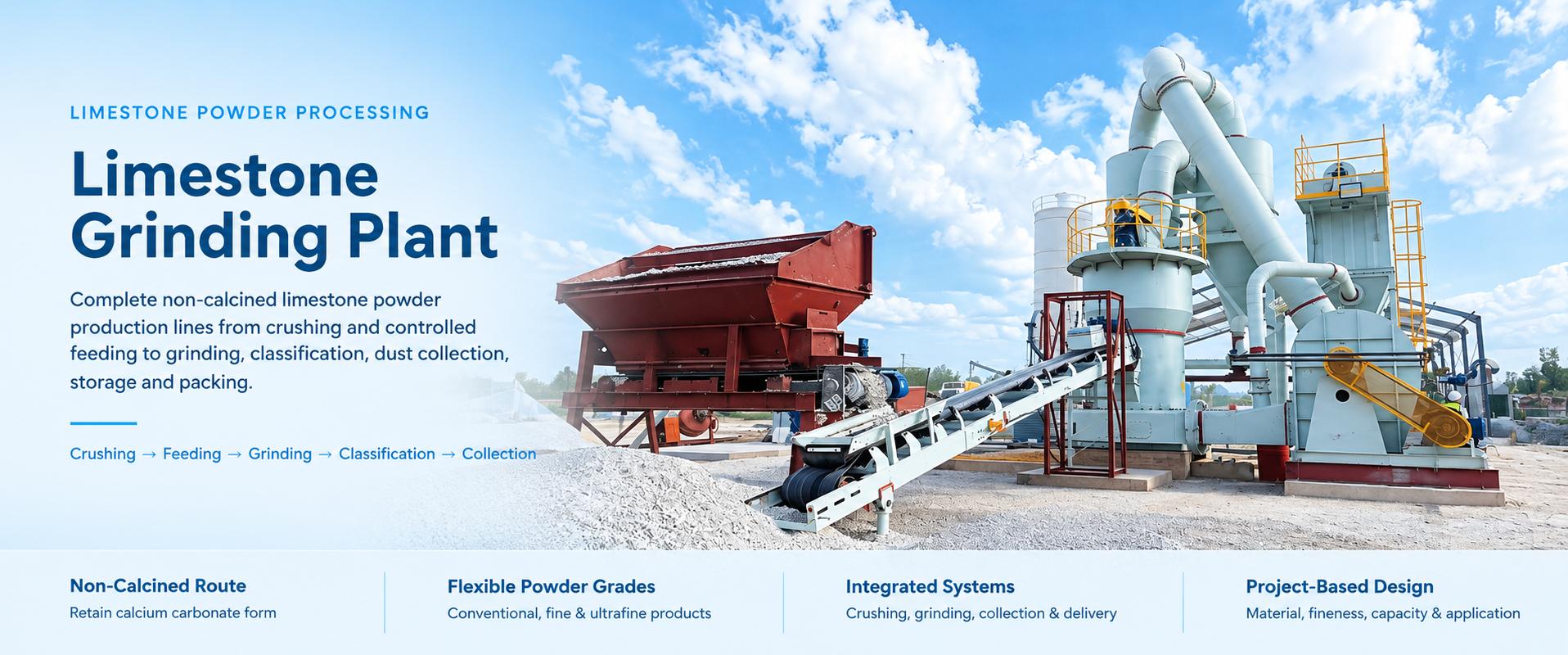
A rock phosphate grinding plant usually combines material preparation, grinding, classification, dust collection, and finished-product handling. The exact process flow depends on the feed size, required fineness, moisture content, and downstream application.
Raw material receiving: Phosphate rock is delivered to the plant and checked against the raw material specification.
Crushing and screening: Oversized material is reduced to a suitable size. Screening may be used to control the feed entering the grinding section.
Intermediate storage and feeding: Prepared material is transferred to a feed hopper or bin and delivered to the mill at a controlled rate.
Grinding: The selected mill reduces the phosphate rock to the required particle size.
Classification: The system separates particles according to the target fineness. Depending on the configuration, material requiring further size reduction may return to the grinding stage.
Dust collection: A suitable collection system captures fine particles from the process air stream.
Finished-product conveying: The ground phosphate is transferred to a storage silo, blending section, or packaging system.
Quality inspection and dispatch: The finished material is sampled and checked before being blended, packaged, or sent to the next process.
Some projects may require additional drying, magnetic separation, beneficiation, or other preparation steps. These processes should be included only when justified by the raw material properties and final product requirements. Grinding alone does not remove unwanted mineral impurities or upgrade phosphate concentration.
5. Selecting a Grinding Mill for Rock Phosphate
The grinding mill should be selected according to the phosphate rock's grindability, feed size, target fineness, production rate, and operating conditions. Liming Heavy Industry offers several grinding mill series that may be evaluated for suitable mineral powder applications.
MTW European Trapezium Grinding Mill
The MTW European Trapezium Grinding Mill can be considered for conventional mineral powder production when the required fineness and output fit the selected model. Its suitability for phosphate rock should be confirmed through an assessment of the ore's grinding characteristics and the finished-product specification.
LM Vertical Grinding Mill
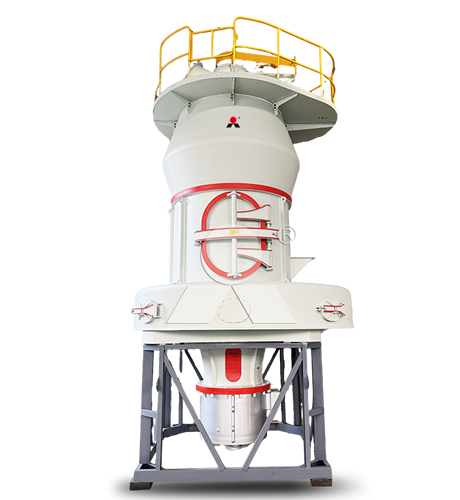
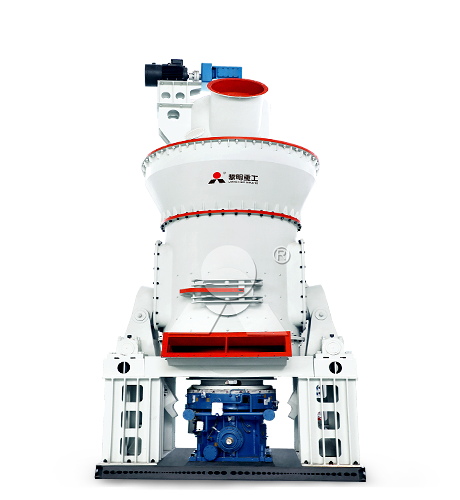
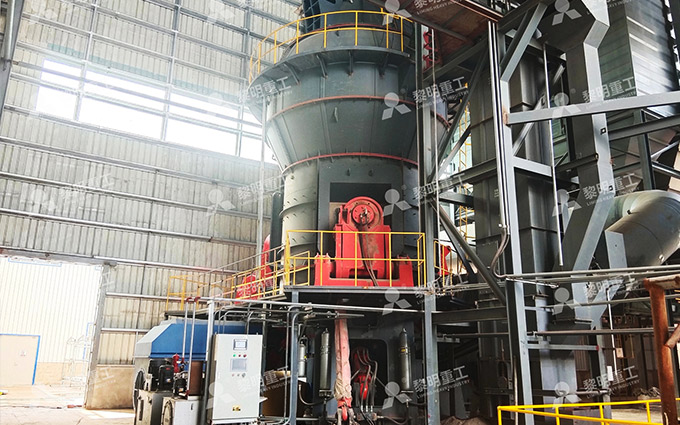
The LM Vertical Grinding Mill may be worth evaluating for larger-scale mineral powder plants. Depending on the model and process configuration, it can integrate grinding, classification, and drying functions where appropriate. The selected system must be matched to the material and the required output at the target fineness.
Raymond Grinding Mill
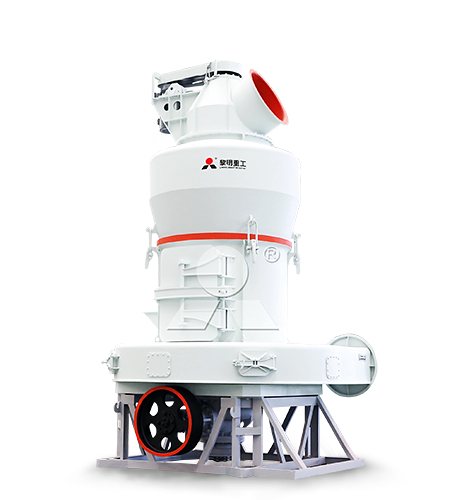
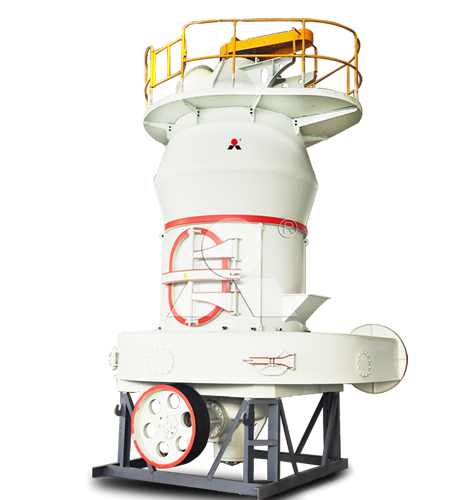
The Raymond Grinding Mill may be considered for smaller-capacity projects when the feed characteristics and required product size are compatible with the selected model's operating range.
These equipment options should not be treated as interchangeable for every phosphate deposit. A technical evaluation is needed to confirm achievable output, power requirements, wear-part needs, and the suitability of the complete grinding system.
6. Control Particle Size for Fertilizer Blending
Particle-size consistency is important when ground phosphate rock is combined with other mineral or nutrient ingredients. Large differences in particle size, density, and flow behavior can contribute to segregation during conveying, storage, or handling, depending on the formulation and equipment.
To improve consistency, fertilizer manufacturers should consider:
Establishing particle-size specifications for each ingredient.
Using representative samples to verify the fineness of the ground phosphate.
Maintaining stable mill feeding and classification conditions.
Checking the compatibility of particle size and flow properties across the blend components.
Evaluating the finished blend after mixing, conveying, and any granulation process.
For products that will be granulated, the appropriate phosphate powder characteristics should be determined together with the granulation process. The optimum powder specification may differ from that of a product sold directly as a mineral powder.
7. Equipment List for a Rock Phosphate Powder Plant
The following equipment list provides a preliminary reference for a grinding-focused facility. The final scope depends on the condition of the incoming ore and whether blending or further processing takes place on the same site.
| Equipment | Function | Key selection factors |
|---|---|---|
| Receiving hopper | Receives raw phosphate rock | Feed size, unloading method, and storage requirements |
| Crusher | Reduces oversized feed material | Feed size, hardness, required discharge size, and capacity |
| Screen and conveyors | Control material size and transfer feed | Required throughput, layout, and material characteristics |
| Grinding mill | Reduces phosphate rock to the target fineness | Grindability, abrasiveness, output, and final particle size |
| Classification system | Controls the finished powder size | Target fineness and particle-size distribution |
| Dust collector and fan | Collects airborne powder and manages process airflow | Air volume, dust properties, and environmental requirements |
| Storage silo | Buffers finished powder before the next process | Production rate, storage time, and powder flow characteristics |
| Blending equipment | Combines phosphate powder with other ingredients when required | Formulation, batch size, mixing uniformity, and downstream process |
| Packaging or bulk-loading system | Prepares product for shipment | Bag size, packing rate, and delivery method |
| Electrical control system | Coordinates plant operation | Automation level, monitoring, and operating requirements |
Not every project requires all these items. For example, a plant that receives pre-crushed phosphate may not need a primary crusher, while a grinding-only supplier may deliver powder directly to an existing fertilizer blending facility.
8. Manage Dust, Wear, and Operating Costs
Rock phosphate grinding can generate fine airborne particles, so the grinding, conveying, storage, and packaging stages should be evaluated together when designing dust collection. The selected system must suit the material, plant airflow, and applicable workplace and environmental requirements.
Wear is another important consideration. Abrasive minerals in the feed can increase the consumption of grinding components and affect maintenance intervals. Material testing and appropriate equipment selection can help establish realistic operating expectations.
When evaluating a proposed plant, compare more than the initial equipment price. Consider electricity consumption, wear parts, maintenance access, downtime, dust collection, labor, and the capacity of auxiliary equipment. A lower-cost mill may not be the most economical option if it cannot achieve the required output at the specified fineness.
9. Rock Phosphate Grinding and Direct Agricultural Use
Finely ground phosphate rock is not automatically suitable for every soil or crop. Its agricultural effectiveness depends on factors such as phosphate mineralogy, particle size, soil acidity, crop requirements, and local agronomic conditions. Some phosphate rock materials require chemical processing to produce fertilizer products with different nutrient availability characteristics.
Manufacturers should confirm the applicable product standards, nutrient declarations, contaminant limits, and regulatory requirements for the destination market. Where direct application is proposed, agronomic testing and professional recommendations may be necessary to determine whether the material is suitable for the intended soil conditions.
For fertilizer blends, the grinding specification should be developed around the complete formulation and the downstream manufacturing process rather than treating fineness as the only quality indicator.
10. Develop Your Rock Phosphate Grinding Project with Liming Heavy Industry
Liming Heavy Industry provides grinding equipment and mineral powder processing solutions for a range of non-metallic mineral applications. For rock phosphate projects, the appropriate grinding configuration depends on the ore's properties, the required particle-size distribution, the target production rate, and whether the powder will be blended or further processed.
To begin a technical assessment, prepare the following information:
Rock phosphate source and available mineral or chemical analysis
Maximum feed size and moisture content
Required finished-product fineness and particle-size distribution
Target production capacity in tonnes per hour or tonnes per day
Whether the product will be used in a fertilizer blend, direct-application product, or further processing
Requirements for crushing, drying, classification, blending, or packaging
Project location and existing plant conditions, if applicable
With these details, the Liming Heavy Industry team can evaluate whether an MTW European Trapezium Grinding Mill, LM Vertical Grinding Mill, Raymond Grinding Mill, or another suitable configuration should be considered for the project.
Explore the available options on the Liming Heavy Industry product page to learn more about grinding equipment for mineral powder production.