Cement Clinker Grinding Plant
Cement Grinding Plant Design
2026-09-10 08:15:12
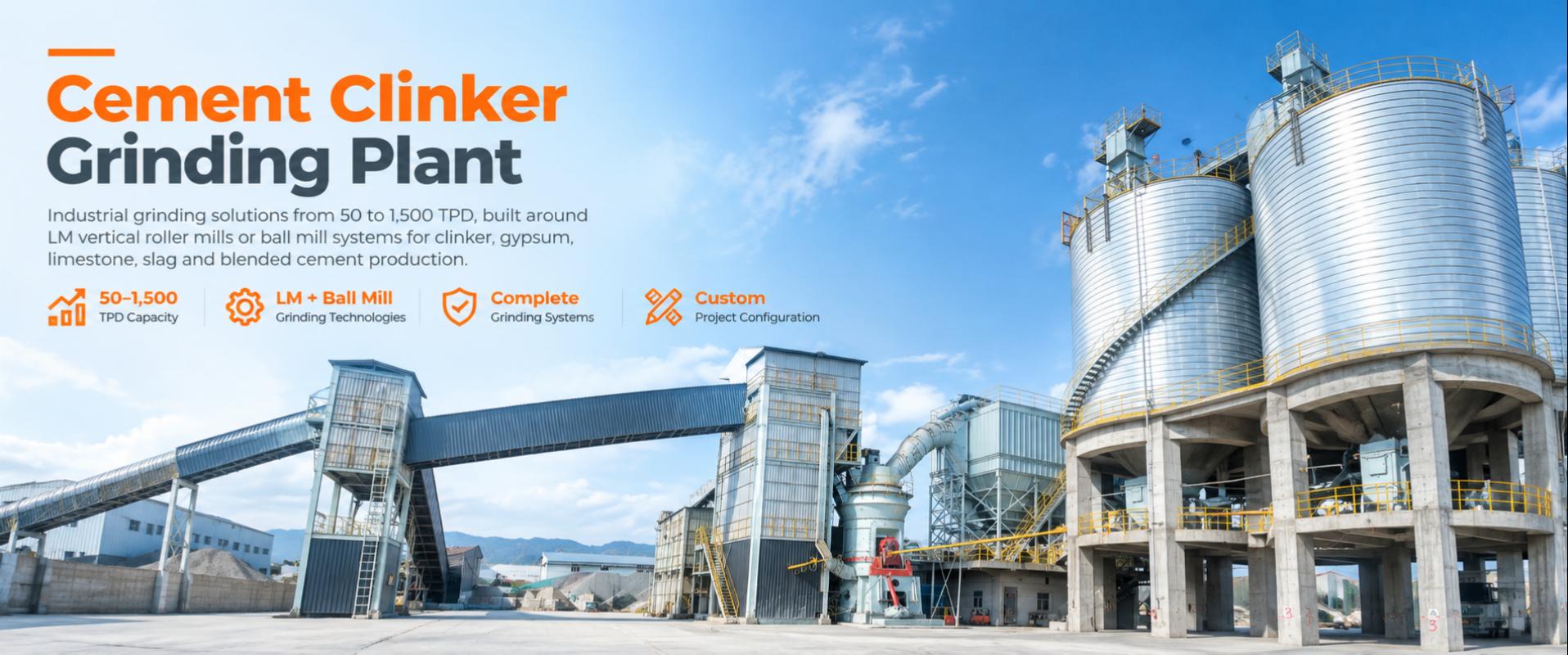
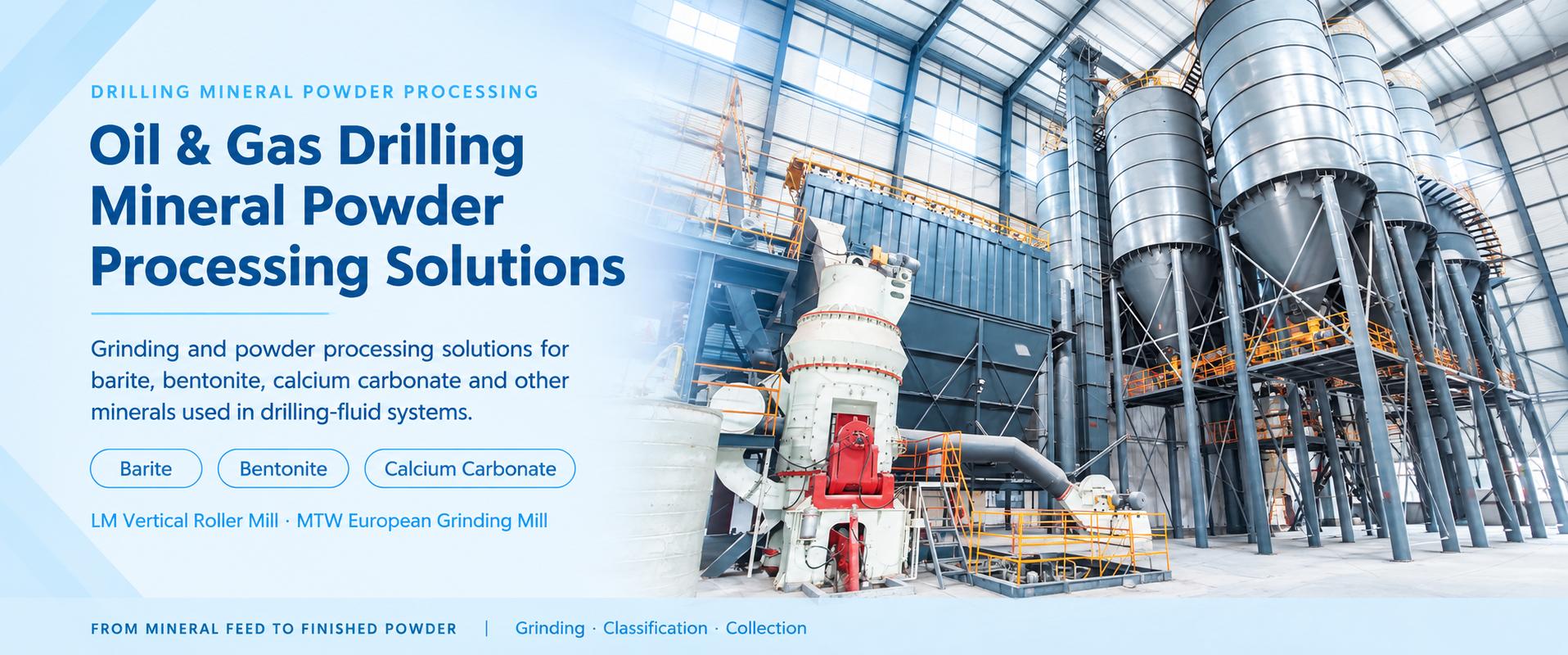
Cement grinding plant design involves configuring every process stage required to convert clinker, gypsum, and suitable mineral additives into finished cement. A complete design must coordinate raw-material receiving, storage, dosing, grinding, classification, dust collection, conveying, cement storage, packing, bulk loading, electrical systems, automation, and civil works.
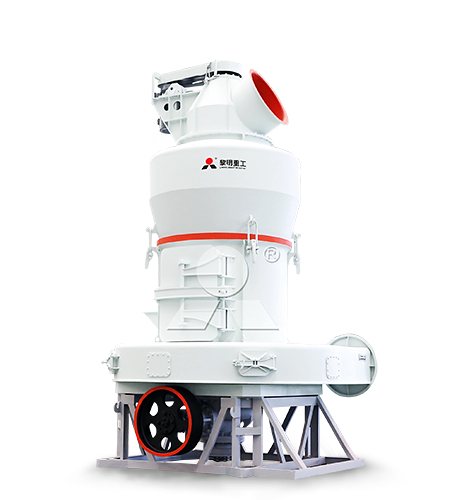
Liming Heavy Industry designs cement grinding solutions around the LM Vertical Roller Mill and cement ball mill. The appropriate solution depends on production capacity, cement type, clinker characteristics, additive ratio, target fineness, material moisture, available site area, local electricity conditions, dispatch requirements, and future expansion plans. For integrated cement projects, Liming Heavy Industry also provides rotary kilns and calcining kilns for clinker production and industrial calcination.
Design Objectives
A well-designed cement grinding plant should produce the required cement quality at stable capacity while controlling energy use, maintenance demand, dust emissions, material losses, and operating cost. The plant layout should also allow safe operation, easy access for maintenance, reliable material flow, and practical future expansion.
Meet the required cement production capacity in tonnes per hour, tonnes per day, or tonnes per year.
Produce cement with controlled fineness, particle size distribution, setting behavior, and strength performance.
Handle clinker, gypsum, limestone, slag, fly ash, and other suitable additives reliably.
Select the appropriate LM Vertical Roller Mill or cement ball mill configuration.
Control specific electricity consumption and avoid unnecessary overgrinding.
Provide efficient dust collection and process-air handling.
Match cement silo, packing, and bulk loading capacity with grinding output.
Allow safe maintenance access for mills, fans, separators, filters, conveyors, and electrical equipment.
Provide automation for stable dosing, grinding, classification, and product-quality control.
Reserve suitable space and infrastructure for future capacity expansion where required.
Basic Cement Grinding Process
The cement grinding plant normally begins with clinker receiving and storage. Clinker may come from an on-site rotary kiln line, an external clinker supplier, a port terminal, rail transport, or truck delivery. It is stored in a clinker silo, clinker hall, warehouse, or covered stockpile before entering the grinding circuit.
Gypsum and other mineral additives are stored separately. Depending on the required cement type, the plant may use limestone, granulated blast-furnace slag, fly ash, pozzolan, or other suitable materials. Each component is measured through weighing and dosing equipment, then conveyed to the grinding system.
The proportioned material enters an LM Vertical Roller Mill or a cement ball mill. The ground material is classified according to the required cement fineness. Fine product is collected through bag filters and conveyed to cement silos, while coarse particles are returned for further grinding in a closed-circuit process. Closed-circuit grinding helps control fineness and reduces unnecessary overgrinding. [59][61]
Typical Plant Flow
Clinker receiving, unloading, and storage.
Gypsum receiving, storage, crushing where required, and conveying.
Limestone, slag, fly ash, or additive receiving and separate storage.
Material dosing through belt weigh feeders, screw feeders, or other proportioning equipment.
Feeding of clinker, gypsum, and additives to the grinding system.
Grinding in an LM Vertical Roller Mill or cement ball mill.
Classification of fine product and coarse return material.
Dust collection, process-air handling, and fine-cement recovery.
Finished-cement conveying to storage silos.
Cement packing, bulk loading, and dispatch.
Key Design Inputs
The quality of the initial technical data determines the quality of the final plant design. The grinding mill should not be selected only according to a nominal capacity figure. Actual output depends on material grindability, feed size, moisture, cement formulation, target fineness, separator performance, operating hours, and available plant utilities.
| Design Input | Why It Matters |
|---|---|
| Required capacity | Determines mill size, storage volume, conveyor capacity, electrical demand, packing capacity, and plant layout |
| Annual production target | Defines operating hours, required equipment availability, maintenance planning, and capacity margin |
| Clinker properties | Hardness, feed size, moisture, chemistry, and grindability affect mill output, power demand, and wear rate |
| Gypsum and additive properties | Moisture, particle size, flowability, abrasiveness, and dosage influence storage, handling, drying, and grinding design |
| Cement type | Determines clinker ratio, gypsum dosage, mineral additions, fineness target, storage arrangement, and quality controls |
| Target fineness | Influences mill capacity, separator selection, circulation load, specific power consumption, and product quality |
| Material moisture | Determines whether drying capacity, hot gas, or a dedicated drying arrangement is required |
| Site conditions | Available land, building height, foundation conditions, transport access, and climate affect the equipment arrangement |
| Power supply | Electrical voltage, grid reliability, electricity cost, and installed power determine electrical-system design and operating economics |
| Dispatch requirement | Defines cement silo volume, packing capacity, bulk loading capacity, truck flow, and warehouse arrangement |
LM Vertical Roller Mill Design
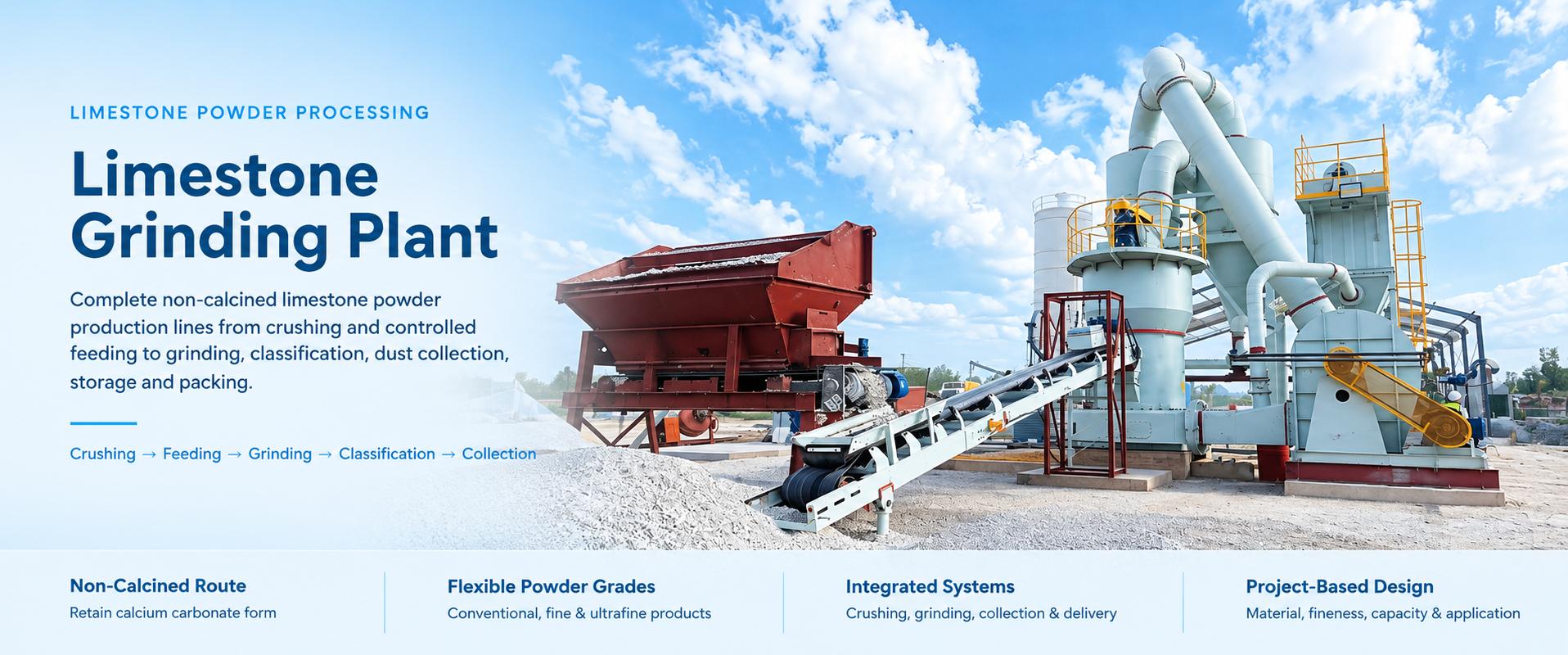
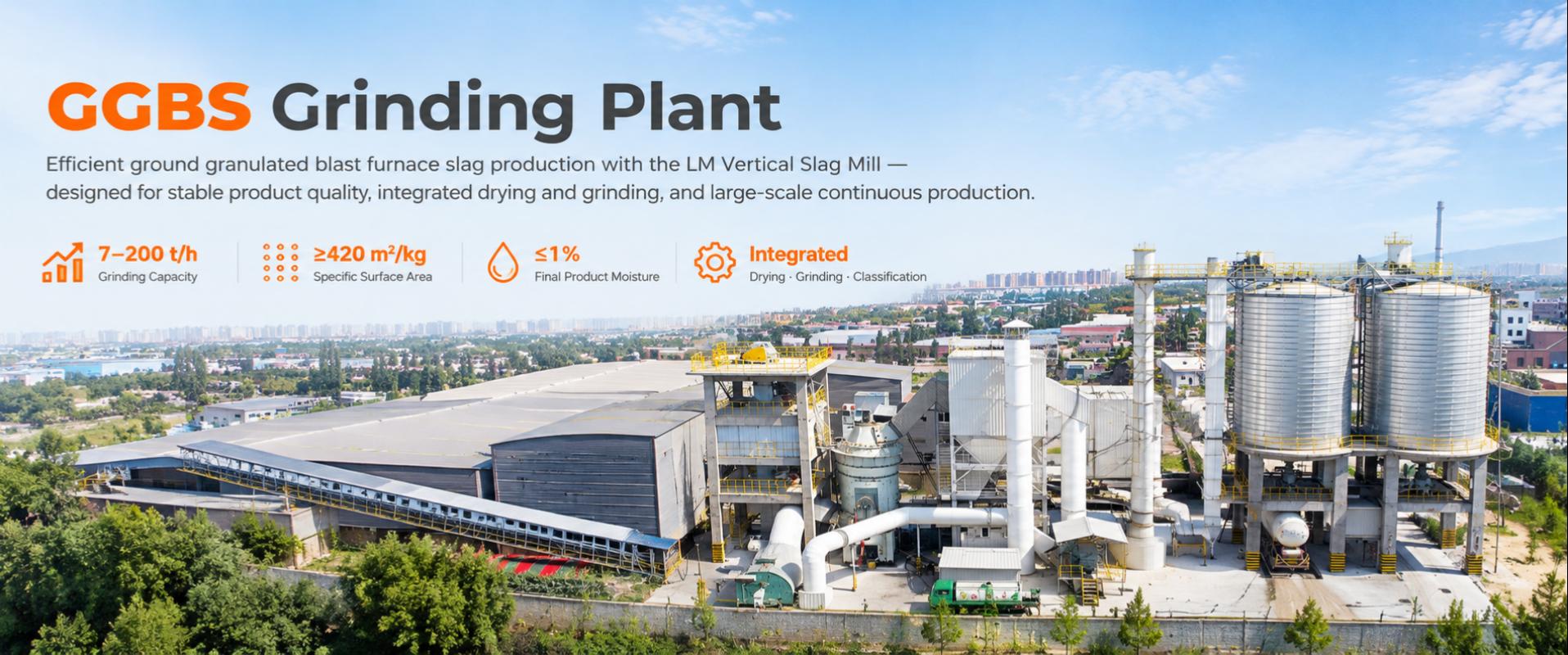
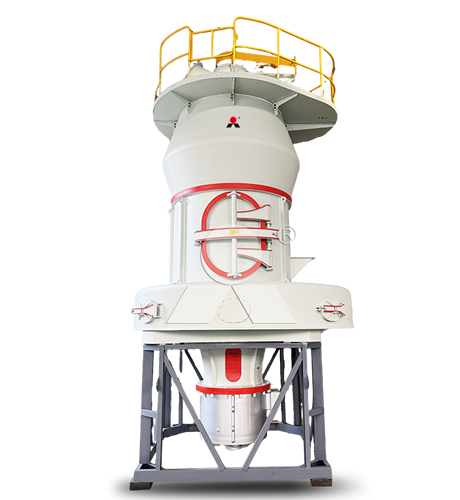
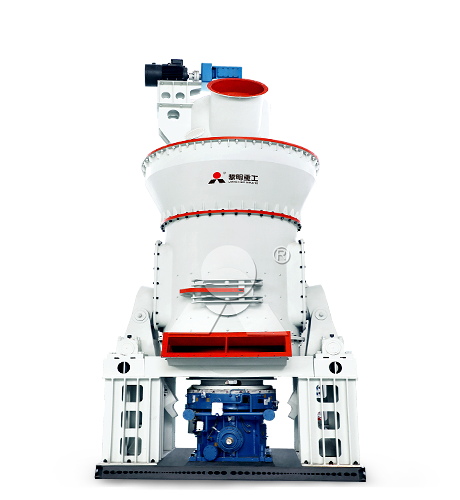
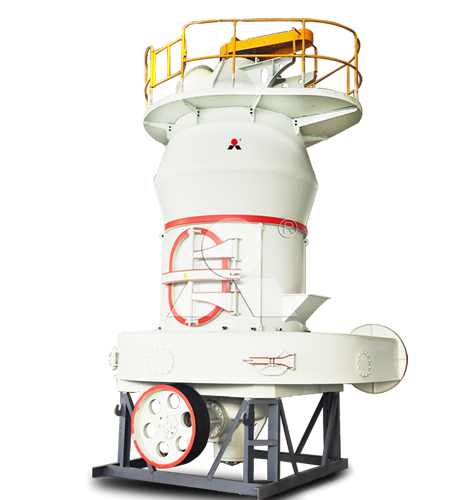
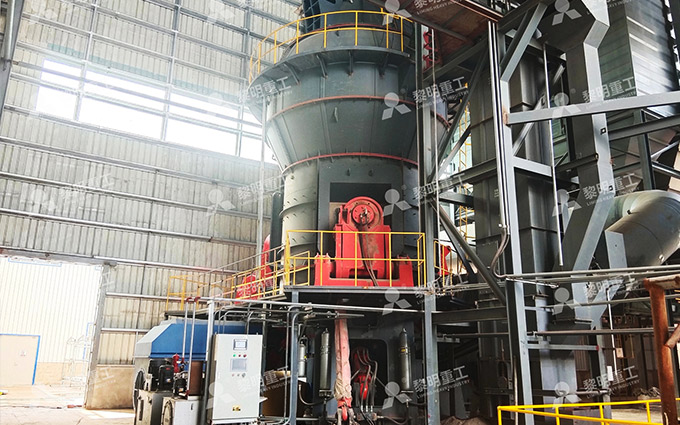
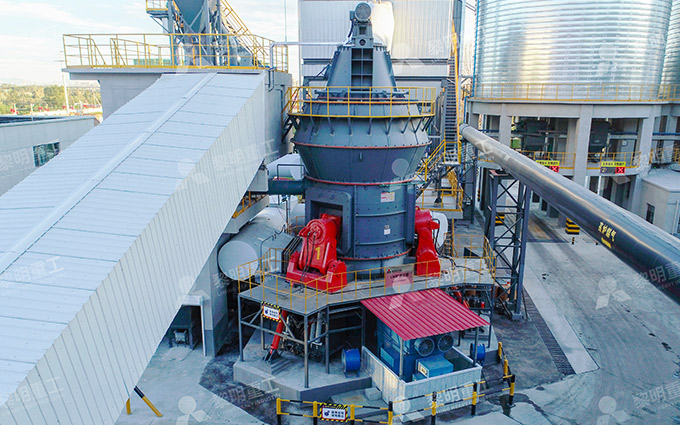
The LM Vertical Roller Mill is designed as an integrated grinding and classification solution for cement clinker and blended cement production. Clinker, gypsum, and suitable additives enter the mill and fall onto a rotating grinding table. Grinding rollers apply pressure to the material bed, reducing particle size through compression and shearing.
Process air lifts the ground material to the integrated dynamic classifier. Fine material that meets the required cement fineness exits the mill with the gas stream and is collected by the dust-control system. Coarse particles are rejected by the classifier and return to the grinding table for further grinding.
This arrangement combines grinding, classification, and material transport in a compact vertical process configuration. Where suitable hot gas is available, the LM Vertical Roller Mill can also support simultaneous drying and grinding of moist materials. This can be useful for projects using slag, limestone, gypsum, or other additives with higher moisture content.
| LM Vertical Roller Mill Design Item | Design Consideration |
|---|---|
| Mill capacity | Selected according to cement output, clinker grindability, additive ratio, fineness target, and operating hours |
| Grinding table and rollers | Configured for the required material throughput, grinding pressure, and wear resistance |
| Dynamic classifier | Selected to achieve the required cement fineness and support stable separation efficiency |
| Process fan | Sized to provide sufficient airflow for material transport, classification, drying where required, and dust collection |
| Hot gas system | Considered when feed moisture requires drying support during grinding |
| Bag filter | Sized for gas volume, dust concentration, pressure drop, product recovery, and environmental requirements |
| Automation system | Controls feed rate, grinding pressure, vibration, temperature, airflow, classifier speed, power, and alarms |
Vertical roller mill design should include appropriate maintenance access. Grinding rollers, grinding-table segments, classifier components, hydraulic systems, gearboxes, lubrication systems, motors, fans, and bag filters require inspection and service space. The structural design should also account for equipment weight, dynamic loads, vibration isolation, lifting equipment, and safe access platforms.
Cement Ball Mill Design
A cement ball mill is a conventional clinker grinding solution based on impact and attrition from steel grinding media. Clinker, gypsum, and additives enter the horizontal rotating mill shell. As the shell rotates, grinding balls are lifted by the liners and then cascade onto the material, progressively reducing its particle size.
For cement grinding, a ball mill is usually designed as part of a closed-circuit system. The mill discharge is transferred to a high-efficiency separator. Fine cement is collected as finished product, while coarse particles are returned to the mill through a reject-return system for further grinding.
Ball mill design commonly includes a main mill, grinding media, liners, diaphragms, main drive, girth gear, pinion, gearbox, bearing system, lubrication system, separator, bucket elevator, process fan, bag filter, conveyors, air slides, finished-cement silos, and automation controls. A conventional ball mill circuit may also use a pre-grinding arrangement where required by capacity and energy objectives. [59][61]
| Ball Mill Design Item | Design Consideration |
|---|---|
| Mill diameter and length | Selected according to required output, grinding duty, material grindability, and product fineness |
| Grinding media | Ball size distribution and total ball charge must match feed size, grinding compartments, and required fineness |
| Mill liners | Protect the shell and control lifting, cascading, and grinding-media movement |
| Diaphragm system | Controls material flow between compartments and supports efficient coarse and fine grinding stages |
| Separator | Controls product fineness, reject rate, circulation load, and overall grinding efficiency |
| Mill ventilation | Helps remove heat, transport material, control moisture, and maintain stable grinding conditions |
| Dust collection | Recovers fine cement and maintains process-air balance and emission control |
Ball mill layout requires sufficient space for mill installation, drive-system access, liner replacement, grinding-media charging, lubrication maintenance, separator installation, bucket elevators, conveyors, fans, filters, and steel structures. When upgrading an existing cement plant, an existing ball mill building, foundation, separator circuit, or conveying line may influence the preferred design solution.
LM Vertical Roller Mill vs Ball Mill
| Comparison Factor | LM Vertical Roller Mill | Cement Ball Mill |
|---|---|---|
| Grinding principle | Compression and shearing between rollers and a rotating grinding table | Impact and attrition from steel grinding media inside a rotating cylinder |
| Classification | Integrated dynamic classifier | Normally uses a separate high-efficiency separator |
| Plant arrangement | Compact vertical configuration integrating grinding and classification | Conventional horizontal grinding circuit with separate classification equipment |
| Moisture handling | Can combine drying and grinding when suitable hot gas is available | May require a dedicated drying arrangement for higher-moisture materials |
| Grinding media | Does not use a large steel-ball charge for primary grinding | Requires steel grinding media and regular ball-charge management |
| Maintenance focus | Grinding rollers, grinding table, classifier, hydraulic system, gearbox, and wear parts | Grinding balls, liners, diaphragms, bearings, gears, lubrication system, and separator |
| Suitable design conditions | New plants, compact layouts, projects requiring integrated classification, and suitable blended cement applications | Conventional cement grinding circuits, existing ball mill infrastructure, and projects aligned with established ball mill operation |
The selection should be based on total project economics rather than only the main mill price. Published cement-industry guidance notes that mill selection depends on material moisture, plant size, abrasiveness, energy consumption, reliability, and financial considerations. Vertical roller mills may offer lower grinding energy demand and stronger drying capability in suitable applications, while ball mills remain a practical option for abrasive materials and conventional grinding circuits. [60][61]
Material Storage and Dosing Design
Material storage and dosing are essential for stable cement quality. Clinker, gypsum, limestone, slag, fly ash, and other additives should be stored separately and fed through controlled dosing systems. This allows the plant to produce different cement types and adjust formulations accurately.
Clinker storage can be designed as a silo, dome, warehouse, or covered pile. The selection depends on capacity, site area, material receiving method, climate, environmental requirements, and desired inventory. Gypsum and additives may be stored in separate bins, silos, hoppers, or covered storage buildings depending on their physical properties.
Weigh feeders should be selected according to required throughput, accuracy, material flowability, and control requirements. The dosing system must maintain the required clinker, gypsum, and additive ratio. Variations in material proportion can affect cement setting time, fineness, strength development, production stability, and operating cost.
Dust Collection and Air System Design
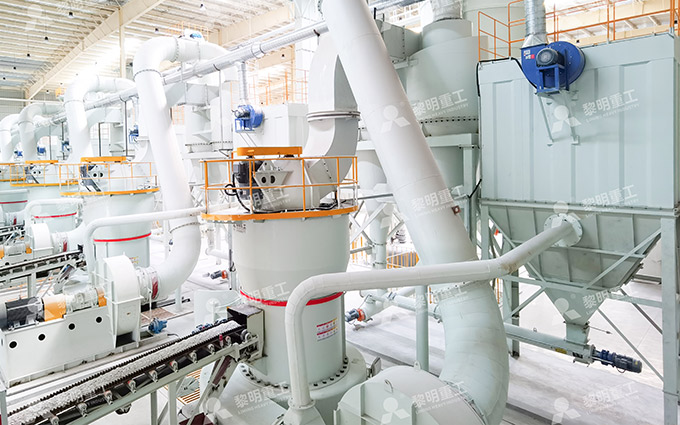
Dust collection is a core part of cement grinding plant design. Bag filters are typically installed at mill outlets, separators, transfer points, bucket elevators, clinker unloading points, cement silos, packing machines, and bulk loading stations.
The dust-control system must be designed for the required gas volume, temperature, dust concentration, moisture condition, pressure drop, fan capacity, and emission target. Collected cement dust is normally recovered and returned to the finished-product stream, reducing material loss and improving plant efficiency.
Process-air design is especially important for LM Vertical Roller Mills because airflow transports material from the grinding table to the classifier. For ball mill systems, ventilation helps control mill temperature, remove moisture where possible, transport material, and maintain stable separator performance.
When grinding cement in a vertical roller mill, mill exit-gas temperature must be considered carefully because gypsum dehydration can affect cement quality and storage behavior. Design provisions may include gas recirculation, temperature control, or supplementary hot-air arrangements where material moisture and thermal conditions require them. [61]
Finished Cement Storage and Dispatch
Finished cement storage should be designed according to grinding capacity, number of cement types, dispatch method, market demand, and production schedule. Each cement grade may require a separate storage silo to avoid contamination and simplify quality control.
Cement silos can include aeration systems, level indicators, pressure-relief valves, silo filters, discharge gates, flow-control devices, and blending systems. The silo discharge system should be matched with the packing line and bulk loading system to prevent finished-product bottlenecks.
For bagged cement, the plant may include rotary packing machines, bag conveyors, bag cleaning equipment, truck loading areas, warehouse space, and palletizing equipment where required. For bulk cement, the plant may include bulk loading spouts for trucks, railcars, ships, or terminals.
Electrical and Automation Design
Electrical design includes main power distribution, transformers, motor control centers, variable-frequency drives, cables, lighting, grounding, emergency systems, and power monitoring. The grinding mill main drive, process fan, separator, bucket elevators, conveyors, feeders, packing machines, and dust-collection equipment must all be included in the load calculation.
PLC-based automation helps stabilize the grinding process and improves operating visibility. A central control system can monitor material feed rates, motor power, mill vibration, grinding pressure, separator speed, airflow, temperature, differential pressure, bag filter performance, cement fineness, silo levels, and alarm status.
Automation should be designed to support both production and maintenance. Trend data, alarm history, energy monitoring, equipment interlocks, and condition-monitoring signals can help operators identify process changes early and reduce the risk of unplanned shutdowns.
Integrated Cement Plant Design
A cement grinding plant can be built as a stand-alone facility that purchases clinker, or it can be included in an integrated cement production line. In an integrated project, raw materials are crushed, proportioned, ground into raw meal, preheated, calcined, and processed in a rotary kiln to produce clinker. The clinker is then cooled, stored, and sent to the cement grinding plant.
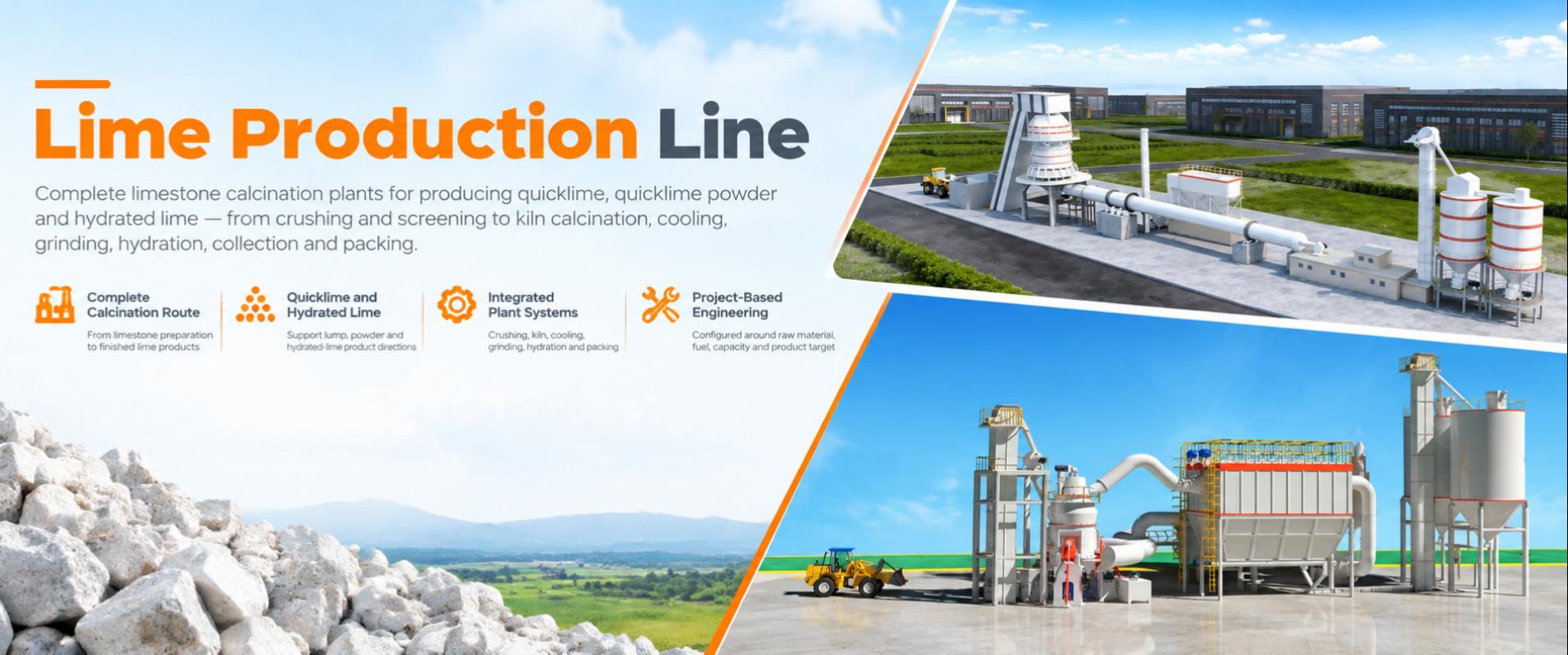
Liming Heavy Industry provides rotary kilns and calcining kilns for suitable clinker production and industrial calcination applications. A complete integrated plant may include raw-material crushing, raw meal grinding, preheating, calcination, rotary kiln processing, clinker cooling, clinker storage, cement grinding, finished-cement storage, packing, bulk loading, dust collection, and automation.
Rotary kiln, clinker cooler, clinker storage, cement grinding mill, cement silos, and dispatch facilities should be sized as one coordinated production system. The design should avoid capacity mismatches that can cause excessive clinker inventory, insufficient cement storage, mill downtime, or dispatch bottlenecks.
Conclusion
Cement grinding plant design requires coordinated planning of material handling, dosing, grinding, classification, air handling, dust collection, storage, dispatch, electrical systems, automation, civil works, and maintenance access. The correct layout and equipment selection depend on the real production target and material conditions.
Liming Heavy Industry provides LM Vertical Roller Mill and cement ball mill solutions for clinker and blended cement grinding. The LM Vertical Roller Mill is suitable for projects seeking an integrated grinding and classification configuration with a compact layout, while the cement ball mill remains a proven solution for conventional closed-circuit grinding systems and sites with compatible existing infrastructure.
For integrated clinker production and cement grinding projects, Liming Heavy Industry can also provide rotary kilns, calcining kilns, and supporting equipment for a coordinated cement plant design.