Cement Clinker Grinding Plant
Open Circuit vs Closed Circuit Cement Grinding
2026-09-10 08:14:35
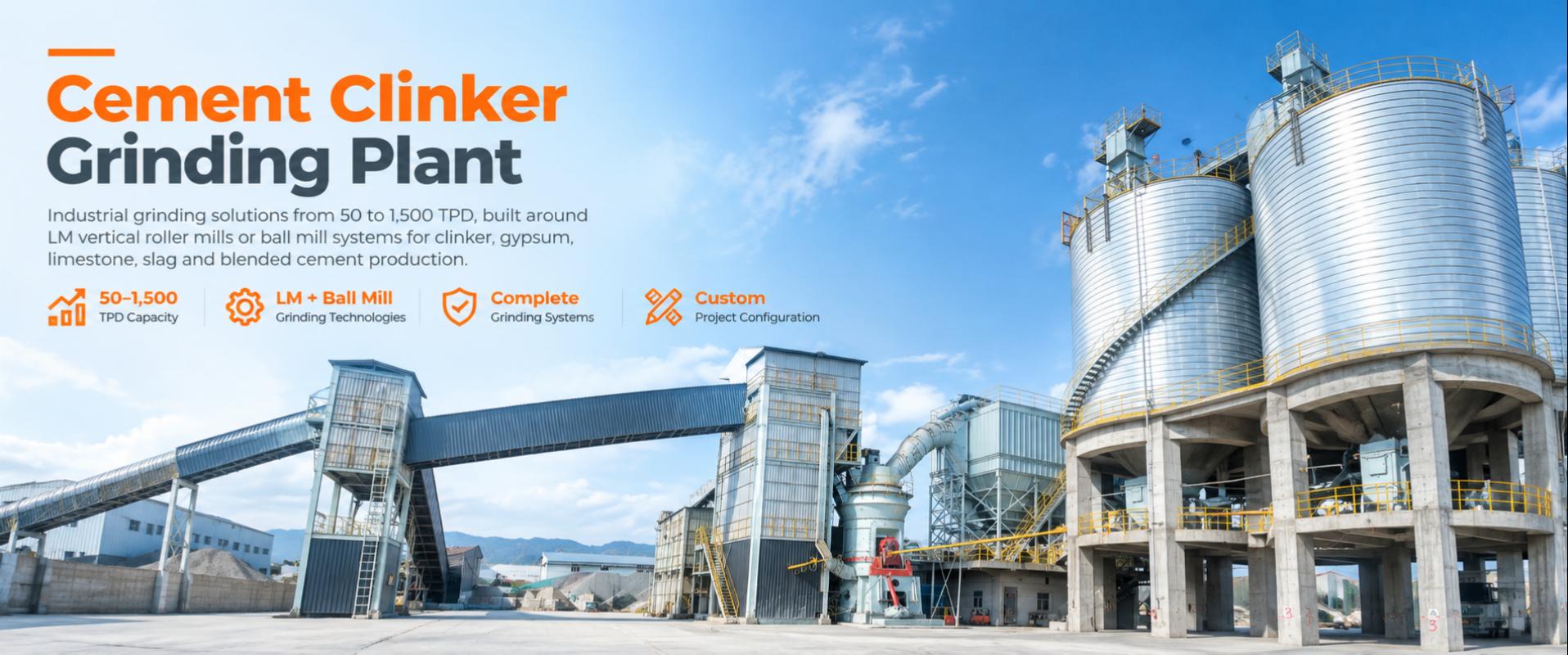
Open-circuit and closed-circuit cement grinding are two different ways of organizing the grinding process. In an open-circuit system, material passes through the grinding mill once and is discharged as product without a classifier returning coarse particles for further grinding. In a closed-circuit system, the mill discharge is sent to a separator, which collects qualified fine cement and returns coarse particles to the mill for additional grinding.
For modern cement clinker grinding, closed-circuit systems are generally preferred when consistent cement fineness, higher throughput, lower specific power consumption, and better product control are required. Liming Heavy Industry provides LM Vertical Roller Mill and cement ball mill solutions for clinker grinding. An LM Vertical Roller Mill uses integrated dynamic classification, while a cement ball mill is commonly combined with a separate high-efficiency separator in a closed circuit.
What Is Open-Circuit Grinding?
In open-circuit cement grinding, clinker, gypsum, and suitable mineral additives enter the mill and pass through the grinding zone once. The ground material is discharged directly as finished product or sent to a collection system without a separator returning coarse particles to the mill.
The process layout is relatively simple. It generally requires fewer machines because there is no separate separator and no reject-return conveying loop. This can reduce the initial equipment investment and simplify operation, especially for smaller projects or applications where a relatively coarse product and broad particle size distribution are acceptable.
However, the mill must grind the complete feed stream to the final fineness in one pass. Fine particles remain in the mill together with coarse particles, increasing the possibility of overgrinding. As a result, open-circuit systems can consume more energy per tonne of cement and may provide less precise control of fineness than closed-circuit systems. [54][56]
What Is Closed-Circuit Grinding?
In closed-circuit cement grinding, clinker, gypsum, and additives are first ground in the mill. The mill discharge is then delivered to a classifier or separator. The separator divides the material into fine and coarse fractions.
Fine particles that meet the required cement fineness are collected as finished product. Coarse particles, commonly called separator rejects, are returned to the grinding mill for further processing. This loop continues until the material reaches the target fineness.
By removing qualified fine particles early, the closed circuit helps prevent unnecessary overgrinding. The mill can focus more of its grinding work on particles that are still too coarse. This can improve capacity, reduce specific energy consumption, narrow the particle size distribution, and provide more accurate fineness control. [56][57]
Process Flow Comparison
| Process Stage | Open-Circuit Cement Grinding | Closed-Circuit Cement Grinding |
|---|---|---|
| Material feeding | Clinker, gypsum, and additives are fed to the mill | Clinker, gypsum, and additives are fed to the mill |
| Grinding | Material passes through the mill once | Material is ground before entering the classification stage |
| Classification | Normally no separate separator for returning coarse material | Separator classifies fine cement and coarse particles |
| Coarse material | Leaves with the final product stream | Returns to the mill for additional grinding |
| Fine product | Collected after one pass through the mill | Collected after meeting separator fineness requirements |
| Circulating load | No intentional separator reject circulation | Coarse separator rejects circulate back to the mill |
Main Differences
| Comparison Factor | Open Circuit | Closed Circuit |
|---|---|---|
| Process arrangement | Simpler flow with fewer major process units | Mill, separator, return conveying, and related controls form a recirculating loop |
| Initial investment | Usually lower because separator and reject-return equipment may not be required | Usually higher because it includes a separator, fans, conveyors or elevators, ducts, and control equipment |
| Fineness control | Primarily controlled by mill operation and residence time | Controlled by both mill operation and separator performance |
| Product particle size distribution | Usually broader and less uniform | Usually narrower and more controllable |
| Overgrinding risk | Higher because fine material remains in the mill with coarse material | Lower because qualified fine material is removed from the circuit earlier |
| Specific power consumption | Often higher for fine cement production | Often lower because classification reduces unnecessary grinding |
| Mill throughput | May be lower at demanding fineness targets | Often higher because coarse particles are selectively returned for regrinding |
| Operating complexity | Simpler to operate and maintain | Requires control of separator speed, airflow, reject rate, circulation load, and related equipment |
| Best suited to | Simple systems, smaller capacities, and applications with less demanding fineness requirements | Modern cement grinding plants requiring stable quality, higher output, and efficient fineness control |
Open-Circuit Cement Grinding Process
An open-circuit grinding plant normally starts with clinker storage, gypsum storage, and additive storage. The materials are proportioned through belt weigh feeders, screw feeders, or other dosing equipment and then fed into the grinding mill.
In a ball mill open-circuit arrangement, the material passes through the ball mill and is discharged as product. A bag filter may collect fine material carried by process air, while conveyors, elevators, and air slides transfer the final cement to storage silos.
The simplicity of an open circuit can be attractive where capital cost and equipment count are the main priorities. It may also be suitable when a coarser cement product is acceptable and the required particle size distribution is not highly critical.
Its limitation is that the mill has less ability to selectively remove qualified particles. Fine particles can remain in the grinding zone longer than necessary, while some coarse particles may leave with the product. This can make it more difficult to produce fine cement with consistent quality and efficient power consumption. Open-circuit grinding is generally associated with a wider product size distribution and a higher risk of overgrinding. [54][57]
Closed-Circuit Cement Grinding Process
A closed-circuit grinding system begins with the same basic raw-material preparation steps: clinker, gypsum, and additives are stored separately, proportioned accurately, and fed to the grinding mill.
After grinding, the mill discharge is sent to a separator. In a ball mill system, the separator may be a high-efficiency dynamic separator installed after the mill. The separator uses airflow and rotor speed to separate fine cement from coarse particles.
Fine material is collected by the bag filter and conveyed to finished-cement silos. Coarse material is returned to the ball mill through bucket elevators, air slides, conveyors, or other return systems. The amount of material returned to the mill is called the circulating load.
In ball mill circuits, circulating load is commonly managed within a range of approximately 150% to 250% of fresh feed, although the optimum value depends on separator efficiency, cement fineness target, material grindability, mill configuration, and operating conditions. Too little circulating load can indicate ineffective classification, while excessive circulating load can reduce grinding efficiency by filling the circuit with too much fine material. [57]
Specific Power Consumption
Specific power consumption is a key performance indicator in cement grinding. It measures how much electricity is required to produce one tonne of finished cement. Electricity is consumed by the grinding mill, separator, process fans, bag filters, bucket elevators, conveyors, feeders, compressors, and finished-product handling systems.
Closed-circuit grinding can reduce energy use because qualified fine material is removed before it receives unnecessary additional grinding. Technical references indicate that closed-circuit grinding can provide lower specific power consumption than open-circuit grinding, especially when producing finer cement products. [56][57]
Published industry guidance indicates that, for typical ball mill systems, an open circuit may consume approximately 38 to 48 kWh per tonne of cement, while a closed-circuit ball mill with a high-efficiency separator may operate around 30 to 38 kWh per tonne under comparable fineness conditions. These are reference ranges only. Actual power consumption depends on clinker hardness, feed size, gypsum and additive ratio, moisture, cement fineness, separator performance, mill ventilation, grinding media condition, and plant operating practice. [57]
For suitable projects, an LM Vertical Roller Mill can offer a further reduction in grinding energy because it combines compression grinding and integrated dynamic classification. Published technical guidance cites typical vertical roller mill finish-grinding power demand of approximately 22 to 30 kWh per tonne for cement fineness in the range of 3,500 to 3,800 Blaine, compared with approximately 30 to 40 kWh per tonne for conventional closed-circuit ball mill systems. Actual results must be determined through project-specific material and process evaluation. [57]
LM Vertical Roller Mill and Closed Circuit
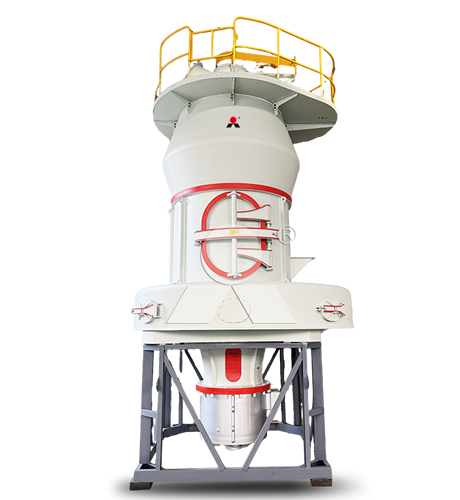
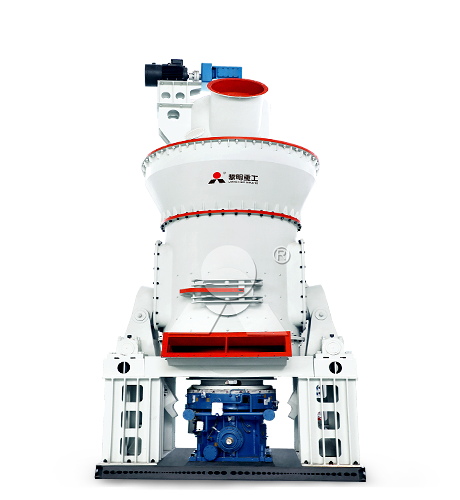
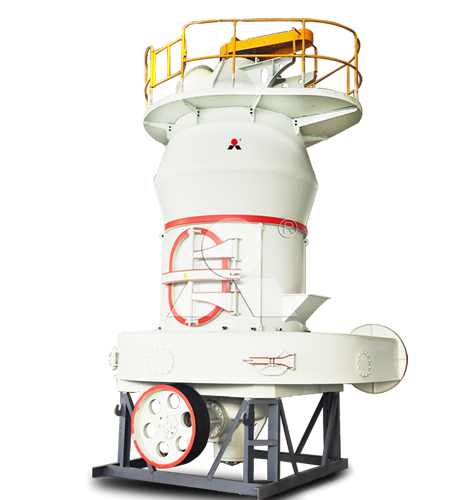
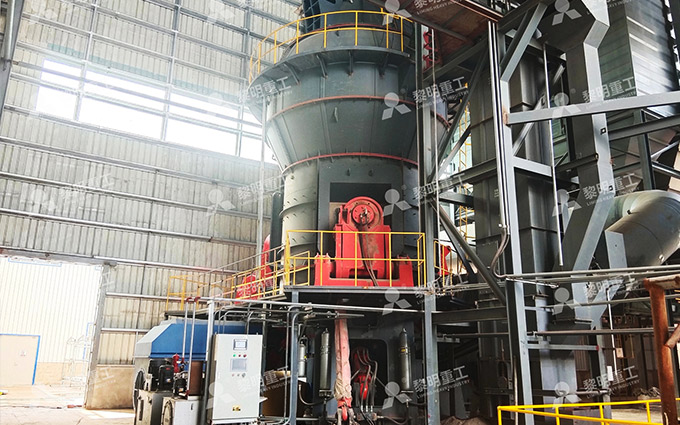
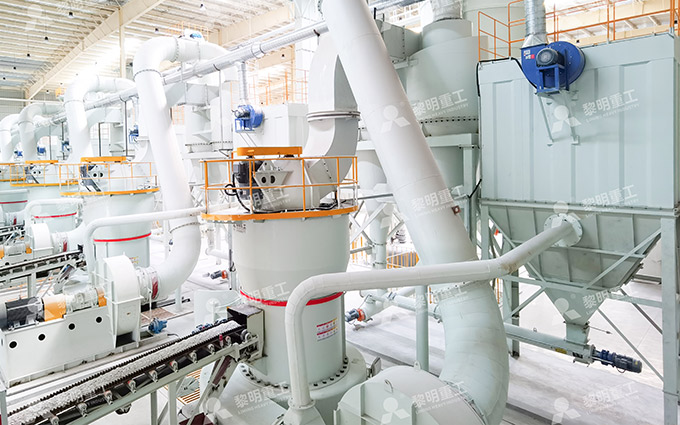
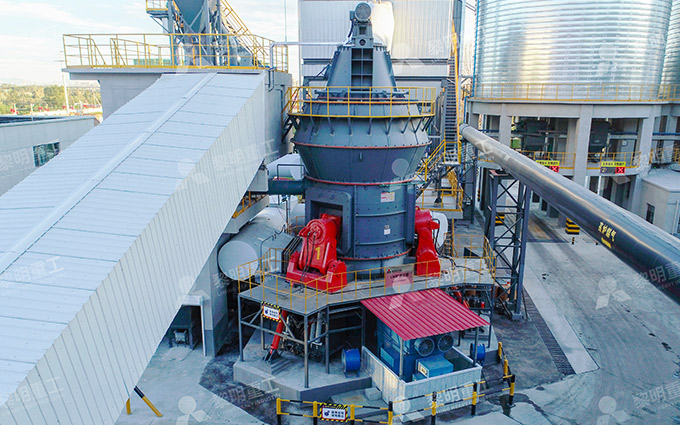
The LM Vertical Roller Mill from Liming Heavy Industry is designed as an integrated grinding and classification system. Material is fed to a rotating grinding table and ground between the table and rollers. Process air lifts the ground material to an integrated dynamic classifier.
The classifier separates finished fine cement from coarse particles. Fine material leaves the mill with the gas stream and is collected by the dust-control system. Coarse material is rejected by the classifier and falls back to the grinding table for additional grinding.
This internal separation and return process means that an LM Vertical Roller Mill operates with a closed-circuit principle inside its compact vertical configuration. It does not normally require the same external separator-and-return loop used by a conventional ball mill closed-circuit system.
The LM Vertical Roller Mill can be configured to grind clinker with gypsum, limestone, slag, fly ash, and other suitable mineral additives. Where appropriate hot gas is available, it can also support simultaneous drying and grinding of materials with moisture.
Ball Mill and Closed Circuit
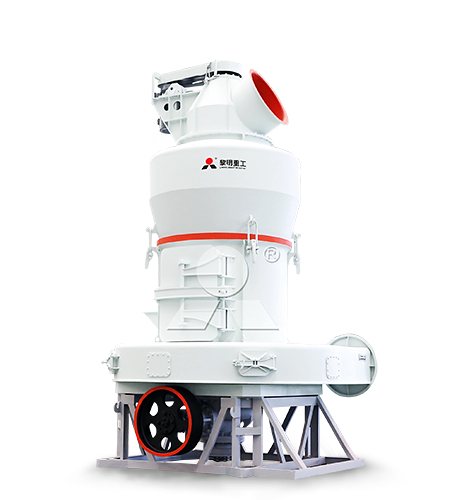
A cement ball mill is commonly used in a closed-circuit grinding arrangement. The ball mill grinds clinker and additives through impact and attrition from steel grinding media. The mill discharge then enters a separate high-efficiency separator for classification.
The separator is a critical component because it controls the fineness of finished cement and the amount of coarse material returned to the mill. If too much fine material returns to the mill, power consumption may increase and mill capacity may fall. If too much coarse material is sent to the finished product, cement quality may not meet the required fineness specification.
A complete closed-circuit ball mill system may include the mill, grinding media, liners, diaphragm, separator, process fan, bag filter, bucket elevator, air slides, conveyors, reject-return system, cement silos, electrical controls, and PLC automation. This conventional configuration remains a reliable solution for cement plants with suitable layout conditions and existing ball mill infrastructure.
When to Choose Open Circuit
Open-circuit cement grinding may be considered for simple projects where the product does not require very fine or tightly controlled particle size distribution. It can also be relevant where a lower initial equipment investment and simpler operating arrangement are more important than maximum efficiency.
Small-scale or simplified cement grinding operations.
Projects with limited initial investment budgets.
Applications where a relatively coarse product is acceptable.
Grinding duties with less demanding fineness requirements.
Sites that require a simple process flow and reduced equipment count.
Existing operations where an open-circuit mill is already installed and the upgrade case is not justified.
For fine cement production, however, open-circuit grinding becomes less attractive because the mill may need to operate longer to reach the target fineness. This can increase energy consumption and make it more difficult to achieve stable product quality.
When to Choose Closed Circuit
Closed-circuit cement grinding is generally suitable for projects that require stable cement quality, controllable fineness, high production capacity, and efficient grinding performance. It is the standard configuration for many modern cement grinding operations.
New cement grinding plants producing ordinary Portland cement or blended cement.
Projects requiring fine cement with controlled Blaine fineness and residue values.
Large-capacity cement grinding operations.
Plants with high electricity costs where specific power consumption is important.
Operations producing multiple cement grades with different fineness targets.
Ball mill systems equipped with a high-efficiency separator and reject-return circuit.
LM Vertical Roller Mill projects using integrated dynamic classification.
Selection Considerations
The best grinding circuit should be selected according to actual production requirements rather than a general preference for one layout. Important decision factors include expected output, clinker grindability, cement type, additive ratio, target fineness, available land area, building height, electricity tariff, maintenance resources, automation level, and future expansion plans.
For a new cement grinding plant, a closed-circuit system is often the preferred solution because it offers stronger control over cement fineness and may reduce specific power consumption. For a ball mill installation, this normally means combining the mill with a high-efficiency separator, process fan, bag filter, return conveying system, and automated controls.
An LM Vertical Roller Mill from Liming Heavy Industry provides an integrated closed-circuit grinding arrangement in which grinding and dynamic classification are combined in one vertical system. A cement ball mill from Liming Heavy Industry can be configured as a conventional closed-circuit system with a separate separator.
Integrated Cement Plant Equipment
For integrated cement projects, clinker grinding is connected with the clinker production process. Raw materials are crushed, proportioned, ground into raw meal, preheated, calcined, and processed in a rotary kiln to form clinker. The clinker is cooled, stored, and transferred to the cement grinding plant.
Liming Heavy Industry also provides rotary kilns and calcining kilns for suitable clinker production and industrial calcination applications. A complete cement plant can include raw-material crushing, raw meal grinding, preheating, calcination, rotary kiln processing, clinker cooling, clinker storage, open-circuit or closed-circuit cement grinding, cement silos, packing systems, bulk loading, dust collection, and automation controls.
Conclusion
Open-circuit cement grinding sends material through the mill once, offering a simpler layout and lower initial equipment requirement. Closed-circuit cement grinding uses a separator to remove fine cement and return coarse material to the mill, providing better fineness control, lower overgrinding risk, and typically stronger energy and capacity performance.
For modern cement clinker grinding, closed-circuit systems are generally more suitable when the project requires high-quality finished cement, controlled fineness, stable production, and lower operating cost per tonne. Liming Heavy Industry can provide LM Vertical Roller Mill solutions with integrated classification and cement ball mill solutions with separate high-efficiency separator systems.