FGD Limestone Grinding Plant
Main Equipment List for an FGD Limestone Grinding Plant
2026-09-19 10:34:14
We are Liming Heavy Industry, a manufacturer of various types of industrial crushers, such as Raymond Mill, Trapezoidal Mill, Vertical Mill, Ultrafine Mill, Ball Mill, etc.
Our mills can process the following minerals:
limestone, quicklime, kaolin, talc, barite, bentonite, calcium carbonate, dolomite, coal, gypsum, clay, carbon black, slag, cement raw materials, cement clinker, etc.
If you need a mill to process stone or minerals into powder, please feel free to contact me (WhatsApp: +8615333807511). Thank you.
An FGD limestone grinding plant is a complete reagent-preparation system rather than a single mill. It receives raw limestone, produces controlled fine powder, prepares a stable limestone slurry, and delivers that slurry continuously to the wet FGD absorber.
For modern wet limestone FGD applications, the finished material is commonly ground to approximately 95% passing 325 mesh, or about 44 μm. The exact fineness, capacity, storage time, and redundancy arrangement should be defined by the absorber design, limestone reactivity, coal sulfur level, and required SO2 removal performance.
Complete Process Route
Limestone receiving → crushing → raw-material storage → controlled feeding → fine grinding → classification → powder collection → finished-powder storage → slurry preparation → slurry storage → metered delivery to FGD absorber
For projects using dry grinding, limestone is first milled into powder and then mixed with water. For wet-grinding layouts, limestone and water enter the grinding circuit together, and the classified slurry is sent directly to a slurry storage tank. Both routes require reliable handling, measurement, agitation, pumping, and control equipment.
Equipment List
| System Section | Main Equipment | Primary Function |
|---|---|---|
| Raw limestone receiving | Truck unloading hopper, rail unloading station, receiving chute, grizzly screen, apron feeder, belt conveyor | Receives bulk limestone and transfers it safely into the preparation line. |
| Metal removal | Permanent magnetic separator, suspended electromagnet, metal detector | Removes tramp iron and protects crushers, mills, feeders, and conveyors from damage. |
| Crushing section | Jaw crusher, impact crusher, hammer crusher, secondary crusher, vibrating screen | Reduces quarry limestone to the stable feed size required by the selected grinding mill. |
| Raw-material storage | Stockpile, covered storage shed, intermediate silo, feed bin, hopper, level indicators | Provides buffer storage between limestone supply and continuous grinding demand. |
| Controlled mill feeding | Vibrating feeder, belt feeder, weigh feeder, rotary valve, screw feeder, gate valve | Maintains a stable limestone feed rate and supports consistent powder quality. |
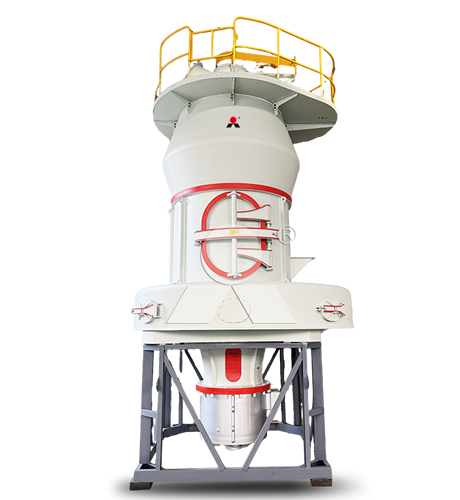
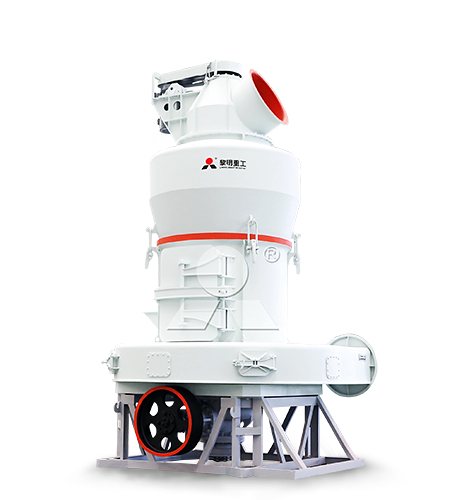
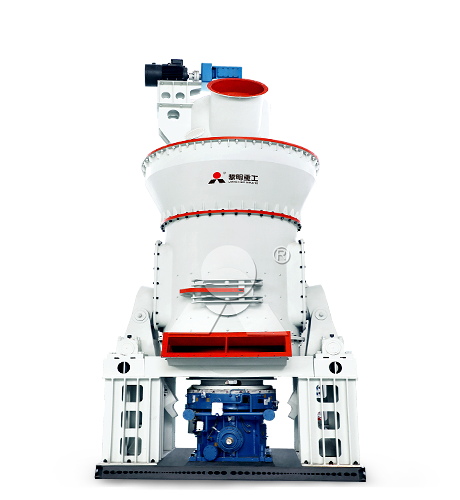
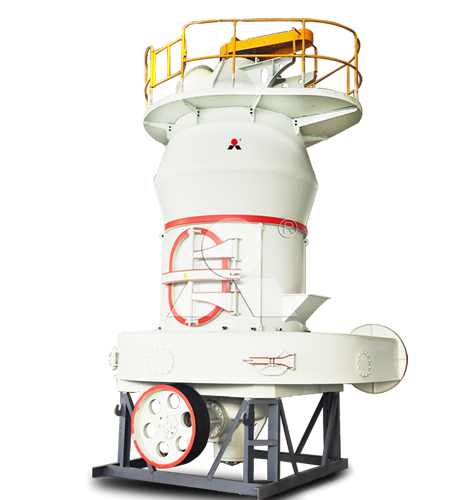
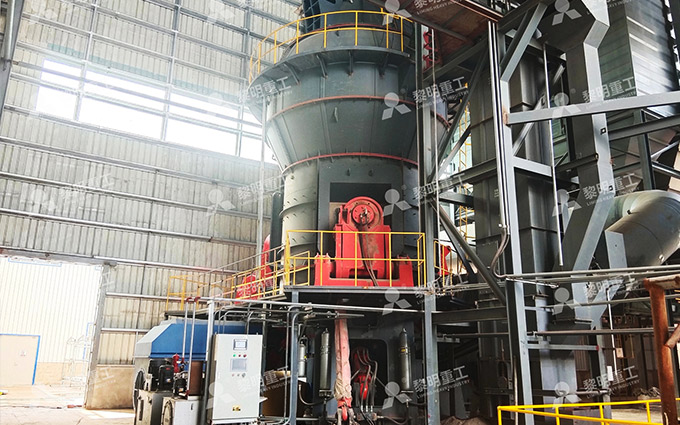
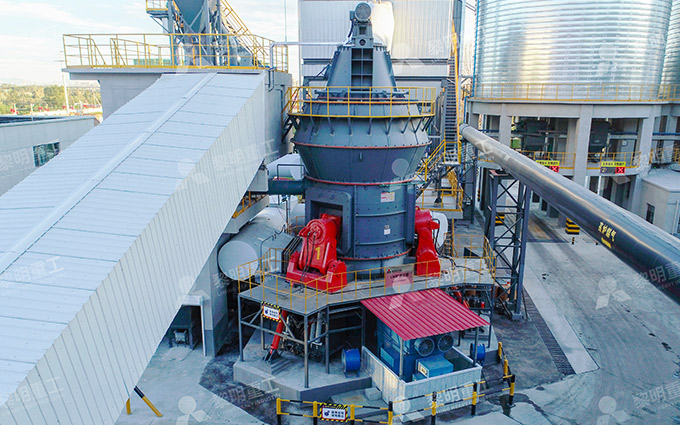
| Fine grinding | LM Vertical Mill or MTW European Mill from Liming Heavy Industry | Grinds crushed limestone into fine FGD powder at the specified output and fineness. |
| Classification | Internal classifier, dynamic separator, classifier drive, return-material system | Separates qualified fine powder from coarse particles and returns oversize material for further grinding. |
| Air and drying system | Main mill fan, hot-air source where required, air duct, damper, expansion joint, temperature instruments | Provides conveying airflow and, where necessary, reduces raw-material moisture during dry grinding. |
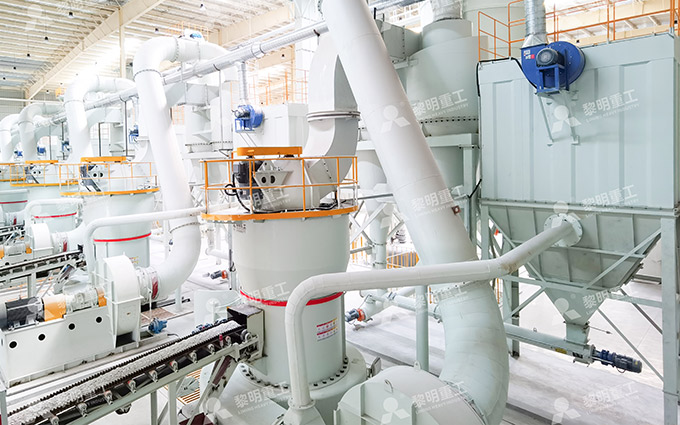
| Powder collection | Pulse bag filter, cyclone collector where required, rotary airlock, screw conveyor | Separates limestone powder from the process air and transfers it to storage. |
| Finished powder conveying | Bucket elevator, pneumatic conveying system, screw conveyor, air slide, rotary feeder | Transfers collected limestone powder to the finished-product silo without excessive material loss. |
| Finished powder storage | Limestone powder silo, vent filter, pressure-relief valve, level switch, load cells, bin aeration pads, air cannon | Stores powder as an operating reserve and ensures smooth discharge to slurry preparation. |
| Slurry preparation | Slurry preparation tank, process-water line, agitator, powder dosing unit, density meter, slurry recirculation pump | Mixes fine limestone powder with water to form a stable, pumpable FGD reagent slurry. |
| Slurry storage | Limestone slurry storage tank, agitator, tank-level transmitter, overflow line, standby agitator where required | Maintains slurry inventory and prevents solids settlement before FGD use. |
| Slurry delivery | Duty-and-standby slurry pumps, flow meter, density meter, isolation valve, control valve, flushing-water line | Feeds the required limestone slurry quantity to the absorber reaction tank or reagent-feed point. |
| Electrical and automation | MCC, VFD, PLC or DCS interface, field instruments, control cabinet, online monitoring system | Coordinates feed rate, mill load, airflow, fineness, silo level, slurry density, and FGD demand. |
| Dust and safety control | Dust collector, local extraction hood, explosion-relief devices where required, sound enclosure, access platforms, fire protection system | Controls dust, supports safe maintenance access, and protects personnel and equipment. |
Core Grinding Equipment
The grinding mill should be selected according to the required limestone consumption, finished-powder fineness, feed moisture, available installation space, and plant availability requirement. For this type of plant, the recommended grinding equipment is limited to the following Liming Heavy Industry solutions.
| Equipment | Best-Fit FGD Application | Process Contribution |
|---|---|---|
| LM Vertical Mill | Large FGD limestone powder projects, centralized grinding stations, multi-boiler systems, and high continuous reagent demand. | Integrates grinding, classification, drying, and pneumatic conveying in one system. It is suitable where a compact large-capacity layout and stable continuous output are required. |
| MTW European Mill | Medium FGD powder production, industrial boiler desulfurization, retrofit projects, and localized slurry preparation systems. | Provides controlled fine grinding with adjustable classification and practical integration with dust collection, powder storage, and slurry preparation equipment. |
The final mill model should be selected based on the guaranteed output at the required fineness, not simply on nominal capacity. Limestone hardness, Bond Work Index, feed moisture, silica content, and target particle-size distribution can all change the actual achievable output.
Raw Material Handling Equipment
Raw-material handling determines whether the mill receives a stable feed. An undersized crusher, poorly designed hopper, or unreliable feeder can reduce the output of the entire FGD reagent-preparation line even when the grinding mill itself is correctly selected.
A typical crushing and handling section includes a receiving hopper, grizzly screen, feeder, crusher, discharge conveyor, metal-removal device, and raw-material storage bin. The objective is to produce crushed limestone with a controlled maximum feed size and maintain continuous material flow to the mill.
Important selection points include:
Maximum incoming limestone lump size and required crusher reduction ratio.
Seasonal variation in raw limestone moisture.
Clay content and the risk of hopper blockage or belt carryback.
Need for magnetic separation before crushing and before the mill feed point.
Required stockpile capacity during quarry, transport, or weather-related interruptions.
Enclosed transfer points and dust collection at unloading, crushing, and conveying locations.
Powder Collection and Storage
After grinding and classification, qualified limestone powder must be separated from the air stream and stored without moisture absorption or uncontrolled dust release. The principal equipment is normally a pulse bag filter, sealed discharge valve, conveying equipment, and a finished-product silo.
The bag filter serves two process functions: it captures finished powder and stabilizes airflow through the grinding circuit. Poor filter performance can reduce powder recovery, disturb classifier operation, increase differential pressure, and create dust accumulation around the plant.
The powder silo should be sized as an operating buffer between the mill and the FGD absorber. Its usable capacity should cover the required period of mill interruption, while also allowing for dead stock, low-level operating limits, and changes in limestone bulk density.
A properly equipped limestone powder silo normally includes:
High, high-high, low, and low-low level indicators.
Vent filter and pressure-relief protection.
Bin aeration pads or fluidizing devices.
Load cells or inventory measurement where required.
Inspection hatch and maintenance access platform.
Rotary valve, screw feeder, or controlled discharge system.
Dry, sealed connections to the slurry preparation section.
Slurry Preparation Equipment
The slurry preparation system converts dry limestone powder into the reagent supplied to the wet FGD absorber. It normally consists of a powder dosing unit, process-water system, slurry preparation tank, agitator, density measurement equipment, transfer pumps, and slurry storage tank.
Powder is metered into water under agitation to produce a uniform suspension. The tank agitator must be adequately sized to prevent settling, especially during low-demand periods. Slurry density should be monitored because density fluctuations can affect reagent feed rate, absorber pH, pump performance, and solids balance.
A typical wet FGD system is divided into three major subsystems: reagent preparation, the scrubber or SO2 absorber with mist elimination, and slurry or solids disposal.
Where wet grinding is selected instead of dry powder grinding, the layout changes. A conventional wet mill circuit may include a wet grinding mill, mill receiver tank, slurry pump, hydrocyclone, distribution box, and limestone slurry storage tank. The hydrocyclone separates coarse particles for return to the mill while sending fine slurry to storage.
Instrumentation and Control List
The FGD limestone grinding plant should operate as a demand-responsive system. It must balance mill production, powder inventory, slurry density, and absorber consumption rather than operate at a fixed output without feedback.
| Control Point | Typical Instrument or Device | Purpose |
|---|---|---|
| Raw limestone feed rate | Weigh feeder, belt scale, VFD-controlled feeder | Maintains stable mill loading and production rate. |
| Mill operating condition | Motor current, vibration sensor, differential-pressure transmitter, bearing-temperature sensor | Protects the mill and supports stable grinding conditions. |
| Grinding airflow | Flow transmitter, pressure transmitter, damper actuator, fan VFD | Controls powder transport and classifier performance. |
| Finished powder fineness | Laboratory sieve analysis, laser particle-size analyzer, classifier-speed control | Verifies compliance with the FGD powder specification. |
| Finished powder inventory | Radar level gauge, rotary level switch, load cells | Protects against silo overflow and low-inventory supply risk. |
| Slurry concentration | Density meter, slurry sampling point, water-flow meter | Maintains the required slurry solids concentration. |
| Slurry tank operation | Level transmitter, agitator motor monitor, tank temperature indicator | Prevents overflow, settlement, and loss of mixing. |
| Slurry feed to absorber | Magnetic flow meter, control valve, pump VFD, pressure transmitter | Adjusts limestone reagent delivery according to FGD operating demand. |
Recommended Redundancy
The reagent-preparation system should not create a single point of failure for the FGD absorber. Large or critical power plants commonly include redundant equipment for components that cannot be repaired quickly or bypassed during operation.
Duty-and-standby slurry transfer pumps.
Duty-and-standby absorber reagent-feed pumps where separate from transfer pumps.
Multiple slurry tanks or compartmented tanks for maintenance flexibility.
Finished-powder storage sufficient to cover planned mill downtime.
Parallel grinding lines or a standby mill for high-availability projects.
Duplicate key instruments for critical density, level, and feed-flow measurements.
Backup power or controlled shutdown arrangements for agitators and slurry pumps where required.
The final equipment list should be prepared from the actual FGD material balance and site conditions. Required hourly powder output, limestone purity, target fineness, raw-material moisture, storage duration, available space, and maintenance philosophy determine the final quantity and size of each item. With the LM Vertical Mill for large projects or the MTW European Mill for medium production lines, the surrounding handling, collection, storage, and slurry equipment should be matched as one coordinated limestone supply system.