FGD Limestone Grinding Plant
How to Reduce Energy Cost per Ton of FGD Limestone Powder
2026-09-19 10:34:49
We are Liming Heavy Industry, a manufacturer of various types of industrial crushers, such as Raymond Mill, Trapezoidal Mill, Vertical Mill, Ultrafine Mill, Ball Mill, etc.
Our mills can process the following minerals:
limestone, quicklime, kaolin, talc, barite, bentonite, calcium carbonate, dolomite, coal, gypsum, clay, carbon black, slag, cement raw materials, cement clinker, etc.
If you need a mill to process stone or minerals into powder, please feel free to contact me (WhatsApp: +8615333807511). Thank you.
The lowest-cost FGD limestone powder is not necessarily the finest powder or the powder produced at the highest instantaneous mill output. The practical target is stable production at the absorber’s required fineness, with the lowest combined electricity, drying, wear-part, labor, and downtime cost per tonne of qualified powder.
For wet FGD service, limestone is commonly produced around 250–325 mesh, and many modern systems use approximately 95% passing 325 mesh. Grinding beyond the absorber’s actual dissolution requirement increases specific power consumption without necessarily improving sulfur dioxide removal.
Measure the Right Cost
Energy improvement should be based on the total electricity consumed by the complete limestone preparation line, not only the main mill motor. Include crushing, feeders, bucket elevators, fans, classifier drives, dust collectors, conveying equipment, powder dosing, slurry agitators, and slurry pumps.
Use the following operating indicator:
Specific electricity consumption = Total plant electricity consumption (kWh) ÷ Qualified FGD limestone powder output (t)
Only include powder that meets the required particle-size specification. If a mill produces high tonnage but the product is too coarse, or if excessive powder must be returned for regrinding, the apparent energy performance will be misleading.
A more complete cost indicator is:
Total cost per tonne = Electricity + drying fuel + wear parts + maintenance labor + downtime loss + dust-control cost
Track this indicator by limestone source, mill model, product fineness, and operating shift. This makes it easier to identify whether higher cost comes from raw-material variability, excessive grinding, poor airflow balance, maintenance issues, or low operating availability.
Set the Correct Fineness
Overgrinding is one of the most common hidden causes of high energy consumption. Limestone particles need enough surface area to dissolve rapidly in the FGD slurry, but ultrafine particles consume disproportionately more energy to produce.
The correct operating target should be established from the FGD process requirement, including limestone reactivity, absorber residence time, slurry pH, target SO2 removal efficiency, gypsum quality, and residual limestone in the dewatered solids.
| Operating Condition | Energy Impact | Recommended Response |
|---|---|---|
| Finished powder is much finer than the absorber requires | Higher mill power, more classifier load, and unnecessary circulating material. | Increase the classifier cut size gradually while confirming absorber pH, gypsum quality, and SO2 removal performance. |
| Too many coarse particles enter the slurry system | Lower limestone dissolution, higher reagent consumption, and possible settling in tanks or pipelines. | Improve classification efficiency and reduce coarse-particle bypass instead of simply increasing total mill output. |
| Wide particle-size distribution | Can combine unnecessary ultrafines with excessive coarse material, wasting grinding energy. | Optimize classifier speed, system airflow, mill feed rate, and air-to-material ratio. |
| Fineness changes frequently between shifts | Creates unstable power consumption and inconsistent slurry behavior. | Use fixed operating windows, automatic feedback, and routine particle-size testing. |
Particle-size distribution is as important as nominal mesh size. Research and industry practice show that particle size strongly affects limestone reaction behavior, while grinding and classification conditions determine how much energy is consumed to reach the selected target.
Stabilize the Feed
A grinding mill uses energy most efficiently when the feed is uniform. Unstable feed size, fluctuating moisture, changing hardness, and variable CaCO3 content force the mill, classifier, and fans to operate away from their best conditions.
Control the following before material reaches the mill:
Maintain a consistent crushed limestone size through correctly sized crushing and screening equipment.
Remove oversized stones before the mill to prevent high mill load, vibration, and lower throughput.
Use a weigh feeder or controlled belt feeder to maintain a steady feed rate.
Separate tramp metal with magnetic separators before the grinding circuit.
Blend material from different quarry faces or stockpile zones when chemical quality and hardness vary.
Monitor CaCO3 content, moisture, silica, and hardness by source and production batch.
Keep raw-material storage covered where rainwater can create sudden moisture variation.
The grinding energy required is linked to feed size, product size, and material grindability. Bond-based grinding calculations use the material Work Index and the feed and product particle sizes to estimate specific energy demand.
Control Moisture and Drying
Moisture can raise energy cost twice: first by reducing grinding efficiency and throughput, and then by requiring more fan power or thermal energy for drying. Wet limestone can coat grinding surfaces, block screens and chutes, reduce classification sharpness, and cause powder to bridge in storage bins.
For a dry grinding line, determine whether the moisture problem should be addressed upstream or inside the mill:
Use covered storage and controlled drainage to reduce rain-related moisture before crushing and grinding.
Separate wet and dry limestone stockpiles instead of feeding variable moisture material randomly.
Introduce only the hot air required to maintain stable mill operation and acceptable finished-powder moisture.
Insulate hot-air ducts and repair air leaks to prevent avoidable thermal losses.
Maintain material flow through hoppers, chutes, and feeders to prevent build-up and intermittent feeding.
Evaluate a wet grinding route where limestone moisture is consistently high and the process already requires slurry preparation.
Classification requirements and feed characteristics influence the allowable moisture in a grinding process. Mineral-processing guidance notes that moisture limits depend on feed type and classification accuracy, with allowable levels commonly ranging from about 2.5% to below 1% for sensitive dry circuits.
Optimize Grinding and Classification
The largest savings usually come from optimizing the interaction among mill load, grinding pressure, classifier speed, airflow, and feed rate. These parameters should be adjusted as a group. Changing only one variable can improve one indicator while increasing total energy use elsewhere in the circuit.
| Parameter | If Set Too Low | If Set Too High | Energy-Efficient Operating Goal |
|---|---|---|---|
| Mill feed rate | Low production rate spreads fixed auxiliary power over fewer tonnes. | Overloading increases vibration, recirculation, and coarse product risk. | Keep a stable feed rate near the mill’s efficient operating window. |
| Grinding pressure or grinding load | Insufficient size reduction and excessive coarse return. | Higher wear and unnecessary power draw. | Use the lowest setting that consistently achieves the required product fineness. |
| Classifier speed | Coarse product and lower FGD reactivity. | Excessive ultrafines, high recirculation, and increased energy consumption. | Set the cut point to meet, but not substantially exceed, the specified particle-size distribution. |
| Air volume | Poor powder transport, coarse separation, and possible material accumulation. | Higher fan power, excessive fine-particle carryover, and unstable classification. | Match airflow to feed rate, moisture, classifier setting, and required transport velocity. |
| System pressure balance | Dust escape and unstable air flow. | High fan energy and increased filter pressure drop. | Maintain sealed ducts, clean filters, and stable differential pressure. |
A closed-circuit grinding arrangement is important because it returns only oversized material for further grinding. This reduces the amount of already-qualified powder that is repeatedly ground, which is a major cause of wasted energy. Closed-circuit systems with effective classification are widely used to prevent overgrinding and improve product uniformity.
Choose the Right Mill
Equipment selection should match the required capacity, feed moisture, available space, and operating pattern. A correctly selected mill running steadily near its efficient operating range normally delivers lower cost per tonne than an oversized mill running lightly loaded or an undersized mill operating continuously at overload.
| FGD Production Requirement | Recommended Liming Heavy Industry Solution | Energy-Cost Focus |
|---|---|---|
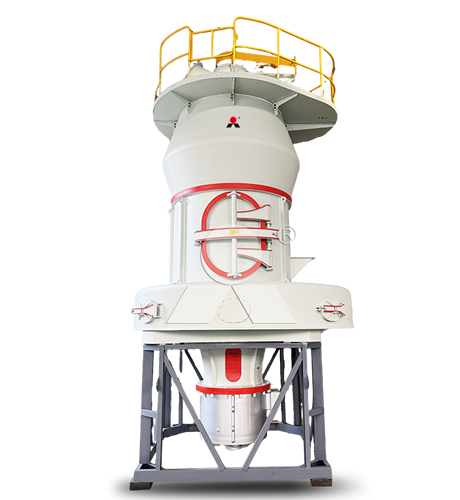
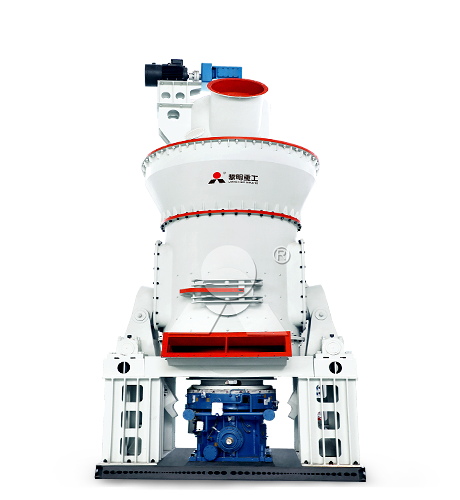
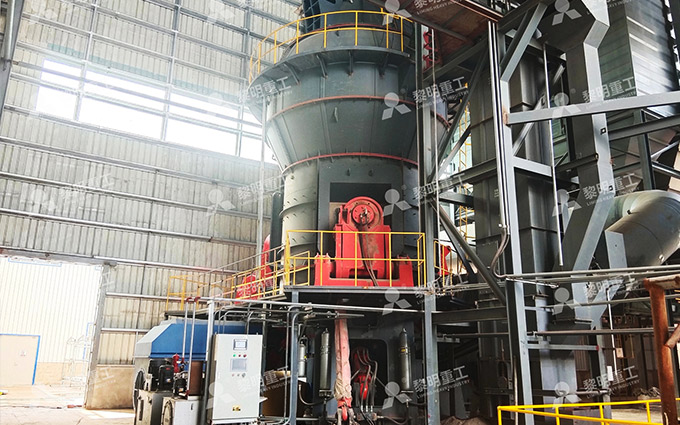
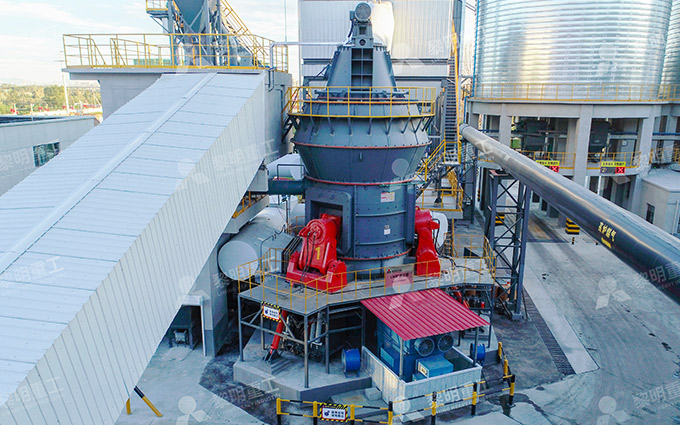
| Large continuous limestone demand, centralized supply, high throughput, or integrated drying requirement | LM Vertical Mill | Its integrated grinding, classification, drying, and conveying arrangement can reduce transfer points and avoid the energy losses associated with separate equipment stages. Vertical roller mill systems are generally recognized as lower-power alternatives to traditional ball-mill circuits in large-scale grinding applications. |
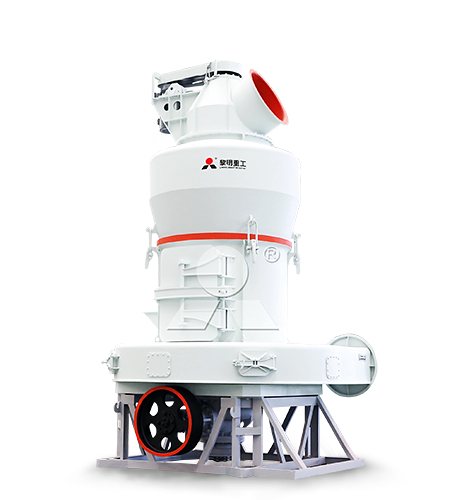
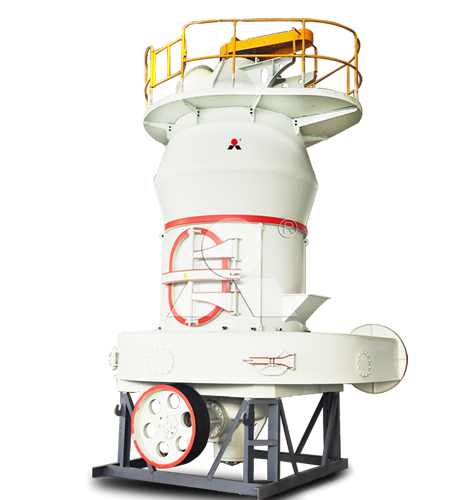
| Medium production demand, moderate footprint, and standard FGD powder requirement | MTW European Mill | Use an appropriately sized model with stable feed, controlled classifier settings, efficient dust collection, and adequate powder storage to avoid low-load operation and repeated starts. |
For either option, capacity must be guaranteed at the actual limestone hardness, moisture level, feed size, and finished-powder fineness. Nameplate capacity alone is not sufficient for cost evaluation.
Reduce Auxiliary Power
In many limestone grinding plants, fans and material-handling equipment consume a substantial share of total electricity. Savings in auxiliary systems can be meaningful even when the main grinding motor cannot be reduced further.
Use variable-frequency drives on main fans, classifiers, feeders, conveyors, and slurry pumps where the duty varies.
Repair duct leakage, worn expansion joints, damaged seals, and unsealed inspection doors that force fans to move unnecessary air.
Keep bag filters clean and monitor differential pressure to avoid excessive fan power.
Use low-resistance duct routing with smooth transitions instead of sharp bends and unnecessary restrictions.
Prevent air bypass around the classifier, mill, and collection system.
Operate conveyors and elevators only when material flow requires them, while avoiding frequent stop-start cycles that disrupt mill feed.
Size pneumatic conveying air velocity correctly; excessive velocity wastes fan energy and accelerates pipe wear.
Maintain slurry pumps near their best-efficiency point and avoid unnecessary throttling.
Classifier performance depends on stable airflow, rotor speed, feed rate, and system pressure. Variable-frequency control and regular calibration allow these conditions to match actual production demand rather than remain fixed at a high-energy setting.
Maintain Mechanical Efficiency
Wear and poor maintenance can increase electricity use long before a mill experiences an obvious failure. Worn grinding components, blocked air passages, leaking ducts, damaged classifier blades, loose belts, and bearing problems all reduce useful energy transfer to the limestone.
Build a preventive-maintenance routine around the energy indicators, not only calendar intervals:
Trend kWh per tonne of qualified powder for every shift and compare it with feed hardness and moisture.
Inspect rollers, grinding rings, table liners, and classifier components before wear changes the particle-size distribution.
Monitor mill vibration, bearing temperature, motor current, and pressure differential for early signs of abnormal operation.
Clean or replace bag-filter elements when pressure drop increases beyond the normal operating range.
Check fan impellers, dampers, ductwork, and air seals for build-up, corrosion, and leakage.
Calibrate belt scales, weigh feeders, density meters, and particle-size testing equipment regularly.
Keep an inventory of critical wear parts to avoid long outages that force emergency external powder purchases or reduced FGD availability.
Use Process-Based Targets
The most effective energy program links the grinding plant to actual FGD performance. Instead of rewarding the mill team only for high throughput, use combined indicators that protect both powder quality and absorber operation.
| Indicator | Purpose |
|---|---|
| kWh per tonne of qualified limestone powder | Measures actual grinding and auxiliary electricity efficiency. |
| Percentage passing the specified control sieve | Confirms that lower energy use is not achieved by producing excessive coarse powder. |
| CaCO3 content per tonne of powder | Separates true reagent availability from total material throughput. |
| Tonnes of limestone per tonne of SO2 removed | Shows whether grinding and absorber conditions are using reagent efficiently. |
| Residual limestone in gypsum | Indicates whether powder fineness and dissolution are appropriate. |
| Mill availability and unplanned downtime | Captures the cost of interruptions, low-load restarts, and emergency supply arrangements. |
The best energy-saving sequence is to first confirm the required FGD fineness, then stabilize limestone feed and moisture, optimize the closed grinding-and-classification circuit, reduce fan and conveying losses, and maintain equipment before wear raises specific power consumption. A stable LM Vertical Mill for large-scale duty or MTW European Mill for medium-capacity duty can then operate close to its most efficient range while consistently supplying the limestone quality required by the absorber.