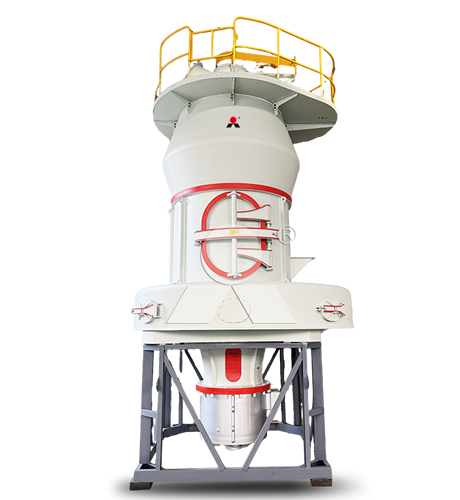
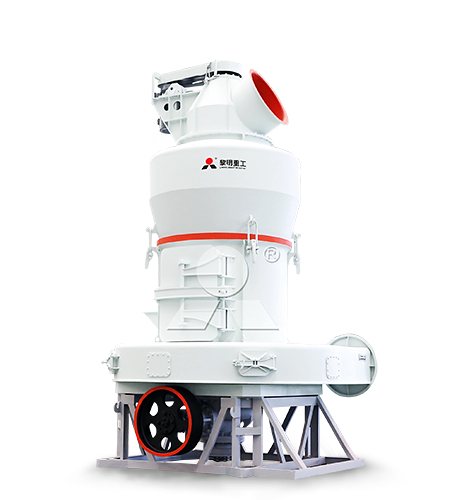
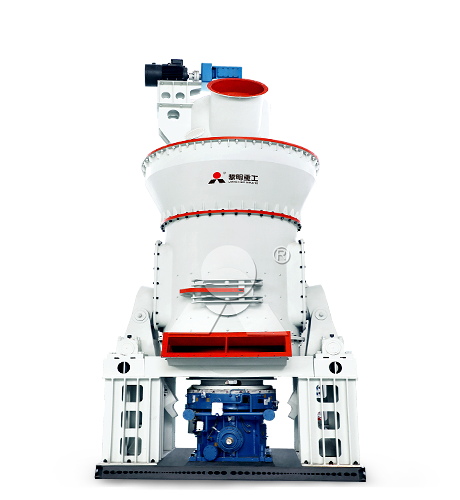
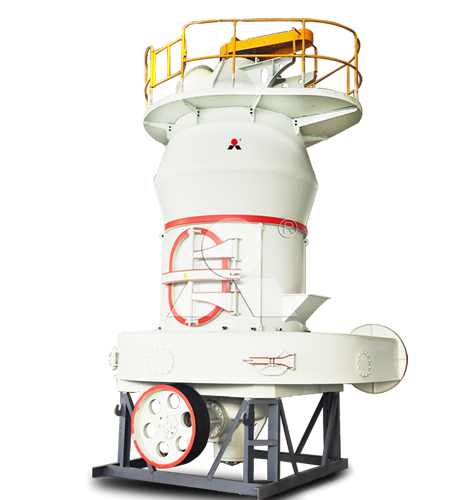
FGD Limestone Grinding Plant
Upgrading an Existing Raymond Mill FGD Powder Line
2026-09-19 10:35:33
We are Liming Heavy Industry, a manufacturer of various types of industrial crushers, such as Raymond Mill, Trapezoidal Mill, Vertical Mill, Ultrafine Mill, Ball Mill, etc.
Our mills can process the following minerals:
limestone, quicklime, kaolin, talc, barite, bentonite, calcium carbonate, dolomite, coal, gypsum, clay, carbon black, slag, cement raw materials, cement clinker, etc.
If you need a mill to process stone or minerals into powder, please feel free to contact me (WhatsApp: +8615333807511). Thank you.
An existing Raymond mill line can often continue serving a wet FGD system if its actual condition, powder quality, and available capacity remain adequate. However, when the plant must consistently supply limestone near 325 mesh, respond to higher sulfur loads, or operate with fewer unplanned stops, the upgrade should focus on the complete circuit—not only the main mill.
The first decision is whether the current line has a correctable bottleneck or whether its basic capacity and classification capability no longer match the FGD duty. Modern wet FGD systems commonly use limestone ground to approximately 95% passing 325 mesh, so a line that produces variable fineness or excessive coarse residue can reduce limestone dissolution and increase reagent consumption.
Start With a Line Audit
Before replacing equipment, establish a reliable baseline from at least several operating shifts under representative boiler load and limestone conditions. Record electricity consumption, mill feed rate, qualified powder output, fineness, raw-material moisture, pressure differential, fan current, classifier condition, dust-collector pressure drop, and slurry preparation performance.
| Audit Item | What to Measure | Why It Matters |
|---|---|---|
| Actual qualified output | Tonnes per hour of limestone that meets the FGD fineness requirement | Nominal mill output is not useful if a large share of powder is too coarse or must be reground. |
| Finished-powder fineness | 325-mesh residue, D90, D97, and full particle-size distribution | Determines whether the powder can dissolve efficiently in the FGD slurry. |
| Specific electricity | Total line kWh ÷ tonnes of qualified powder | Shows the true energy cost of crushing, grinding, fans, collection, conveying, and slurry preparation. |
| Raw limestone condition | CaCO3, moisture, feed size, hardness, silica, and clay content | Changes in limestone source can reduce mill capacity and increase wear without any equipment failure. |
| Mill loading | Main motor current, vibration, grinding pressure, roller and ring wear | Identifies underloading, overload, worn grinding parts, or poor material circulation. |
| Air system | Fan current, airflow, duct pressure, air leakage, temperature, and damper position | Unbalanced airflow affects both powder transport and classification quality. |
| Classifier condition | Rotor speed, blade wear, sealing clearance, buildup, and coarse-particle bypass | Classification is often the limiting factor when a legacy Raymond line cannot maintain fine FGD powder. |
| Dust collection | Bag-filter differential pressure, compressed-air condition, emissions, and powder recovery | A blocked or leaking collector increases fan energy, reduces output, and causes powder loss. |
| Storage and slurry section | Silo discharge, powder bridging, dosing accuracy, slurry density, agitator load, pump reliability | Even qualified powder is ineffective if it cannot be discharged and supplied steadily to the absorber. |
A stable 325-mesh line depends on controlled feed volume, balanced airflow, classifier speed, and manageable raw-material moisture. These variables should be measured before drawing conclusions from the mill’s nameplate rating.
Common Upgrade Paths
| Observed Problem | Likely Cause | Practical Upgrade Direction |
|---|---|---|
| Powder is too coarse or varies between shifts | Worn classifier blades, unstable airflow, poor feed control, leakage, or inadequate classification precision | Repair or replace classifier parts; improve sealing; install a higher-efficiency classifier where required; add feed-rate control and routine particle-size testing. |
| Cannot sustain required tonnes per hour at 325 mesh | Mill is undersized, grinding parts are worn, raw material is harder than design conditions, or circulating load is excessive | Restore grinding components first; improve crushing and feed uniformity; assess replacement with an MTW European Mill or LM Vertical Mill when capacity remains insufficient. |
| High kWh per tonne | Overgrinding, poor classifier cut point, low-load operation, fan leakage, dirty filters, or mechanical wear | Optimize the fineness target and operating window; fit VFDs where appropriate; repair leaks; clean filters; eliminate unnecessary recirculation. |
| Mill blocks or material flow is unstable | Wet feed, clay contamination, undersized hopper outlet, inconsistent feeder operation, or buildup in ducts | Improve covered storage, hopper geometry, flow aids, controlled feeding, and drying capability; remove accumulated material from the process route. |
| High dust level or poor powder recovery | Bag-filter leakage, high filter pressure drop, damaged seals, poor duct design, or insufficient collection capacity | Upgrade filter bags, pulse-cleaning system, fan, duct sealing, and collector area; provide enclosed transfer points. |
| Frequent shutdowns for wear repair | Abrasive limestone, excessive quartz, poor lubrication, bearing wear, or lack of critical spare parts | Use suitable wear-resistant components, improve magnetic separation, strengthen lubrication management, and maintain critical spare inventory. |
| FGD slurry density fluctuates | Unstable powder flow, powder bridging in the silo, inaccurate dosing, weak mixing, or slurry pump instability | Upgrade silo discharge aids, install accurate dosing equipment, improve agitation, and add density-based water control. |
Improve Feed and Crushing First
Many apparent Raymond mill problems begin upstream. When crushed limestone contains oversized particles, excessive fines, high moisture, clay lumps, or tramp metal, the grinding circuit cannot operate consistently. The result is lower throughput, more vibration, unstable classifier performance, and excessive energy use.
Upgrade priorities in the raw-material section include:
Install or improve primary and secondary crushing so mill feed remains within the required maximum size.
Add a vibrating screen or other size-control stage if oversized feed frequently reaches the mill.
Use a permanent magnet or suspended electromagnet before the mill feed point.
Replace uncontrolled gate feeding with a vibrating feeder, belt feeder, or weigh feeder.
Increase buffer-bin capacity so short interruptions in crushing do not cause unstable mill feeding.
Cover the limestone stockpile and improve drainage where rain causes significant feed moisture changes.
Use bin vibrators, air pads, air cannons, or improved hopper angles where wet limestone bridges or hangs up.
Consistent feed size and feed rate allow the grinding rollers, classifier, and fan system to work in a stable range. This is often less expensive and more effective than attempting to solve every performance issue through higher grinding pressure or higher fan speed.
Upgrade Classification and Airflow
In an older Raymond mill line, the classifier and airflow circuit are frequently the decisive limitations when the target is fine FGD limestone powder. The grinding chamber may still reduce limestone adequately, but poor separation allows coarse material to leave with the finished powder or causes excessive fine material to circulate repeatedly.
A higher-efficiency dynamic classifier can improve the separation of qualified powder from coarse particles. It should be evaluated together with the main fan, duct diameter, system sealing, cyclone or collector arrangement, and control system. Simply installing a faster classifier without correcting airflow imbalance can increase power consumption and make the product even less stable.
Key actions include:
Inspect classifier blades, rotor, bearings, shaft alignment, and wear condition.
Check the classifier speed against actual particle-size test results rather than using a fixed historical setting.
Eliminate leakage at mill doors, duct joints, expansion joints, classifier seals, and collector connections.
Remove deposits from ducts, classifier passages, cyclones, and material-return routes.
Balance main-fan airflow with feed rate and product fineness.
Use variable-frequency control where airflow or classifier speed must change with production demand.
Verify that coarse particles are returned effectively for grinding instead of bypassing to the finished-product silo.
Raymond-type systems rely on airflow to carry material to the classifier, return oversize particles for regrinding, and transfer qualified powder to the collector. Negative-pressure operation and a pulse dust collector are commonly used to manage excess airflow and maintain a cleaner working environment.
Renew Grinding Components
Grinding rollers, grinding rings, blades, shovels, liners, and related components gradually lose their designed geometry. As wear increases, the mill may require more power to produce the same output, and product fineness can become harder to control.
A mechanical restoration package should normally include an inspection of:
Grinding rollers and grinding rings for wear profile, cracks, and loss of effective grinding surface.
Grinding roller bearings, seals, and lubrication condition.
Shovel blades and material-lifting components.
Classifier blades, rotor balance, and clearance condition.
Main shaft, transmission components, couplings, and foundation fasteners.
Main motor current, belt tension where applicable, reducer condition, and bearing temperature.
Mill housing, access doors, air seals, and duct connections for leakage.
Maintenance guidance for Raymond roller mills highlights the importance of keeping metal contaminants out of the machine, monitoring bearings and lubrication, and addressing causes of abnormal motor current such as bearing damage, blocked pipes, worn shovel components, or unsuitable classifier settings.
Modernize Collection and Storage
Dust collection is both a process and a housekeeping issue. A poorly performing dust collector raises pressure loss, increases fan power, reduces powder recovery, and may create visible dust around the plant. In an FGD powder line, every tonne lost through poor collection is also a tonne unavailable for slurry preparation.
Consider upgrading the collection and storage system when any of the following conditions are present:
Bag-filter differential pressure remains high despite cleaning.
Filter bags are damaged, clogged, or unsuitable for the operating temperature and powder characteristics.
Compressed-air pressure or pulse-cleaning performance is unstable.
Collector area is too small for the required airflow and powder loading.
Powder escapes from transfer points, rotary valves, silo vents, or inspection doors.
The powder silo bridges, compacts, or cannot maintain stable discharge.
Finished-powder inventory is too small to support the FGD unit during mill maintenance.
A practical upgrade may include a new pulse bag filter, improved rotary airlock, sealed screw conveyor or pneumatic conveying system, silo vent filter, radar level measurement, bin aeration pads, and a controlled powder-dosing device. These changes can improve both production stability and slurry-density control.
Integrate Slurry Preparation Control
The purpose of the Raymond mill line is to provide a stable limestone reagent to the wet FGD absorber. The powder line should therefore be connected to slurry preparation and absorber demand through automatic control rather than operated independently.
Useful control improvements include:
Use finished-powder silo level to start, stop, or adjust the mill feed rate.
Use a loss-in-weight feeder, screw feeder, or calibrated rotary feeder for accurate powder dosing.
Control process-water flow in relation to powder feed rate.
Measure slurry density continuously and use it to correct water or powder addition.
Maintain sufficient agitation to prevent settlement in preparation and storage tanks.
Install duty-and-standby slurry pumps for continuous FGD reagent supply.
Provide flushing-water connections for slurry pipelines during shutdowns.
Trend limestone consumption against inlet SO2, absorber pH, boiler load, and gypsum quality.
This approach allows the grinding plant to follow real reagent demand. It also reveals whether a high limestone-consumption rate is caused by mill fineness, limestone purity, absorber chemistry, or inaccurate slurry dosing.
When to Replace the Raymond Mill
Retrofitting is usually worthwhile when the existing mill has a sound mechanical structure, the required production increase is modest, and the fineness problem can be corrected through feed control, renewed wear parts, improved classification, airflow balancing, and collection-system upgrades.
Replacement should be evaluated when the line cannot provide the required qualified output after a realistic upgrade assessment, when wear and maintenance costs remain high, or when expansion requires a fundamentally different capacity range.
| Project Situation | Recommended Direction |
|---|---|
| Existing line has moderate capacity shortfall, stable dry limestone feed, and limited available space | Upgrade feeder, classifier, air system, collector, silo discharge, and controls; retain the Raymond mill if performance testing confirms that it can meet the required qualified output. |
| Medium FGD powder demand requires a more stable and efficient dedicated grinding line | Replace or add capacity with the MTW European Mill from Liming Heavy Industry. It is suitable for medium FGD powder production and supports controlled fine limestone output with integrated classification. |
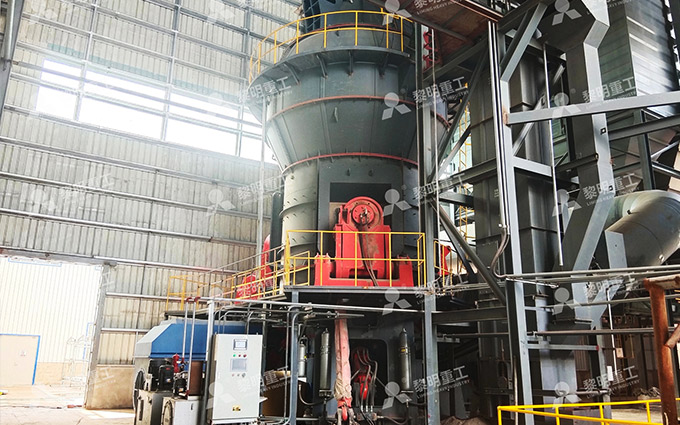
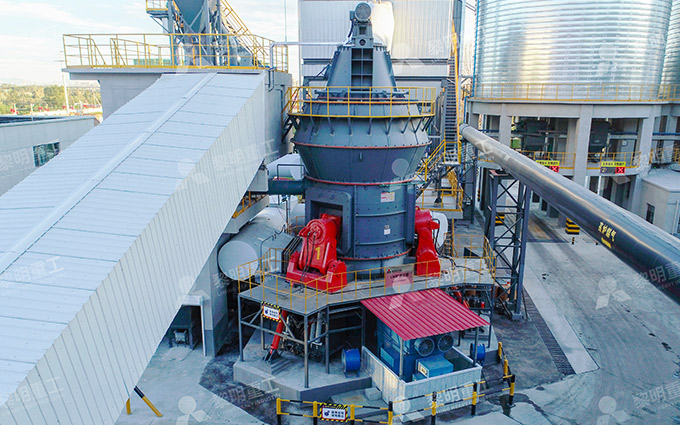
| Large continuous demand, multiple FGD absorbers, high capacity expansion, or need for integrated drying and conveying | Use the LM Vertical Mill from Liming Heavy Industry for a large-scale integrated grinding, classification, drying, and conveying arrangement. |
| High-moisture, highly abrasive, or highly variable limestone source | Complete raw-material testing first. The decision should consider drying demand, wear rate, expected capacity at target fineness, and whether the current dry-grinding route remains suitable. |
As a practical guide, a Raymond-type circuit may be appropriate for smaller duties, but larger FGD powder requirements often justify a dedicated MTW European Mill or LM Vertical Mill. Published comparative guidance places European trapezium mills in a medium-to-high capacity range and vertical roller mills in higher-throughput FGD duty, with both capable of producing limestone in the common 30–325 mesh range.
Recommended Upgrade Sequence
A staged upgrade reduces risk and prevents unnecessary replacement of equipment that is still usable.
Test the actual limestone source for CaCO3, moisture, hardness, silica, clay, and grindability.
Measure qualified hourly output and total kWh per tonne at the required FGD fineness.
Repair obvious mechanical deficiencies, leaks, wear parts, blocked ducts, and dust-collection faults.
Stabilize crushing, raw-material storage, and mill feeding.
Optimize or upgrade the classifier and airflow system based on particle-size test results.
Improve powder collection, silo discharge, dosing accuracy, and slurry-density control.
Run a sustained performance test under maximum representative FGD demand.
Replace the main mill only if the upgraded line cannot meet qualified output, availability, or energy-cost requirements.
An effective Raymond mill upgrade is not measured by a single equipment change. It is measured by whether the complete line can continuously deliver the required limestone quantity, at the required fineness, with stable slurry preparation and acceptable operating cost. When that target cannot be achieved economically, the MTW European Mill for medium-duty projects or the LM Vertical Mill for larger integrated FGD limestone systems provides a clear next-step configuration.