Industrial By-product Gypsum Solutions
Does Industrial Gypsum Need Drying Before Grinding?
2026-09-08 16:07:05
Industrial gypsum does not always need drying before grinding, but moisture must be controlled before the material enters the mill. The correct process depends on gypsum type, free-moisture level, feed condition, target fineness, production capacity, selected grinding system and final application.
Drying is commonly required when industrial gypsum is supplied as wet filter cake, slurry-derived material, sticky stockpile feed or compacted lumps. If the material has already been well dewatered, has stable low moisture and can flow consistently through the feeding system, it may be ground without a separate drying stage. The decision should be based on representative material testing rather than on a fixed moisture limit.
Why Moisture Matters in Industrial Gypsum Grinding
Industrial gypsum is often different from dry, crushed natural gypsum. FGD gypsum, phosphogypsum and other by-product gypsum materials may be produced or stored in wet conditions. They can contain free water that affects feeding, conveying, grinding, classification, powder collection and storage.
Excess moisture can create several operating problems:
Material may bridge or compact inside hoppers and bins.
Wet gypsum can stick to belt conveyors, screw conveyors, chutes and feeders.
Filter cake can form large agglomerates that create unstable mill feed.
Grinding components may become coated with moist material.
Airflow and classification performance can become unstable.
Finished powder may cake during storage or transport.
Production capacity may decrease because part of the system’s energy is used to evaporate water.
The real issue is not whether a material is described as “wet” or “dry.” The key issue is whether its moisture and physical condition allow stable, continuous operation at the required powder quality and production rate.
Free Moisture and Chemically Bound Water Are Different
Industrial gypsum commonly contains calcium sulfate dihydrate. Its chemical formula is CaSO4·2H2O, meaning that water is part of the crystal structure. This chemically bound water is different from free moisture on the surface of the material or between particles.
Grinding systems are mainly affected by free moisture. Free moisture causes sticky feeding, agglomeration and powder caking. The water inside the gypsum crystal does not create these handling problems under normal grinding conditions.
This distinction is important because normal drying for mill preparation aims to reduce free moisture. It should not be confused with calcination, which removes part of the chemically bound water and converts calcium sulfate dihydrate into calcium sulfate hemihydrate.
When Does Industrial Gypsum Need Drying?
Drying is usually required when the material cannot be fed, ground or collected reliably in its incoming condition. The need for drying should be evaluated together with feed preparation, material handling and mill selection.
Drying is commonly required when:
The gypsum is received as wet filter cake or slurry-derived solids.
Free moisture causes material to bridge, compact or stick in the feeding system.
Large wet agglomerates cannot be handled consistently.
The selected mill is designed mainly for dry or low-moisture feed.
The final application requires dry, free-flowing powder.
The finished powder will be stored, packed or transported for a long period.
High moisture would reduce grinding output or create unstable fineness.
The material must be dried before calcination or another downstream process.
Separate drying may not be necessary when:
The material has already been effectively dewatered at the source plant.
Free moisture is stable and low enough for the selected feeding and grinding system.
The gypsum is free-flowing and does not form sticky lumps.
The plant uses an LM Vertical Roller Mill configured for appropriate drying integration.
The final application can accept the resulting powder moisture level.
Storage and conveying systems can protect the powder from moisture absorption.
In practice, the decision is not always “dry” or “do not dry.” Some projects require only mechanical dewatering and controlled storage. Others need a small amount of drying to stabilize the feed. High-moisture materials may require a dedicated drying system or integrated thermal drying during grinding.
Drying Requirements by Industrial Gypsum Type
FGD gypsum
FGD gypsum is commonly generated in wet flue-gas desulfurization systems. After oxidation, washing and filtration, it is often supplied as moist filter cake. The actual moisture depends on the dewatering equipment, operating conditions, washing system and handling practices.
FGD gypsum may require drying before grinding if it remains cohesive or if the selected mill requires a dry, stable feed. In other cases, it can be processed after adequate dewatering and feed preparation. Industry descriptions commonly identify FGD gypsum as a material with moderate moisture after dewatering, while its original slurry condition can contain much more water.
For FGD gypsum used in cement, gypsum board or dry building materials, controlled moisture is important for stable storage, conveying, dosing and powder performance. The correct moisture target should be set by the receiving process, not by a general rule.
Phosphogypsum
Phosphogypsum often requires more careful moisture management because it may be recovered from wet processing or stored in large stockpiles. Its free moisture can be high and can vary significantly between fresh material, aged material and rain-exposed material.
High-moisture phosphogypsum may require dewatering and thermal drying before conventional grinding. If the material is sticky, wet or highly variable, drying should be combined with suitable pre-treatment, lump breaking and controlled feeding. Grinding alone cannot compensate for poor feed condition.
Phosphogypsum also requires evaluation for soluble phosphorus, fluoride-related compounds, acidity and other source-specific properties. Drying improves handling, but it does not remove unsuitable impurities or confirm that the material is acceptable for a given end use.
Citrogypsum, titanogypsum and other by-product gypsum
Citrogypsum, titanogypsum, fluorogypsum, borogypsum and other industrial gypsum sources should be evaluated individually. Their moisture content can depend on filtration performance, washing, storage and the original chemical process.
For these materials, drying should be selected based on measured feed moisture, flowability, agglomeration, target product moisture and equipment requirements. A material that appears dry on the surface may still contain enough free moisture to create handling or grinding problems.
Drying Before Grinding vs. Integrated Drying and Grinding
Industrial gypsum can be dried in a separate stage before grinding or dried inside an integrated grinding system. The better option depends on the moisture load, capacity requirement, available heat source, plant layout and selected mill.
Separate drying before grinding
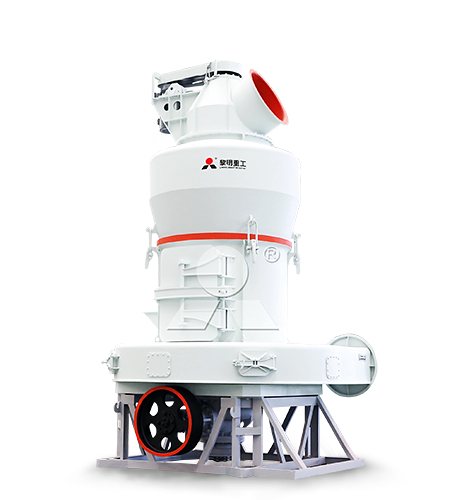
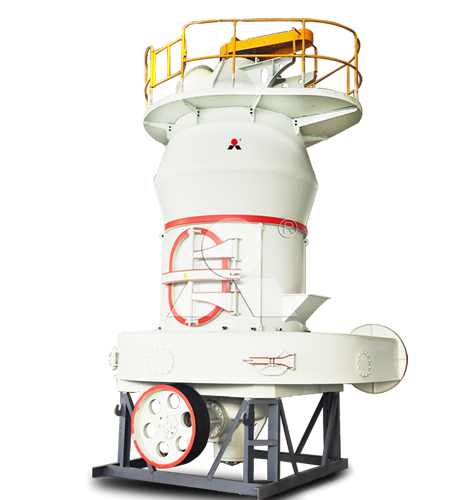
A separate dryer can be used before MTW European Grinding Mill or Raymond mill when the incoming gypsum is too wet for reliable milling. The material is first dewatered or dried, then fed to the grinding system at a more stable moisture level.
This arrangement can be suitable when:
The incoming material has high moisture or large moisture variation.
The project uses an MTW European Grinding Mill or Raymond mill.
The grinding mill is selected mainly for dry, prepared feed.
The plant needs separate control of drying and grinding conditions.
The source material requires deagglomeration or conditioning before milling.
The separate-dryer route may require more equipment, transfer points and installation space. However, it can provide strong control when the material has difficult moisture behavior.
Integrated drying and grinding
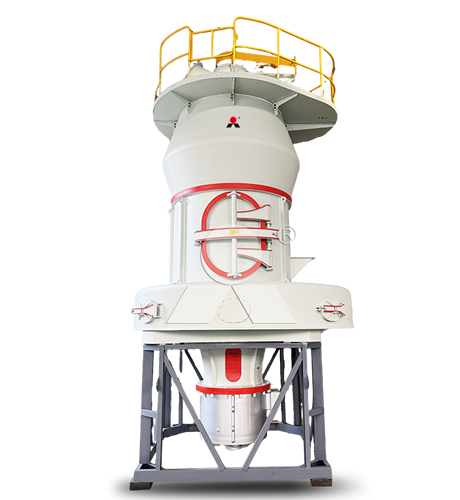
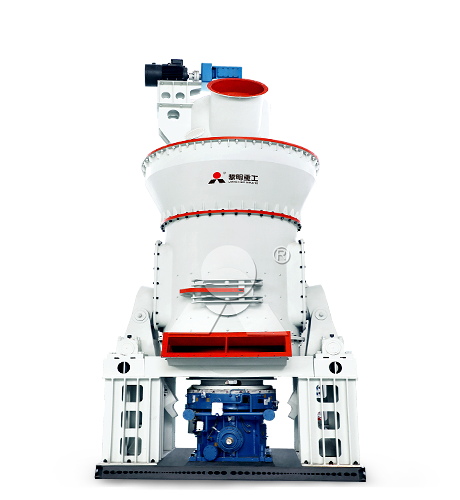
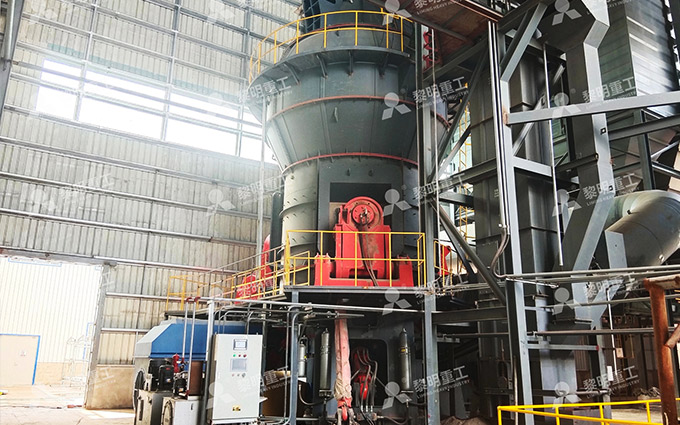
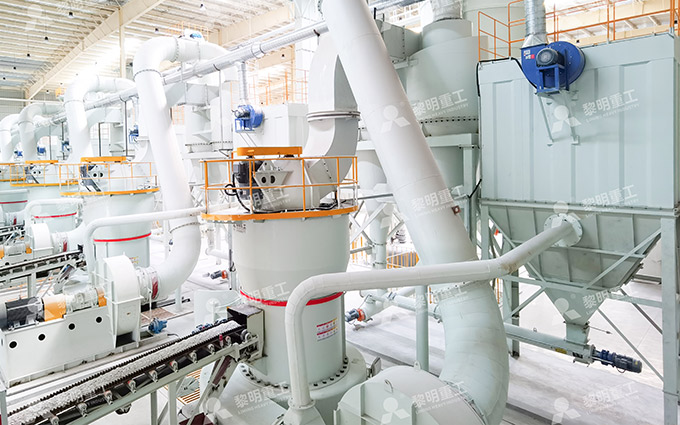
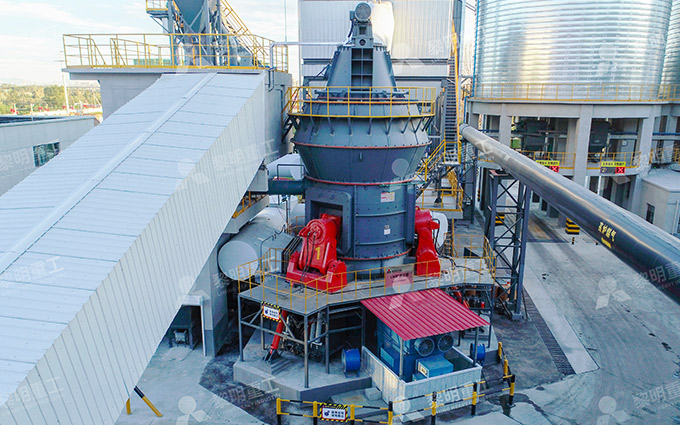
LM Vertical Roller Mill can combine drying, grinding and classification when the system is designed with appropriate hot-gas flow, airflow balance, feed control and dust collection. This can reduce the need for a separate drying stage and simplify the overall process layout.
Integrated drying and grinding can be suitable when:
The project requires medium-to-high production capacity.
Industrial gypsum has moderate-to-high moisture.
The plant has a suitable and stable heat source.
The process benefits from continuous operation.
The target fineness and drying duty can be achieved within one integrated system.
Integrated drying is not automatically the best solution for every project. The actual evaporation load must be calculated from the feed moisture, finished-powder moisture and required dry-product output. The hot-gas system, fan, classifier, dust collector and conveying equipment must all be matched to this load.
How to Calculate the Drying Load
The drying system should be sized based on the mass of water that must be removed per hour. Wet-feed capacity is not the same as dry finished-powder capacity.
For example, assume a plant receives 20 tonnes per hour of industrial gypsum at 18% free moisture and needs to produce powder at 2% moisture.
Wet feed: 20 tonnes per hour
Dry solids in feed: 20 × 82% = 16.4 tonnes per hour
Finished powder at 2% moisture: 16.4 ÷ 98% = approximately 16.7 tonnes per hour
Water removed: 20 − 16.7 = approximately 3.3 tonnes per hour
This means the drying system must remove approximately 3.3 tonnes of water per hour under the stated condition. In actual project design, the system should also account for feed-moisture variation, safety margin, heat losses, exhaust-gas conditions and required production flexibility.
Drying Temperature and Product Quality
Drying temperature should be selected carefully. The purpose of pre-grinding drying is to reduce free moisture and improve handling. It is not necessarily intended to calcine the gypsum.
If temperature is too low, the material may remain wet and difficult to grind. If temperature is too high or residence time is poorly controlled, part of the gypsum may begin to dehydrate. This can change product characteristics and may be undesirable when the project requires calcium sulfate dihydrate powder.
The drying system should therefore be designed to control:
Inlet gas temperature
Material residence time
Outlet gas temperature
Finished-powder moisture
Potential gypsum dehydration during processing
Airflow and dust-collection performance
If the project intends to produce hemihydrate gypsum for plaster or gypsum board, calcination should be treated as a separate, controlled process stage rather than an uncontrolled result of pre-grinding drying.
Which Mill Is Suitable for Wet Industrial Gypsum?
The best mill depends on how much drying is required and whether the gypsum can be conditioned before grinding.
MTW European Grinding Mill
MTW European Grinding Mill is suitable for small-to-medium capacity industrial gypsum powder production with prepared, relatively stable feed. If the gypsum has excessive free moisture, it normally requires upstream dewatering, drying or conditioning before entering the mill.
MTW European Grinding Mill is a practical choice when a separate dryer is acceptable and the project needs controlled conventional powder fineness. It is not intended to replace a complete high-moisture feed-preparation system.
LM Vertical Roller Mill
LM Vertical Roller Mill is suitable for high-capacity industrial gypsum projects with moderate-to-high drying requirements. It can integrate drying, grinding and classification when supported by the correct process design and heat source.
This makes LM Vertical Roller Mill particularly useful for FGD gypsum, phosphogypsum and other by-product gypsum sources with moisture variation. Final selection should be based on actual feed moisture, drying duty, target fineness, required capacity and available hot-gas conditions.
Raymond Mill
Raymond mill is suitable for conventional gypsum powder production with dry or pre-dried, stable feed. It can be used after effective upstream drying and deagglomeration when the project has moderate output requirements.
Raymond mill is generally not the first choice for highly wet, sticky gypsum filter cake without a separate preparation stage. The feed should be sufficiently dry and free-flowing to support stable grinding, air classification and powder collection.
Common Drying Problems Before Gypsum Grinding
Material remains sticky after drying
If gypsum still bridges in hoppers or coats equipment after drying, the problem may be uneven moisture distribution, insufficient residence time, poor feed dispersion, excessive lump size or incomplete deagglomeration. Increasing temperature alone may not solve the problem.
Finished powder cakes in storage
Powder caking can occur when the final moisture remains too high or when dry powder absorbs humidity after collection. The solution may involve improved drying control, sealed conveying, silo ventilation, insulated storage or better protection from external moisture.
Unexpected dehydration during drying
Excessive temperature or long residence time can begin to remove chemically bound water from gypsum. If the final product is intended to remain calcium sulfate dihydrate, drying conditions must be controlled to avoid unintended calcination.
Drying capacity is calculated from average moisture only
A dryer designed only for average feed moisture may become overloaded when moisture increases during rainy periods, source-process changes or stockpile variation. The design should consider the highest normal moisture condition and include suitable operating flexibility.
Information Needed to Decide Whether Drying Is Required
To evaluate the need for drying before industrial gypsum grinding, provide the following information:
Industrial gypsum type and source process
Minimum, average and maximum free moisture
Feed form, including filter cake, slurry-derived solids, loose powder or compacted lumps
Feed size, maximum lump size and degree of agglomeration
Required final powder moisture
Required powder fineness and production capacity
Final application, such as cement, gypsum board, plaster or dry mortar
Whether the process requires dihydrate gypsum or calcined hemihydrate gypsum
Available heat source and energy conditions
Preferred mill type and available installation space
Finished-powder storage and dispatch method
Conclusion
Industrial gypsum does not always need a separate drying stage before grinding, but free moisture must be controlled to achieve stable feeding, efficient grinding, reliable classification and good powder storage performance.
MTW European Grinding Mill and Raymond mill are suitable for prepared gypsum with controlled moisture, usually after upstream drying or conditioning when feed is wet. LM Vertical Roller Mill is suitable for high-capacity projects and materials that benefit from integrated drying, grinding and classification.
The correct drying route depends on the actual gypsum source, moisture variation, desired finished-powder condition and final application. A representative material test and drying-load calculation should be completed before selecting the mill or finalizing the process flow.