Industrial By-product Gypsum Solutions
How to Design a Complete Industrial By-product Gypsum Processing Line?
2026-09-08 16:14:51
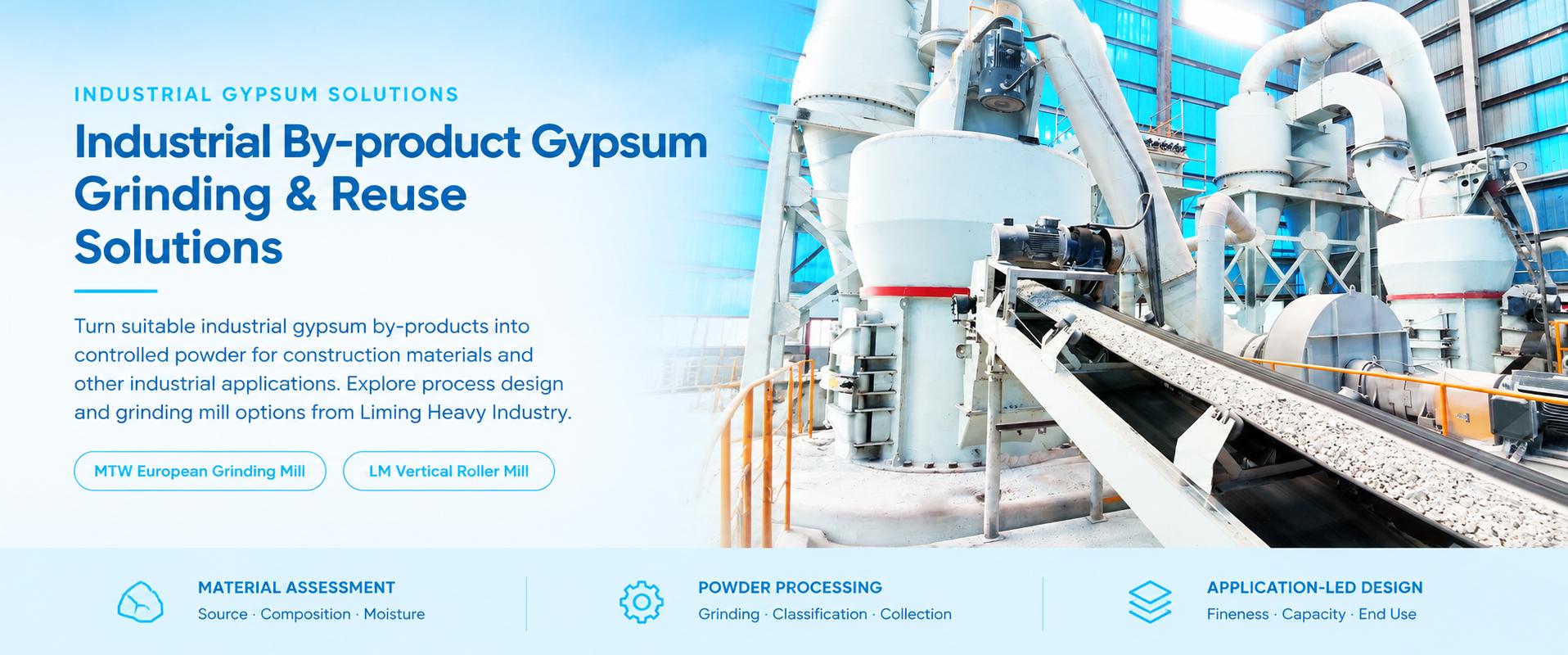
A complete industrial by-product gypsum processing line should be designed from the raw material and final application backward. The correct line is not simply “crusher + mill.” It may include receiving, storage, sampling, deagglomeration, washing or neutralization when required, dewatering, drying, grinding, classification, powder collection, storage, packing and quality control.
FGD gypsum and phosphogypsum require different process priorities. FGD gypsum lines usually focus on washing quality, dewatering, moisture control and stable grinding. Phosphogypsum lines may require those stages plus impurity management, pH control, environmental or radiological review and application-specific treatment before the material is approved for reuse.
Start with the End Product
The first design decision is the product to be sold or used. This defines the required process route, powder fineness, moisture target, chemical quality, storage method and equipment configuration.
Possible final products include:
Gypsum powder for cement setting control
Gypsum feed for gypsum board or wallboard production
Calcined gypsum for plaster and gypsum-based building products
Gypsum powder for dry mortar and construction-material formulations
Industrial gypsum powder for qualified filler or chemical applications
Other reuse applications confirmed by material testing and local requirements
The processing line must be selected around the final product. A line producing dihydrate gypsum powder for cement is different from a line producing hemihydrate stucco for plaster or gypsum board. Grinding controls particle size, while calcination changes the chemical form of gypsum through controlled heat treatment.
1. Collect Material Data Before Designing Equipment
Industrial by-product gypsum should be sampled before any mill model or dryer size is selected. Fresh material, aged stockpile material and material from different storage zones can have different moisture, impurity levels and physical behavior.
The preliminary design package should include:
Gypsum type and source process
Representative chemical analysis and calcium sulfate content
Free moisture, total moisture and expected moisture variation
Feed form, such as slurry-derived solids, filter cake, loose powder, stockpile material or compacted lumps
Maximum lump size, particle-size distribution and degree of agglomeration
Bulk density, flowability and tendency to bridge or stick
Chloride, soluble salts, residual sulfite, carbonate and ash-related components for FGD gypsum
pH, soluble phosphorus, fluoride-related compounds, acidity and other source-specific data for phosphogypsum
Trace-element and radiological data where required
Required finished-powder fineness and test method
Required capacity in tonnes per hour of finished dry product
Final application and customer acceptance criteria
Material data determines whether the project requires a simple dry grinding line or a more complete treatment system. Grinding can control powder size, but it cannot remove unsuitable impurities or establish that the finished material is acceptable for cement, gypsum board, plaster or another final use.
2. Define the Design Basis
A complete plant design should use a written design basis. This avoids comparing equipment proposals that assume different feed conditions or different final-product specifications.
The design basis should define:
Minimum, average and maximum feed moisture
Minimum, average and maximum gypsum content
Required finished-powder capacity at specified fineness
Required annual output and operating schedule
Finished-powder moisture limit
Required powder particle-size distribution
Final product type: dihydrate gypsum powder, calcined gypsum or another product
Allowed impurity range for the final application
Available heat source and energy conditions
Raw-material receiving and finished-product dispatch method
Site area, building-height limit and local environmental requirements
Capacity must be expressed as finished dry product. Wet-feed capacity can be misleading because part of the incoming mass is water that must be removed before the powder is stored or delivered.
For example, a plant receiving 30 tonnes per hour of industrial gypsum at 18% free moisture contains 24.6 tonnes per hour of dry solids. If the finished powder is specified at 2% moisture, the plant produces approximately 25.1 tonnes per hour of finished powder and must remove approximately 4.9 tonnes of water per hour. The drying system, hot-air source, fan, dust collector and conveying equipment should all be designed around this actual evaporation duty.
3. Select the Appropriate Process Route
Industrial gypsum processing routes vary according to source material and final application. The following flow chart provides a practical starting point:
Receiving → Sampling → Storage → Pre-treatment → Dewatering / Drying → Grinding → Classification → Collection → Storage / Packing → Quality Control
Additional treatment steps may be required before drying and grinding, especially for phosphogypsum or other chemical-industry gypsum sources:
Receiving → Sampling → Segregation → Washing / Neutralization / Treatment → Dewatering → Drying → Grinding → Classification → Collection → Storage → Quality Control
If the target product is calcined gypsum for plaster or gypsum board, add a controlled calcination stage:
Receiving → Preparation → Drying / Grinding → Calcination → Cooling → Classification → Storage → Product Testing
4. Raw-Material Receiving and Storage
The receiving system should match the physical form of the gypsum. FGD gypsum may be delivered as moist filter cake, while phosphogypsum may come from fresh production, covered storage, open stockpiles or long-term stacks.
A complete receiving section may include:
Truck, rail, belt-conveyor or bulk-material receiving equipment
Covered receiving pit or hopper
Raw-material storage shed or enclosed stockpile area
Drainage and runoff-control system
Hopper lining and geometry designed to reduce material buildup
Feeding equipment suitable for moist or cohesive material
Sampling points for incoming-material quality control
Covered storage is particularly important for industrial gypsum because uncontrolled rain exposure can increase free moisture, create large lump variation and raise drying cost. Storage design should also prevent contamination from soil, metal, wood, plastics or other foreign material.
5. Sampling, Segregation and Quality Control
Quality control should be designed into the plant rather than added after commissioning. Industrial by-product gypsum can vary with source-process conditions, raw-material changes and storage history.
The plant should have a sampling plan for:
Incoming gypsum
Material after washing or pre-treatment where applicable
Material entering the dryer or mill
Finished powder
Stored product before dispatch
Where source quality varies significantly, material segregation or controlled blending may be necessary. For example, fresh phosphogypsum and aged stockpile material may have different moisture, acidity and impurity profiles. Mixing them without control can make drying, grinding and final-product quality unstable.
6. Pre-treatment and Feed Preparation
Pre-treatment prepares gypsum for stable downstream operation. The required steps depend on whether the material is dry, moist, lumpy, contaminated or chemically unsuitable for the intended application.
Mechanical pre-treatment
Mechanical preparation may include:
Screening to remove oversize material and foreign objects
Magnetic separation where ferrous contamination is a concern
Lump breaking or deagglomeration of filter cake
Crushing of hard compacted gypsum lumps
Controlled blending to stabilize moisture and quality
Mechanical dewatering before thermal drying
The purpose is to create a stable feed. Industrial gypsum often has fine primary particles, but it can still form large agglomerates after filtration, transport or stockpiling. These agglomerates can block feeders and reduce mill performance if they are not managed before grinding.
FGD gypsum preparation
FGD gypsum processing commonly focuses on dewatering, washing quality, moisture control and feed stability. In a typical wet FGD system, gypsum slurry can be dewatered in two stages using primary hydrocyclones followed by vacuum belt filters. One published technical specification describes a target of less than 10% moisture in the final gypsum cake after vacuum-belt filtration.
Depending on the final application, the FGD gypsum may be washed to reduce selected soluble components, then dewatered, stored under cover, deagglomerated and dried before conventional grinding. The actual process should be selected from source-material analysis and the receiving customer’s specification.
Phosphogypsum preparation
Phosphogypsum can require a broader pre-treatment route. It may contain soluble phosphorus, fluoride-related compounds, residual acidity, salts and other source-specific constituents. The processing line may need washing, neutralization, filtration and controlled treatment before grinding.
Published phosphogypsum studies describe washing and neutralization routes to reduce water-soluble phosphorus and acidity. One reported approach uses water washing and, where needed, neutralization to a pH range of approximately 7–9 before drying and further processing. The appropriate treatment method, water demand and target chemistry must be defined by the material and the final application.
Water treatment and wastewater management must be included in the plant design if washing is used. A washing process without a practical solution for filtrate, recycled water, solids recovery and discharge compliance is not a complete production line.
7. Dewatering and Drying
Dewatering and drying are among the most important sections of an industrial gypsum plant. Free moisture affects storage, feed flow, grinding efficiency, classification, powder collection and finished-product stability.
Mechanical dewatering
Mechanical dewatering should be used where practical because removing water mechanically is generally less energy-intensive than evaporating it thermally. Depending on the source material, equipment may include hydrocyclones, vacuum belt filters, centrifuges, filter presses or other solid-liquid separation systems.
For FGD gypsum, hydrocyclone and vacuum-belt-filter arrangements are widely used to convert slurry into a filter cake that can be transported and processed further. The actual moisture after dewatering should be measured regularly because it determines the thermal drying load.
Thermal drying
Thermal drying may be needed when the gypsum remains too wet for stable grinding or when the finished powder must have low moisture for storage, transport or end use.
The drying system may include:
Separate dryer before the mill
Hot-air generator or waste-heat connection
Drying ducts, fans and temperature-control equipment
Dust collection and gas-cleaning equipment
Insulated conveyors and transfer points where needed
Drying must remove free water without unintentionally changing calcium sulfate dihydrate into calcined gypsum when the product is intended to remain dihydrate powder. Temperature, material residence time, airflow and finished-powder moisture should be controlled carefully.
8. Select the Grinding System
After feed preparation and moisture control are defined, select the grinding system according to finished-powder capacity, target fineness, feed condition, drying demand and required process integration.
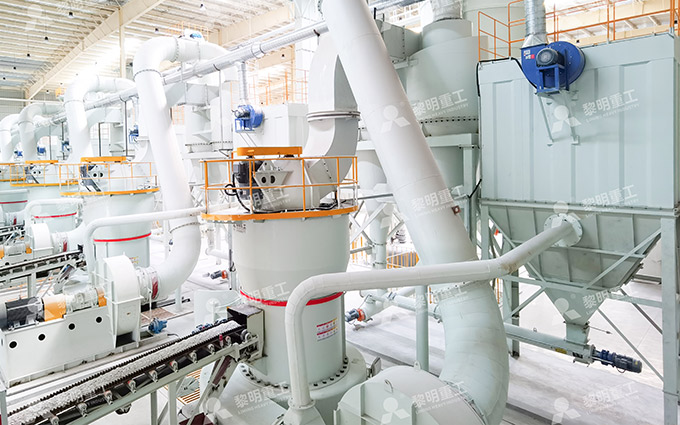
MTW European Grinding Mill
MTW European Grinding Mill is suitable for small-to-medium capacity industrial gypsum powder production. It is appropriate for prepared, relatively stable feed and conventional powder fineness. Wet FGD gypsum or phosphogypsum normally requires upstream dewatering, drying and deagglomeration before entering an MTW grinding system.
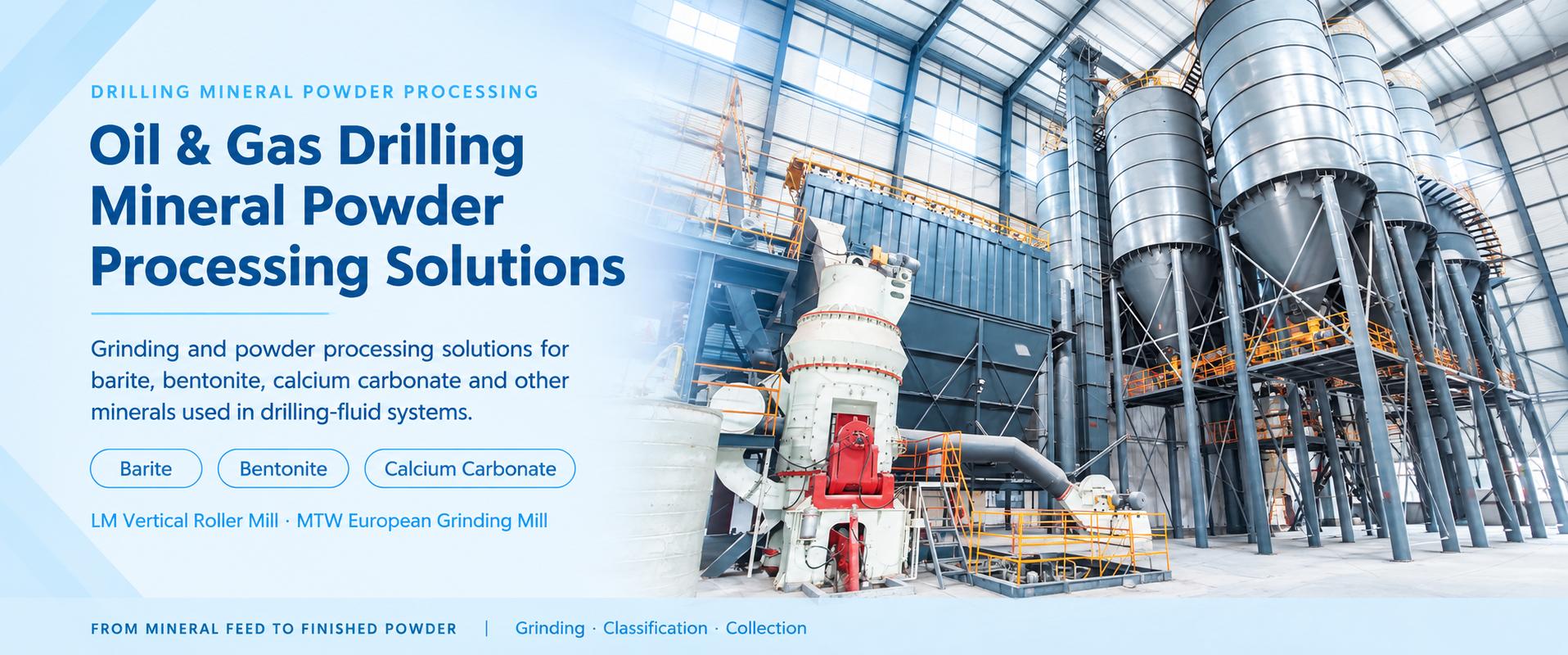
A typical MTW line can include a controlled feeder, the grinding mill, classifier, fan, cyclone or powder collector, bag filter, conveying equipment and finished-powder silo.
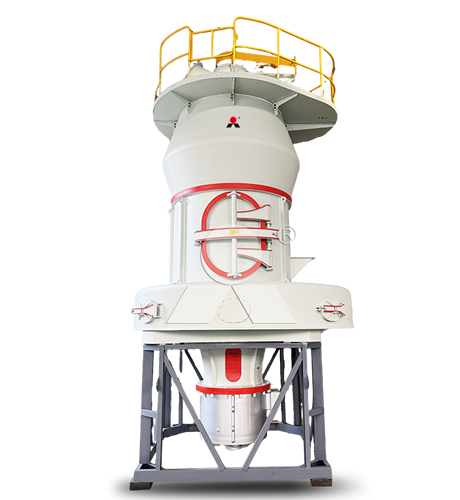
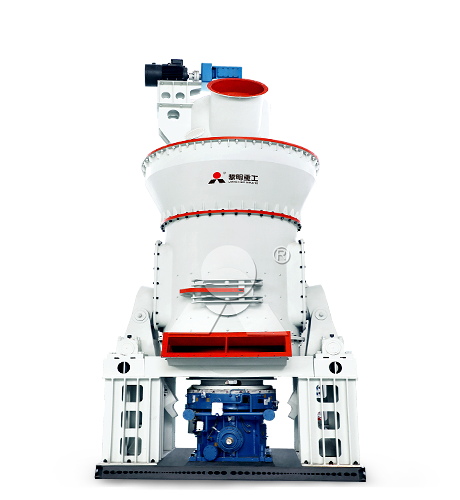
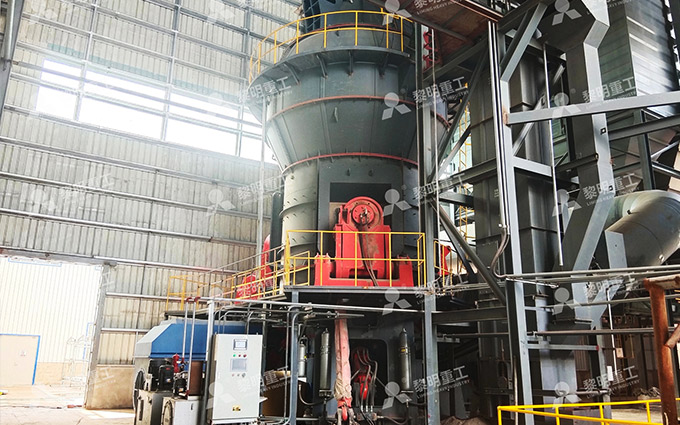
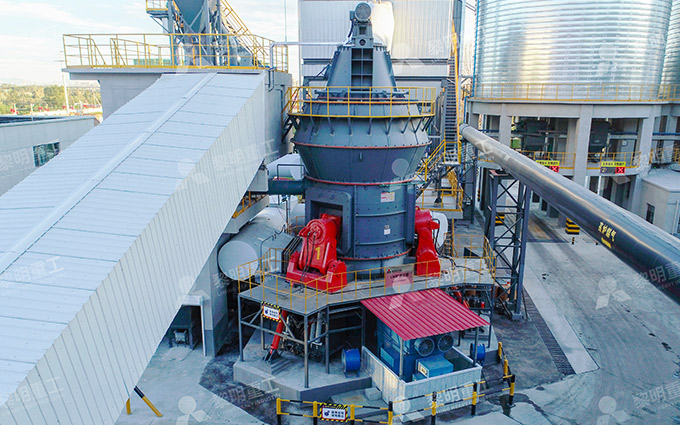
LM Vertical Roller Mill
LM Vertical Roller Mill is suitable for medium-to-large and high-capacity gypsum processing projects. It can integrate drying, grinding and classification when the gypsum has moderate moisture and a suitable heat source is available.
LM Vertical Roller Mill is especially relevant when the plant needs continuous high output, has significant drying demand or benefits from reducing separate equipment stages. The final design should be based on actual moisture variation, evaporation load, target fineness, heat-source conditions and required finished-powder capacity.
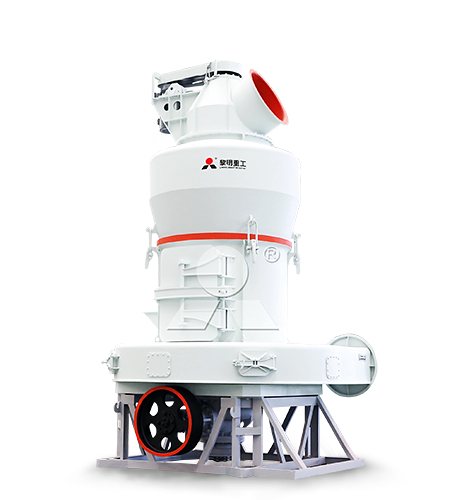
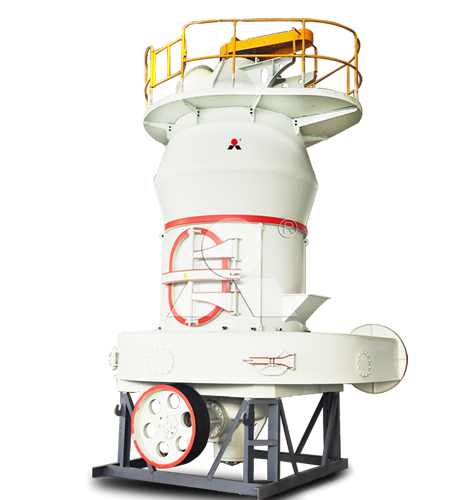
Raymond Mill
Raymond mill can be considered for conventional gypsum powder production with moderate capacity requirements and dry, stable, adequately prepared feed. It is suitable where major drying duty is not required inside the mill.
For wet filter cake, sticky industrial gypsum or highly variable feed, a Raymond mill should be paired with effective upstream preparation. It should not be expected to solve high-moisture handling problems without drying and conditioning.
9. Classification and Fineness Control
Classification separates qualified powder from oversized particles. Coarse material is returned for additional grinding, while fine powder moves to the collection system.
Fineness should be defined by the final application. A cement customer may specify sieve residue, a dry-mortar producer may require a particle-size distribution, and a gypsum-board plant may require a process-specific surface area or feed behavior.
The plant should control:
Classifier speed or cut point
Airflow volume and balance
Feed rate
Grinding pressure or mill load
Finished-powder particle-size distribution
Finished-powder moisture
Higher fineness normally reduces finished-powder capacity and increases energy use. The target should be the minimum fineness that meets the final product requirement, not the highest fineness the mill can achieve.
10. Powder Collection and Dust Control
After classification, the finished gypsum powder must be collected, separated from the process air and transferred to storage. Dust-control equipment is necessary for material recovery, plant cleanliness, worker safety and environmental compliance.
A complete collection system may include:
Cyclone separator where applicable
Bag filter or other high-efficiency dust collector
Induced-draft fan and controlled duct system
Airlocks, rotary valves or screw conveyors
Sealed transfer chutes and dust-extraction points
Monitoring of filter differential pressure and fan performance
Dust control should be designed as part of the grinding circuit. Poor airflow balance can reduce classification efficiency, increase product loss, overload filters and make powder fineness unstable.
11. Finished Powder Storage, Packing and Dispatch
Finished gypsum powder should be protected from moisture after grinding. If the powder absorbs water during storage, it can cake, lose flowability and become difficult to convey or dose accurately.
The final product section may include:
Finished-powder silos with level measurement
Silo aeration and discharge systems
Bulk tanker loading equipment
Big-bag filling or small-bag packaging systems
Weighing, sampling and product-identification systems
Warehouse space for packaged powder
Dust extraction at loading points
The choice between bulk and bagged dispatch should be made early because it affects silo capacity, warehouse layout, packing equipment, labor needs and customer logistics.
12. Add Calcination Only When Needed
Grinding and calcination should not be confused. Grinding reduces particle size. Calcination removes part of the chemically bound water in calcium sulfate dihydrate to produce calcium sulfate hemihydrate, commonly called stucco or plaster of Paris.
Add a calcination stage when the final product is:
Gypsum plaster
Gypsum-board stucco
Gypsum blocks
Molded gypsum products
Another settable gypsum binder
For cement-grade gypsum or industrial dihydrate powder, calcination may not be needed and may be undesirable. The product specification should determine whether the plant is designed for grinding only, drying and grinding, or a complete grinding-and-calcination route.
13. Automation and Process Control
Automation helps maintain stable capacity, fineness, moisture and product quality. The appropriate level depends on plant size, material variability, labor availability and customer specifications.
Useful controls include:
Automatic feed-rate control
Moisture, temperature and gas-flow monitoring
Mill-load and grinding-pressure control
Classifier-speed adjustment
Fan-speed and airflow control
Dryer temperature and outlet-moisture control
Filter differential-pressure monitoring
Silo-level measurement and loading control
Interlocks, alarms and emergency shutdown systems
Production reporting and quality-data recording
For industrial by-product gypsum, data recording is valuable because it helps connect feed changes with finished-powder quality. This can reduce waste, improve troubleshooting and support customer acceptance.
14. Environmental and Safety Design
Environmental and safety requirements should be included in the initial line design. Retrofitting dust, wastewater, heat-source or material-handling systems later is usually more expensive and can interrupt production.
Key design areas include:
Dust collection at mills, conveyors, silos and packaging points
Noise control and equipment enclosure where required
Combustion emission control for thermal drying or calcination
Fire protection and temperature safety systems
Safe access platforms, guards and maintenance space
Wastewater and filtrate management if washing is included
Runoff control for outdoor raw-material storage
Material-specific environmental and radiological controls where required
For phosphogypsum, the plant design must include the applicable environmental, product-quality and radiation-protection requirements of the intended market. The material should not be processed into a building-material feedstock until the proposed application route has been technically and legally confirmed.
Example Line Configurations
FGD gypsum powder line for cement or building materials
FGD gypsum filter cake → covered storage → lump breaking → controlled feeding → drying or LM Vertical Roller Mill with integrated drying → grinding and classification → bag filter → finished-powder silo → bulk loading or bagging
This route is suitable when FGD gypsum quality is acceptable and the main requirement is moisture reduction, controlled fineness and stable powder handling.
Phosphogypsum powder line for a qualified application
Phosphogypsum receiving → sampling and segregation → washing / neutralization when required → filtration and dewatering → drying → deagglomeration → grinding and classification → dust collection → finished-powder storage → application-specific quality control
This route emphasizes material treatment before grinding. The exact washing and neutralization stages depend on impurity data, wastewater management capability, final application and local requirements.
High-capacity gypsum grinding line with integrated drying
Prepared moist gypsum → covered storage → deagglomeration → controlled feeding → LM Vertical Roller Mill with hot-gas drying, grinding and classification → bag filter → silo storage → bulk dispatch
This route can reduce separate equipment stages when the project has sufficient capacity, a stable heat source and a material condition suitable for integrated drying.
Final Design Checklist
Before issuing a final equipment specification or requesting a quotation, confirm the following:
Gypsum source and source-process description
Representative chemical analysis and impurity profile
Minimum, average and maximum feed moisture
Feed form, lump size, flowability and storage condition
Required final product and target market
Required fineness, moisture and finished-powder capacity
Need for washing, neutralization, dewatering, drying or calcination
Available heat source, electricity supply and energy cost
Mill selection: MTW European Grinding Mill, LM Vertical Roller Mill or Raymond mill
Dust-control, wastewater and environmental requirements
Raw-material storage and finished-product dispatch method
Site layout, building height, foundations and maintenance access
Automation level, operator requirements and spare-parts plan
Quality-control plan and final-product acceptance method
Conclusion
A complete industrial by-product gypsum processing line begins with material testing and a defined final application. The core stages are receiving, storage, sampling, pre-treatment, dewatering or drying, grinding, classification, powder collection, storage and quality control. FGD gypsum lines commonly prioritize dewatering, moisture control and efficient grinding. Phosphogypsum lines may need additional washing, neutralization, impurity management and compliance evaluation before powder production.
MTW European Grinding Mill is suitable for prepared small-to-medium capacity powder projects. LM Vertical Roller Mill is suitable for high-capacity systems that benefit from integrated drying, grinding and classification. Raymond mill is suitable for conventional powder production with dry, stable and adequately prepared feed.
The right line is the one that matches the actual gypsum source, moisture range, impurity profile, target fineness, output requirement and final product specification. A complete design should evaluate the entire material path, from wet incoming gypsum to stable finished powder, rather than selecting a mill in isolation.