Industrial By-product Gypsum Solutions
How to Test Industrial By-product Gypsum Before Grinding?
2026-09-08 16:18:52
Industrial by-product gypsum should be tested before grinding because the right process depends on more than gypsum content. The evaluation must confirm material chemistry, free moisture, particle size, feed behavior, impurity profile and suitability for the intended final application.
For FGD gypsum, testing usually focuses on moisture, calcium sulfate content, residual sulfite, chlorides, soluble salts and non-gypsum solids. For phosphogypsum, citrogypsum, titanogypsum, fluorogypsum and borogypsum, the test program should also address source-specific constituents such as phosphorus, fluoride, organic residues, acidity, iron, boron, trace elements and, where required, radiological characteristics.
Why Test Before Grinding?
Grinding controls particle size. It does not remove most chemical impurities or make an unsuitable industrial gypsum source acceptable for cement, gypsum board, plaster, dry mortar, agriculture or another end use.
Testing before equipment selection helps answer the most important project questions:
Is the gypsum suitable for the intended final application?
Does the material need washing, neutralization, blending or another pre-treatment?
Does it need mechanical dewatering or thermal drying before grinding?
Can it be fed continuously without bridging, sticking or forming large lumps?
Which mill configuration is suitable for required fineness and capacity?
What quality-control limits are needed for reliable commercial production?
A mill selected only from capacity and mesh size may underperform if the incoming material has high free moisture, variable lump size, sticky filter cake, abrasive impurities or an unsuitable chemical profile.
Step 1: Define the Intended Final Application
Start the test program by defining what the finished powder will be used for. The final application determines the acceptance criteria and the type of process required.
| Final application | Key test focus |
|---|---|
| Cement set regulator | Gypsum content, sulfate contribution, moisture, chlorides, impurities and effect on cement setting and strength |
| Gypsum board feed | Purity, free moisture, particle characteristics, calcination behavior, soluble salts, color and board-process compatibility |
| Gypsum plaster or calcined gypsum | Gypsum phase, impurity profile, calcination behavior, water demand, setting time and strength |
| Dry mortar or construction materials | Fineness, flowability, moisture, setting behavior, strength, compatibility with additives and durability |
| Road base, fill or civil-engineering use | Moisture sensitivity, compaction, strength, leaching, sulfate-related behavior and local requirements |
| Other industrial applications | Application-specific chemistry, particle size, purity, bulk density and regulatory acceptance |
Do not test every material against every possible application. Define the likely market first, then select the tests that determine whether the material can meet that product specification.
Step 2: Collect Representative Samples
A representative sample is more important than a large sample. Industrial by-product gypsum can vary with source-process conditions, raw-material changes, filtration efficiency, storage time, weather exposure and stockpile location.
Sampling should cover normal operating conditions, including:
Fresh material directly after filtration or recovery
Material from different production days or batches
Material from different stockpile locations and depths
Dry and wet-season material where climate affects storage
Material before and after covered storage when possible
Fine material and larger agglomerates or compacted lumps
Keep samples sealed and labeled. Record the source location, date, production batch, storage condition, visible moisture, color, odor, lump size and any unusual features. This information is useful when laboratory results need to be connected with actual material behavior.
Step 3: Inspect Physical Condition
Before laboratory analysis, inspect the material physically. This provides early information about the required storage, feeding and pre-treatment equipment.
Record:
Material form: slurry-derived solids, filter cake, loose powder, granules, lumps or compacted stockpile material
Color and color variation
Odor or evidence of organic residues
Surface moisture and visible free water
Maximum lump size and degree of agglomeration
Flowability and tendency to bridge in a hopper
Stickiness on handling surfaces
Presence of foreign materials, metal, plastics, wood, soil or stones
Apparent bulk density and compaction behavior
Physical inspection does not replace laboratory testing, but it helps determine whether the plant will need covered storage, lump breaking, screening, special hopper geometry, controlled feeding, dewatering or drying.
Step 4: Measure Moisture
Free moisture is one of the most important gypsum processing parameters. It affects storage, material flow, drying duty, grinding efficiency, classification, powder collection and finished-product stability.
Measure at least:
Free moisture in fresh material
Moisture after storage
Minimum, average and maximum moisture across normal supply conditions
Moisture in fine material and larger lumps if they behave differently
Target finished-powder moisture required by the end user
ASTM C472 includes a method for determining free water in gypsum, gypsum plaster and gypsum concrete materials, as well as physical tests for fineness and other relevant properties.
Do not rely on a single average moisture result. A drying and grinding line must be designed for normal variation. Material at 5% free moisture behaves very differently from material at 15% or 25% moisture, even when both are described as “industrial gypsum.”
Step 5: Determine Gypsum Content and Mineral Phases
Identify how much of the material is calcium sulfate and which calcium sulfate phase is present. The main phases can include:
Calcium sulfate dihydrate, CaSO4·2H2O
Calcium sulfate hemihydrate, CaSO4·½H2O
Anhydrite, CaSO4
Calcium sulfite or mixed sulfite-sulfate phases in incompletely oxidized FGD material
Useful methods may include X-ray diffraction, thermal analysis and chemical analysis. X-ray diffraction identifies mineral phases, while thermal methods can help distinguish hydration states and mass loss during heating.
For phosphogypsum reuse studies, researchers have used X-ray diffraction, X-ray fluorescence, thermal analysis and laser particle-size measurement to compare industrial gypsum with natural gypsum.
Gypsum phase matters because it affects drying, calcination, setting behavior and final-product selection. A cement additive, dihydrate gypsum powder, calcined plaster product and anhydrite-based material require different process routes.
Step 6: Complete Chemical Analysis
Chemical analysis determines whether the material can meet the intended application’s quality requirements. The test package should be adapted to the gypsum source.
Core chemical tests for most industrial gypsum sources
Calcium sulfate or gypsum content
CaO and SO3 content
Loss on ignition or thermal mass loss where relevant
pH and residual acidity or alkalinity
Chloride and soluble-salt content where relevant
Insoluble residue
Silica, alumina, iron and magnesium compounds
Carbonate content where relevant
Organic matter where relevant
Additional tests for FGD gypsum
Residual sulfite and oxidation quality
Chloride and soluble-salt content
Residual limestone or carbonate
Fly ash, silica and ash-related impurities
Trace metals where required by the end-use market
FGD gypsum generally has high calcium sulfate content, but chloride, residual sulfite, ash-related solids and moisture can affect reuse. A recent review notes that FGD gypsum often has relatively high purity but can contain chloride ions and aluminosilicate impurities that influence construction-material performance.
Additional tests for phosphogypsum
Soluble phosphorus and phosphate-related compounds
Fluoride-related compounds
pH and residual acidity
Soluble salts and conductivity
Organic matter
Trace elements and heavy metals where required
Radionuclide content and radiological characteristics where required
Phosphogypsum contains calcium sulfate dihydrate together with impurities originating from phosphate rock, including trace elements and naturally occurring radionuclides. Studies of phosphogypsum characterization commonly use ICP-MS for chemical and radiochemical analysis and gamma spectrometry for radionuclide measurement.
Additional tests for other industrial gypsum types
Citrogypsum: residual citric acid, citrate-related compounds, pH and organic matter
Titanogypsum: iron content, residual titanium-related material, color, pH and trace metals
Fluorogypsum: total fluoride, soluble fluoride, residual acidity and silica
Borogypsum: boron content, residual boric acid, silica and soluble-boron level
Step 7: Measure Particle Size and Feed Size
Particle-size testing should cover both the original gypsum particles and the actual lumps that the process will receive. Industrial gypsum may have fine primary crystals but arrive as wet filter cake, compacted blocks or weathered stockpile material.
Measure or record:
Particle-size distribution of loose material
Maximum lump size
Percentage of oversized or compacted material
Amount of fine particles and dust
Particle shape and degree of agglomeration
Screening results or laser particle-size distribution
Particle-size data helps determine whether the plant needs a crusher, lump breaker, screen, deagglomerator or only controlled feeding before grinding. It also helps estimate the grinding work required to reach the target powder specification.
For finished powder, specify fineness using a measurable method. Possible specifications include mesh and sieve residue, laser particle-size distribution, D10, D50, D90 or specific surface area.
Step 8: Test Flowability and Bulk Density
Flowability determines whether gypsum can move reliably from storage to feeders, dryers, mills and finished-powder silos. Moist industrial gypsum may bridge, rat-hole, compact or stick to equipment even when its chemical quality is acceptable.
Useful physical tests include:
Loose and tapped bulk density
Angle of repose
Flow through a hopper or funnel
Compaction and caking behavior
Adhesion or stickiness on steel surfaces
Bridging tendency in representative hopper geometry
Behavior after storage under expected humidity conditions
These results affect hopper shape, liner selection, feeder type, conveyor selection, storage design and whether material conditioning is required before grinding.
Step 9: Perform Drying and Thermal Tests
Drying tests help determine how much energy is required to remove free moisture and whether the material changes when heated. This is especially important for wet FGD gypsum, phosphogypsum and filter-cake materials.
Thermal testing can help identify:
Free-moisture removal behavior
Drying temperature needed for stable handling
Risk of unintended gypsum dehydration during drying
Calcination temperature range if hemihydrate gypsum is required
Effect of impurities on thermal behavior
Potential release of gases or odors from organic residues
For a dihydrate gypsum powder product, the dryer should remove free water without uncontrolled calcination. For plaster or gypsum-board stucco, calcination must be designed as a separate controlled process that produces the desired calcium sulfate phase.
Step 10: Test Grindability and Pilot Grinding Performance
Laboratory or pilot grinding trials provide the most useful information for final mill selection. The trial should use representative material at the expected feed moisture and should target the required final powder fineness.
Evaluate:
Feed behavior during grinding
Tendency to coat grinding surfaces
Grinding energy requirement
Achievable throughput at the specified fineness
Classifier performance and particle-size distribution
Finished-powder moisture
Powder flowability after grinding
Dust-collection behavior
Wear tendency if silica, ash or abrasive minerals are present
For wet or variable industrial gypsum, test both average and difficult feed conditions. A mill may perform well with a dry laboratory sample but become unstable when real filter cake or high-moisture stockpile material is processed.
Step 11: Test the Final Application
Grinding performance alone does not confirm reuse suitability. The finished powder should be tested in its intended end-use system.
For cement applications
SO3 contribution and sulfate balance
Initial and final setting time
Early and later compressive strength
Soundness and expansion behavior
Compatibility with clinker and supplementary cementitious materials
For gypsum plaster and board applications
Calcination behavior and calcium sulfate phase composition
Water demand and slurry consistency
Initial and final setting time
Compressive strength and density
Color, surface quality and compatibility with additives
Board-core or plaster-product performance where relevant
For dry mortar and construction materials
Powder flowability and blending performance
Water demand and workability
Setting time and open time
Adhesion, strength, shrinkage and durability
Storage stability of the dry mix
For civil-engineering applications
Compaction characteristics
Strength and bearing performance
Moisture sensitivity
Leaching and environmental behavior
Sulfate-related expansion risk
Long-term durability under expected site conditions
Recommended Test Package by Gypsum Type
| Gypsum source | Essential tests before grinding |
|---|---|
| FGD gypsum | Gypsum content, free moisture, particle size, residual sulfite, chlorides, soluble salts, carbonate, ash-related impurities, flowability and end-use performance |
| Phosphogypsum | Gypsum content, moisture, pH, soluble phosphorus, fluoride-related compounds, salts, trace elements, radionuclides where required, particle size, flowability and application testing |
| Citrogypsum | Gypsum content, moisture, residual citric acid, organic matter, pH, salts, particle size, drying behavior and setting-performance testing |
| Titanogypsum | Gypsum content, moisture, iron content, color, pH, residual titanium-related material, trace elements, particle size and product-performance testing |
| Fluorogypsum | Gypsum content, moisture, total and soluble fluoride, pH, residual acidity, salts, silica, trace elements, particle size and leaching or end-use testing |
| Borogypsum | Gypsum content, moisture, boron content, residual boric acid, pH, silica, salts, particle size and setting-performance testing |
How Test Results Determine the Process Route
Test results should lead directly to process decisions.
| Test result | Likely process implication |
|---|---|
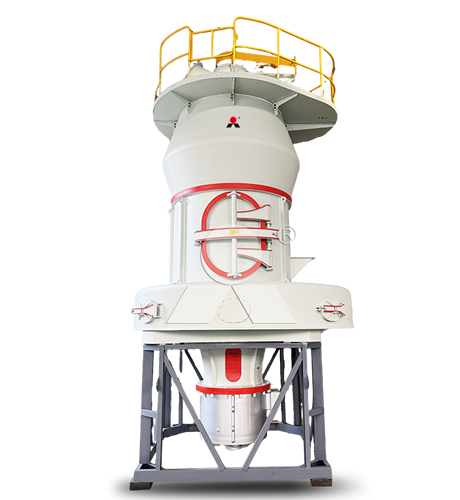
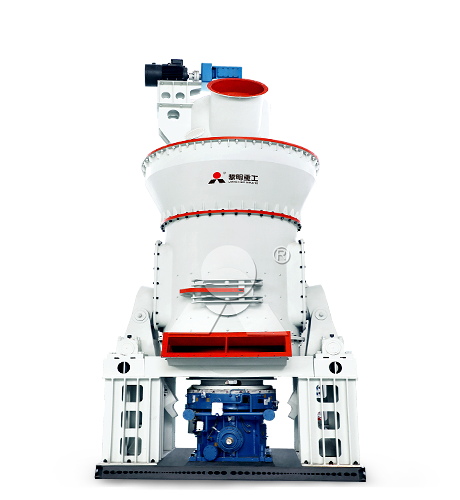
| High and variable free moisture | Use covered storage, controlled feeding, mechanical dewatering, thermal drying or LM Vertical Roller Mill with integrated drying. |
| Large wet agglomerates | Add lump breaking, deagglomeration, controlled feeding and possible drying before grinding. |
| High soluble salts or residual acidity | Evaluate washing, neutralization, blending, corrosion protection or a different final application. |
| High phosphorus or fluoride in phosphogypsum | Evaluate source-specific treatment and verify final-use compliance before milling. |
| High iron or color variation in titanogypsum | Consider color-tolerant applications, purification, blending or material segregation. |
| High silica or abrasive particles | Allow for increased wear, screening, separation or more frequent maintenance planning. |
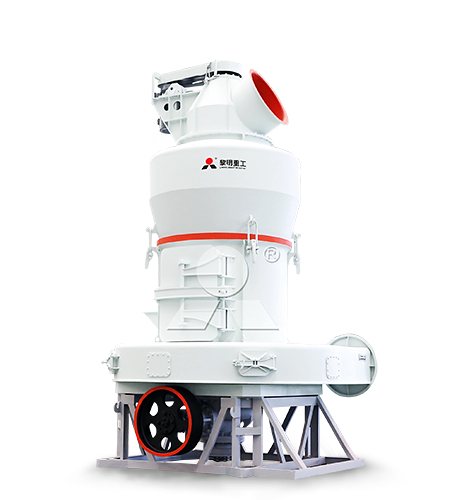
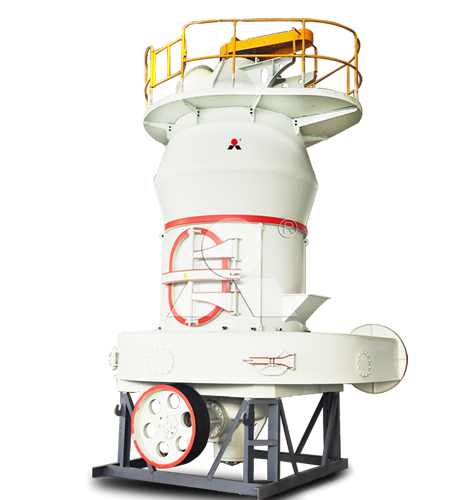
| Dry, stable, low-moisture feed | Consider MTW European Grinding Mill or Raymond mill for conventional powder production. |
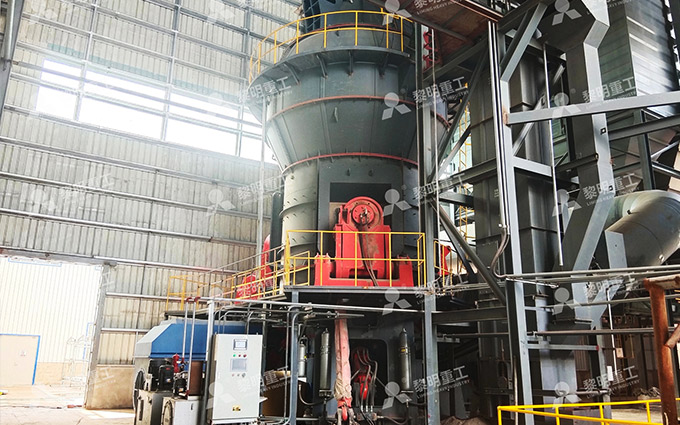
| High capacity with drying requirement | Consider LM Vertical Roller Mill with integrated drying, grinding and classification. |
Information to Send for a Grinding Proposal
After testing, prepare the following package for a preliminary grinding-plant evaluation:
Gypsum type and source-process description
Representative laboratory analysis
Minimum, average and maximum free-moisture data
Photos and description of raw-material condition
Particle-size distribution and maximum lump size
Bulk density, flowability and handling observations
Required finished-powder fineness and test method
Required finished-powder capacity in tonnes per hour
Annual production target and operating schedule
Final application and customer quality specification
Need for washing, neutralization, drying or calcination
Available heat source and electrical power conditions
Site layout, storage and dispatch requirements
Applicable environmental, product-quality and local compliance requirements
Conclusion
Testing industrial by-product gypsum before grinding is essential because material quality determines the reuse route and plant configuration. The core evaluation should cover source process, representative sampling, moisture, gypsum content, mineral phases, chemistry, impurities, particle size, flowability, drying behavior, grindability and final-application performance.
FGD gypsum typically requires close control of moisture, residual sulfite, chlorides and ash-related impurities. Phosphogypsum and other chemical-industry gypsum sources require additional source-specific tests, such as soluble phosphorus, fluoride, acidity, boron, iron, organics, trace elements or radiological parameters where relevant.
After testing, MTW European Grinding Mill can be considered for prepared small-to-medium capacity powder projects, LM Vertical Roller Mill for high-capacity lines or material requiring integrated drying, and Raymond mill for conventional powder production with dry, stable feed. The best grinding solution is selected only after the gypsum source and final product requirements have been confirmed.