Oil & Gas Mineral Processing
Complete Drilling Mineral Powder Processing Solution
2026-09-14 17:33:48
We are Liming Heavy Industry, a manufacturer of various types of industrial crushers, such as Raymond Mill, Trapezoidal Mill, Vertical Mill, Ultrafine Mill, Ball Mill, etc.
Our mills can process the following minerals:
limestone, quicklime, kaolin, talc, barite, bentonite, calcium carbonate, dolomite, coal, gypsum, clay, carbon black, slag, cement raw materials, cement clinker, etc.
If you need a mill to process stone or minerals into powder, please feel free to contact me (WhatsApp: +8615333807511). Thank you.
A complete drilling mineral powder processing solution covers the full route from raw ore receiving to qualified finished powder delivery. It is designed for barite, hematite, bentonite, and calcium carbonate used in drilling, drill-in, completion, workover, fluid-loss-control, and wellbore-stability applications.
The solution must be built around the final use of the mineral. Barite and hematite require stable density and controlled fine-powder distribution for mud weighting. Bentonite requires reliable hydration, viscosity development, and filtration performance. Calcium carbonate requires high acid solubility and accurately separated fine, medium, and coarse bridging grades. API Specification 13A provides physical-property and test-procedure requirements for drilling-fluid materials, including barite, hematite, and bentonite.
Minerals and End Uses
| Mineral Product | Primary Drilling Function | Key Finished-Product Requirement |
|---|---|---|
| Barite powder | Raises drilling-fluid density to support hydrostatic pressure control. | High specific gravity, controlled coarse fraction, limited ultrafines, low moisture, and stable density from batch to batch. |
| Hematite powder | Provides high-density weighting in demanding high-pressure drilling-fluid systems. | High Fe2O3 content, high specific gravity, low moisture, controlled fine powder, and limited abrasive impurities. |
| Bentonite powder | Builds viscosity, gel strength, cuttings suspension, and filtration control. | Suitable montmorillonite quality, controlled moisture, limited coarse residue, dependable hydration, and verified rheological performance. |
| Fine calcium carbonate | Supports seepage control, fine bridging, and filter-cake formation. | High acid solubility, low insoluble residue, and controlled fine-particle distribution. |
| Medium and coarse calcium carbonate | Bridges pore openings, fractures, and loss zones in drilling or completion fluids. | Preserved particle sizes, low cross-contamination, high acid solubility, and accurately defined grade ranges. |
Hematite is used where a higher-density weighting material is needed. A published hematite drilling-grade product lists Fe2O3 at 98% minimum, specific gravity at 5.0 minimum, and 98% passing 200 mesh, illustrating the need for both mineral purity and controlled powder size.
Complete Process Flow
The complete solution should be divided into connected process sections. Each section must be sized to match the planned hourly capacity so that the grinding mill, classifier, dust collector, silos, packing equipment, and loading station do not become bottlenecks.
Raw material receiving and testing. Ore or mineral feed enters through a receiving hopper, stockpile yard, or covered storage building. Before production, representative samples are tested for mineral composition, specific gravity, moisture, hardness, abrasiveness, particle-size distribution, and relevant functional properties.
Raw material storage and controlled blending. Different ore sources should be stored separately when their properties vary. Barite from separate mine benches may differ in specific gravity and barium sulfate content. Bentonite may vary in swelling capacity and moisture. Calcium carbonate may differ in purity and acid solubility. Controlled blending stabilizes the feed and reduces changes in finished-product performance.
Crushing and feed preparation. Large mineral lumps are reduced to a stable mill-feed size. The crushing section may include a jaw crusher, impact crusher, cone crusher, vibrating screen, conveyor, and magnetic separator. Screening removes oversize particles and helps ensure that the grinding mill receives uniform feed.
Drying and moisture management. Wet feed can cause material buildup in hoppers, block conveyors, reduce classification efficiency, increase filter loading, and create storage problems. The plant may use covered raw-material storage, hot-air drying, a hot-blast stove, or integrated drying within the grinding system.
Fine grinding and classification. Barite, hematite, bentonite, and fine calcium carbonate enter a closed grinding circuit. The mill reduces particle size, and the air classifier separates qualified powder from coarse material. Fine powder enters the collector, while oversize particles return to the grinding zone for further processing.
Medium and coarse calcium carbonate preparation. Medium and coarse calcium carbonate should normally be produced through controlled crushing and multi-stage screening. These particles must remain large enough to bridge pores and fractures, so unnecessary fine grinding should be avoided.
Powder collection and air treatment. The dust collector recovers fine powder from the process air and supports a negative-pressure operating condition. The collected powder can be returned to the appropriate product stream when it meets the same product-grade requirement.
Storage, blending, and dispatch. Finished products are stored in dedicated silos or bins. Barite, hematite, bentonite, fine calcium carbonate, and coarse calcium carbonate should remain separated. The plant can then load bulk tankers, fill big bags, pack valve bags, or blend several calcium carbonate grades for a defined lost-circulation treatment.
Final laboratory release. Each batch is sampled and tested before shipment. The final quality report should identify the raw-material source, processing date, batch number, product silo, test results, and loading record.
Grinding Equipment Selection
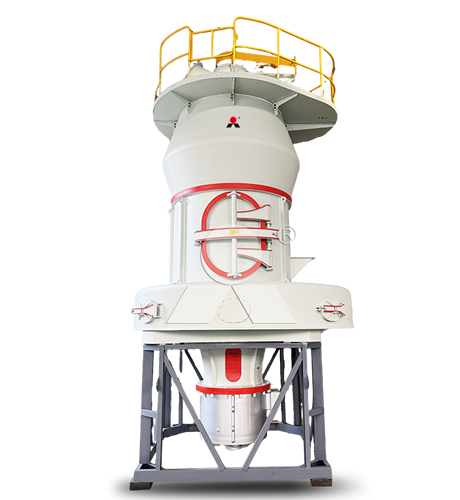
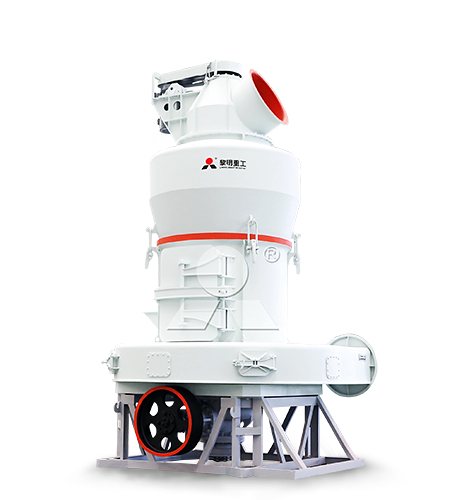
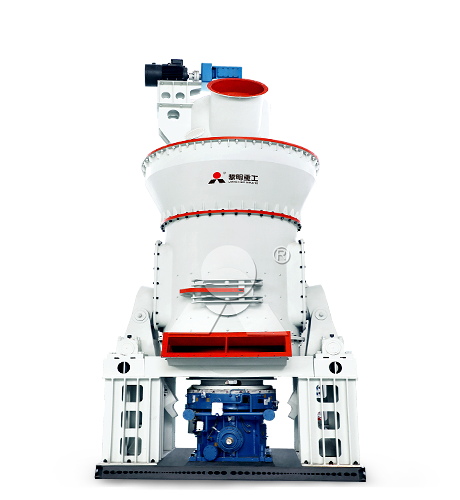
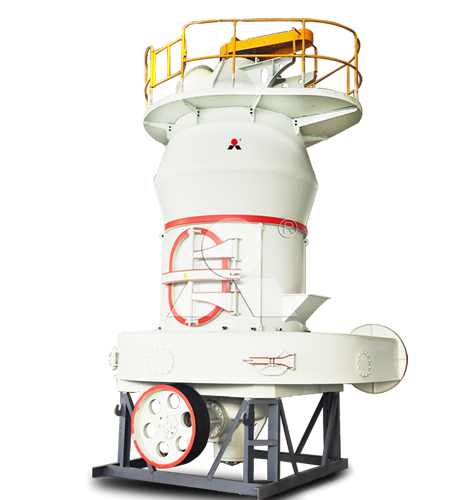
The grinding section should be selected according to raw feed size, moisture, mineral hardness, abrasiveness, target powder size, required capacity, plant layout, and future expansion plan. For drilling mineral powder applications, the LM Vertical Roller Mill and MTW European Grinding Mill provide two suitable routes for different production scales.
| Selection Factor | LM Vertical Roller Mill | MTW European Grinding Mill |
|---|---|---|
| Suitable project scale | Large-capacity, centralized, continuous mineral powder production. | Flexible small-to-medium capacity mineral powder production. |
| Process integration | Integrates drying, grinding, classification, and pneumatic conveying in one main system. | Uses roller-and-ring grinding with air classification, powder collection, and coarse-material recirculation. |
| Moisture handling | Suitable for feed requiring drying during the grinding process. | Suitable for dry or properly prepared feed; a hot-air system can be added when required. |
| Plant layout | Compact integrated arrangement with fewer intermediate powder-transfer stages. | Practical arrangement with crusher, elevator, feeder, mill, classifier, collector, silo, and packing equipment. |
| Typical drilling-mineral use | High-output barite, hematite, bentonite, and fine calcium carbonate powder plants. | Regional barite, bentonite, hematite, and fine calcium carbonate plants with adaptable production scheduling. |
| Main operating focus | Thermal balance, feed stability, mill loading, internal classification, and continuous operation. | Feed uniformity, roller-and-ring condition, classifier setting, airflow balance, and routine maintenance. |
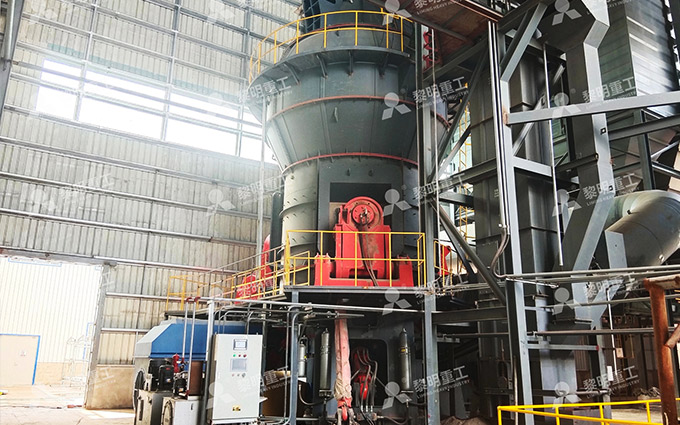
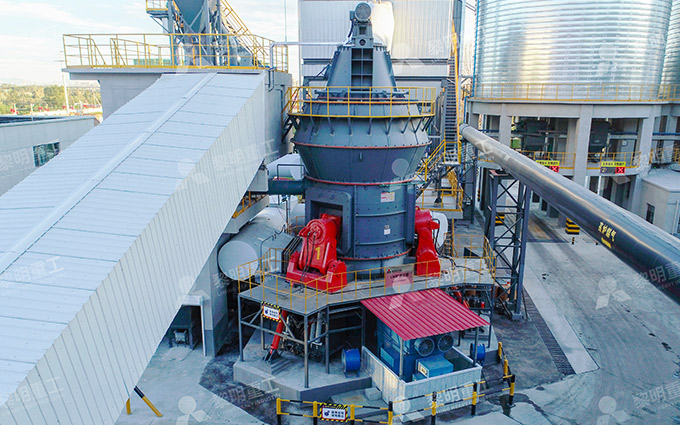
The LM Vertical Roller Mill is suitable where high output and integrated drying are required. Its process combines material grinding, moisture removal, classification, and pneumatic powder transfer. This is valuable for large barite or bentonite operations with variable feed moisture and bulk-delivery requirements.
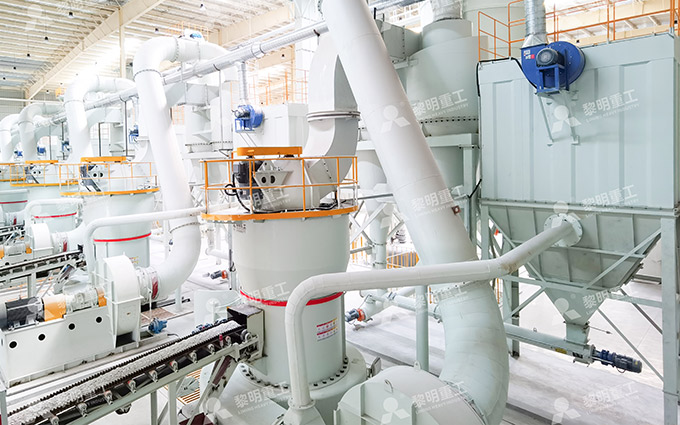
The MTW European Grinding Mill is suitable where the project requires controlled fine powder with flexible capacity. The mill uses a roller-and-ring system to grind prepared material. Airflow carries the powder to the classifier, qualified powder moves to the dust collector, and coarse material returns to the grinding chamber.
For barite, a complete grinding line must control both coarse particles and ultrafines. Published drilling-grade barite guidance identifies minimum density requirements of 4.1–4.2 g/cm3, limits for water-soluble alkaline components, and controlled fine-powder distribution.
Quality-Control System
Quality control should operate throughout production rather than only at the final packing stage. The laboratory must verify properties that directly affect drilling-fluid performance, and the plant control system should record operating data that explains any change in product quality.
| Material | Raw Material Checks | Finished Product Checks |
|---|---|---|
| Barite | Specific gravity, BaSO4 content, moisture, hardness, impurities, and feed-size distribution. | Specific gravity, moisture, particles above 75 μm, particles below 6 μm, soluble components, and batch consistency. |
| Hematite | Fe2O3 content, specific gravity, silica content, moisture, hardness, and abrasiveness. | Specific gravity, iron oxide content, particle-size distribution, moisture, coarse residue, ultrafine fraction, and soluble components. |
| Bentonite | Montmorillonite content, sodium-calcium balance, swelling behavior, moisture, and clay contamination. | Moisture, wet-screen residue, rheology, yield point, filtration performance, and hydration behavior. |
| Calcium carbonate | CaCO3 content, acid solubility, insoluble residue, hardness, moisture, and quarry-source consistency. | Particle-size distribution by grade, D10/D50/D90, acid solubility, moisture, bulk density, and blend ratio where applicable. |
For a stable plant, the production-control system should monitor feed rate, crusher discharge size, mill load, grinding pressure, classifier setting, fan current, air volume, inlet and outlet temperature, dust-collector differential pressure, silo level, and packing or loading weight. When laboratory results change, these recorded process values help identify whether the source is raw-material variation, feed instability, grinding wear, airflow imbalance, or classification drift.
Storage and Delivery Design
Finished powder handling is as important as milling. Barite and hematite are dense powders, so silos, rotary valves, screws, and bulk-loading equipment must be sized for high bulk density. Bentonite requires dry storage because moisture pickup can cause bridging and poor flow. Calcium carbonate grades require separate storage to prevent fine material from contaminating medium and coarse bridging products.
| Delivery Method | Recommended Arrangement | Key Requirement |
|---|---|---|
| Bulk tanker loading | Finished-product silo, load cell or truck scale, enclosed loading spout, screw or pneumatic conveyor, and tanker vent filter. | Accurate loading weight, fast turnaround, low dust release, and dry powder flow. |
| Big-bag filling | Dedicated big-bag station with bag-inlet seal, weighing system, dust extraction, and pallet handling area. | Consistent fill weight, minimal dust, and secure sealed bags for transport. |
| Valve-bag packing | Automatic or semi-automatic packer, bag clamp, local extraction, checkweigher, and bag-cleaning arrangement. | Clean packaging, controlled weight, and efficient storage for containerized shipment. |
| Customized calcium carbonate blends | Separate grade silos, weighing hoppers, batch blender, and dedicated dispatch bin. | Accurate fine/medium/coarse blending ratio and no cross-contamination with other products. |
A complete solution should also include closed conveying, pulse dust collection, local extraction at bagging and loading points, and a practical maintenance layout. These measures protect powder quality, reduce product loss, and help maintain stable airflow in the grinding and classification circuit.
Project Configuration Principles
The final processing solution should be configured from actual test data rather than generic capacity assumptions. Before selecting the mill and auxiliary equipment, evaluate representative raw-mineral samples, required finished-product properties, hourly output, annual production schedule, moisture variation, site utilities, installation space, storage days, and delivery format.
Use LM Vertical Roller Mill: For high-output barite, hematite, bentonite, or fine calcium carbonate projects requiring integrated drying, grinding, classification, and conveying.
Use MTW European Grinding Mill: For flexible-capacity fine-powder projects requiring controlled grinding, air classification, and a practical complete plant layout.
Use crushing and screening: For medium and coarse calcium carbonate grades that must preserve bridging particle sizes.
Use dedicated silos: For separate mineral types, barite density grades, and calcium carbonate size grades.
Use controlled blending: For variable raw ore sources and customized multi-grade calcium carbonate products.
Use batch testing: To verify density, moisture, particle-size distribution, mineral composition, and functional drilling-fluid properties before dispatch.
A complete drilling mineral powder processing solution is therefore an integrated system rather than a single grinding machine. With reliable raw-material preparation, the appropriate LM Vertical Roller Mill or MTW European Grinding Mill, accurate classification, efficient dust collection, dedicated storage, and documented laboratory control, the plant can produce stable mineral powders for drilling-fluid applications over long operating cycles.