Oil & Gas Mineral Processing
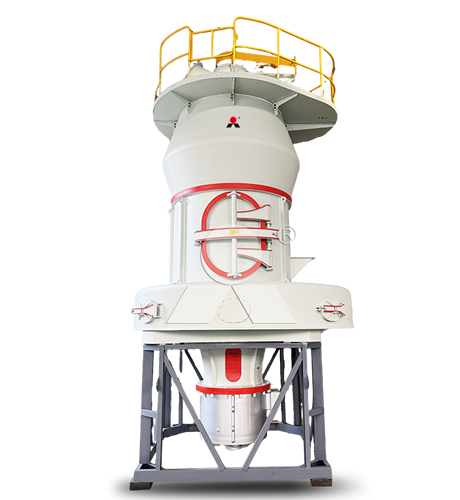
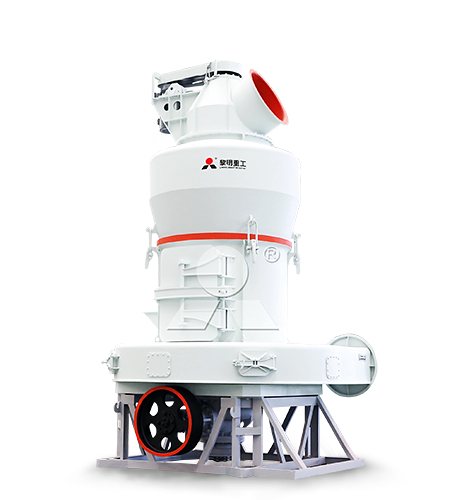
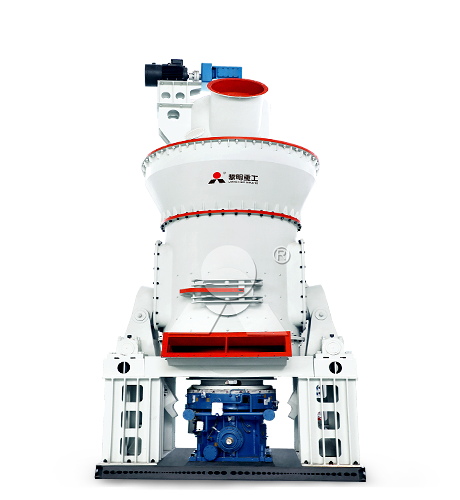
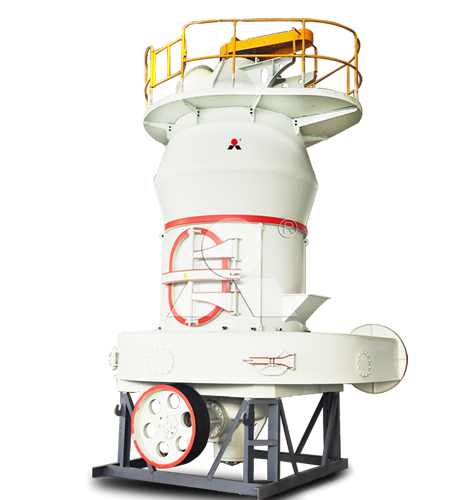
MTW European Grinding Mill for Drilling Minerals
2026-09-14 17:24:36
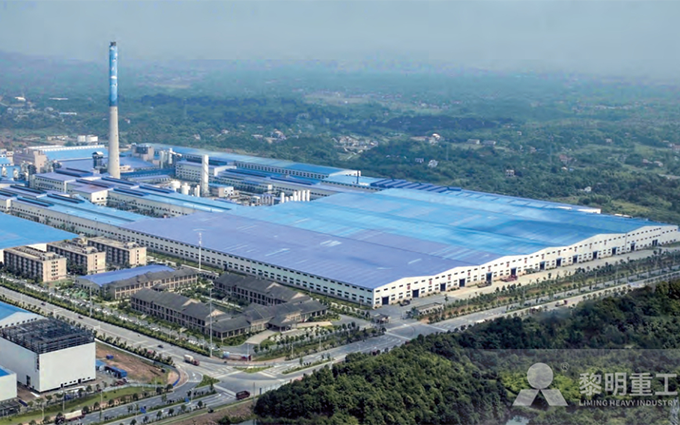
We are Liming Heavy Industry, a manufacturer of various types of industrial crushers, such as Raymond Mill, Trapezoidal Mill, Vertical Mill, Ultrafine Mill, Ball Mill, etc.
Our mills can process the following minerals:
limestone, quicklime, kaolin, talc, barite, bentonite, calcium carbonate, dolomite, coal, gypsum, clay, carbon black, slag, cement raw materials, cement clinker, etc.
If you need a mill to process stone or minerals into powder, please feel free to contact me (WhatsApp: +8615333807511). Thank you.
The MTW European Grinding Mill is a practical solution for processing drilling minerals into controlled powder grades, especially barite used as a weighting material in oil and gas drilling fluids. It is designed for continuous fine grinding, air classification, powder collection, and closed-circuit recirculation, making it suitable for barite plants that require stable output, consistent fineness, and clean powder handling.
For drilling-fluid applications, a successful grinding line must do more than reduce mineral size. It must produce powder with a repeatable particle-size distribution, controlled moisture, stable density, and low contamination. The MTW European Grinding Mill can be configured with crushing, feeding, drying, classification, dust collection, storage, and packing equipment to form a complete drilling-mineral powder production line.
Barite as a Drilling Mineral
Barite, mainly composed of barium sulfate (BaSO4), is widely used to increase the density of drilling mud. During oil and gas well construction, drilling fluid must help balance underground formation pressure while transporting drill cuttings, cooling the bit, supporting the borehole wall, and carrying solids back to the surface. High-density barite powder allows mud engineers to increase fluid weight without adding an excessive volume of solids.
The value of barite in drilling fluids comes from its high specific gravity, chemical stability, and limited solubility. However, the raw mineral must meet the required density before grinding. Milling changes particle size; it does not increase the inherent specific gravity of low-grade ore. Raw material selection, ore blending, and quality inspection are therefore essential before the material enters the mill.
API drilling-grade barite is generally supplied in 4.1 g/mL and 4.2 g/mL grades. The 4.2-grade material requires a minimum specific gravity of 4.20 g/mL. In addition, particle-size control is required because excessive coarse particles and excessive ultrafines can both affect drilling-fluid behavior.
| Barite Property | Typical Requirement for 4.2-Grade Barite | Why It Matters |
|---|---|---|
| Specific gravity | Minimum 4.20 g/mL | Determines the ability of barite to increase drilling-fluid density efficiently. |
| Coarse particle fraction | Maximum 3% retained above 75 μm | Helps reduce the presence of large particles that may settle more easily. |
| Ultrafine particle fraction | Maximum 30% below 6 μm | Helps control excessive surface area and undesirable changes in fluid rheology. |
| Moisture | Controlled according to storage and delivery requirements | Supports free powder flow, accurate weighing, reliable packing, and dry silo storage. |
| Product consistency | Stable from batch to batch | Supports predictable mud-weight adjustment and downstream fluid preparation. |
How the MTW Mill Works
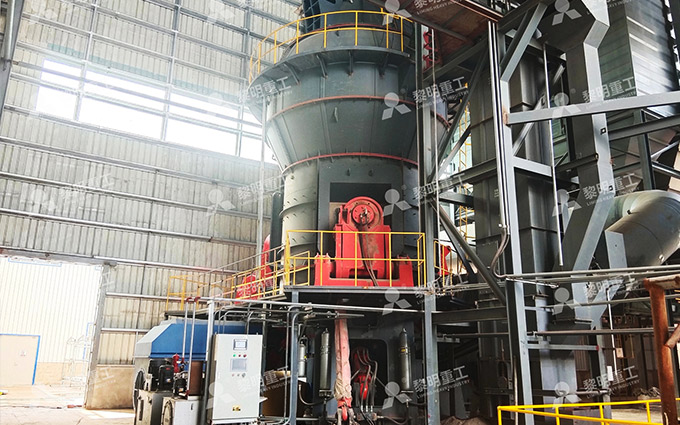
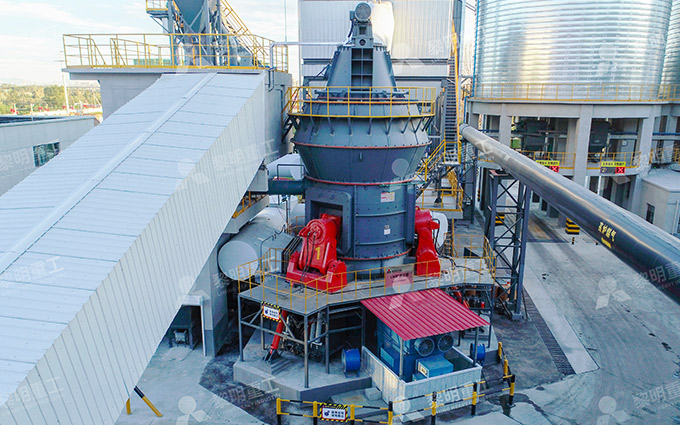
The MTW European Grinding Mill uses a roller-and-ring grinding structure. After crushing, qualified mineral feed is delivered evenly into the mill through a controlled feeding system. The grinding rollers apply pressure to the material against the grinding ring, reducing the mineral into fine powder.
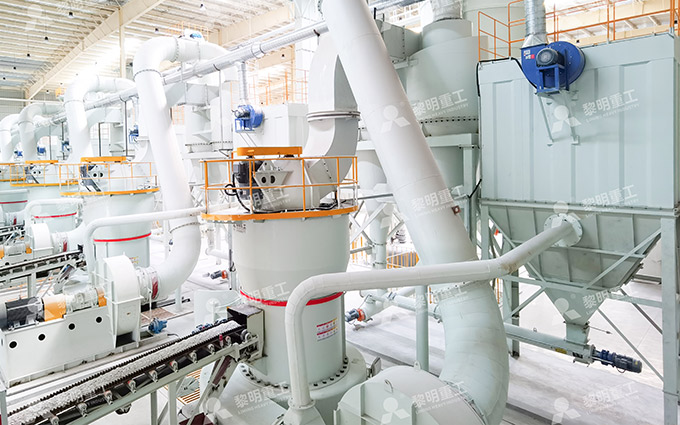
Airflow carries the ground material upward to the classifier. Fine powder that meets the required size range passes through the separator and moves to the pulse dust collector or powder collector. Particles that are too coarse cannot pass through the separator. They fall back into the grinding chamber and are processed again.
This closed-circuit process is particularly important for drilling-barite production. It prevents oversized particles from entering the final product while avoiding the need to send all material through repeated full grinding cycles. The airflow is recycled through the system, while the dust collector recovers fine powder and supports cleaner operation.
A typical operating sequence is:
1. Crushing. Raw barite ore is crushed to a controlled feed size, normally within the mill’s required range. Uniform feed improves grinding stability and reduces the risk of uneven wear or fluctuating output.
2. Metered feeding. A variable-frequency feeder supplies barite continuously and evenly to the MTW mill. Stable feeding is essential because sudden changes in material flow can affect mill current, grinding pressure, airflow balance, and final powder fineness.
3. Grinding. The material is ground between the rollers and grinding ring. The roller assembly and grinding parts should be selected and maintained according to the abrasiveness of the barite feed.
4. Drying when required. Hot air can be introduced into the mill to reduce feed moisture. This helps prevent powder buildup, improves classification efficiency, and supports stable finished-product storage.
5. Air classification. The classifier separates qualified powder from coarse particles. Coarse material returns to the grinding chamber, creating a continuous recirculation loop.
6. Powder collection. Qualified barite powder is collected by a pulse dust collector and transported to a finished-product silo for bulk loading or packing.
Why MTW Fits Barite Projects
The MTW European Grinding Mill is suitable for barite processing because it combines controlled fine grinding with an efficient classification circuit. It is designed for non-flammable, non-explosive materials with Mohs hardness below 7 and moisture below 6%. Barite is specifically included among the minerals suitable for processing by the MTW series. The MTW European Type Trapezium Mill is available with feed sizes of approximately 30–50 mm and a stated capacity range of 3–55 t/h, depending on model, material characteristics, fineness, and operating conditions.
| MTW European Grinding Mill Feature | Value for Drilling-Mineral Processing |
|---|---|
| Roller-and-ring grinding system | Provides controlled fine grinding for barite and other non-metallic drilling minerals. |
| Integrated air classifier | Separates qualified powder and returns coarse particles for regrinding. |
| Closed-circuit airflow | Supports stable powder transport and reduces material loss during production. |
| Adjustable finished-powder fineness | Allows the plant to match production settings to different particle-size requirements. |
| Thin-oil lubrication system | Supports stable operation and reduces routine lubrication work for key mechanical components. |
| Pulse dust collection | Recovers valuable fine powder and helps maintain a cleaner workshop environment. |
| Compact line arrangement | Allows crushing, grinding, classification, collection, and storage equipment to be organized efficiently. |
The MTW6X version uses a high-efficiency analyzer with improved sealing and airflow conditions to support more precise powder classification. It also uses thin-oil lubrication for the main unit and grinding-roller system, as well as multi-point monitoring of operating conditions such as vibration, temperature, and current.
Controlling Particle Size for Drilling Barite
Particle-size distribution is one of the most important quality indicators in drilling-barite processing. A finished product can have a satisfactory average mesh value but still contain too much oversize material or too many ultrafines. Both conditions may create problems after the barite enters a drilling-fluid system.
When the coarse fraction is too high, larger particles can settle more easily during fluid circulation or during static periods. When the ultrafine fraction is too high, the powder has a much larger total surface area. This may increase fluid viscosity, require more treatment chemicals, and make the mud system more difficult to control.
The MTW European Grinding Mill manages this balance through the interaction of grinding intensity and air classification. Important operating factors include:
Raw barite feed size and feed-size consistency.
Feed rate supplied by the variable-frequency feeder.
Grinding roller condition and grinding-ring wear.
Air volume and airflow stability within the system.
Classifier speed and separator adjustment.
Hot-air temperature and feed moisture conditions.
Dust-collector performance and system pressure balance.
For instance, if laboratory tests show an increase in the fraction above 75 μm, the plant should first check raw feed size, mill loading, classifier adjustment, airflow, and wear of the grinding components. Simply reducing feed rate may lower output without solving the underlying classification issue. If the amount of material below 6 μm becomes excessive, the operator should review whether grinding pressure, residence time, or separator settings are causing unnecessary overgrinding.
Complete Barite Grinding Line
A complete MTW European Grinding Mill line for drilling minerals should be designed as a coordinated system. The mill determines the core grinding capacity, but product quality and operational continuity also depend on upstream preparation and downstream powder handling.
| Equipment Section | Function in the Processing Line |
|---|---|
| Raw material hopper | Receives and buffers barite ore before controlled feeding. |
| Jaw crusher or primary crusher | Reduces large barite lumps to a suitable feed size for the grinding mill. |
| Elevator and feeder | Transfers crushed material and maintains an even, continuous feed rate. |
| MTW European Grinding Mill | Completes fine grinding of barite through the roller-and-ring system. |
| Hot-air system | Provides drying capacity when feed moisture requires thermal treatment. |
| Classifier | Separates qualified barite powder from coarse material returned for regrinding. |
| Pulse dust collector | Collects finished fine powder and reduces dust emissions from the system. |
| Finished-product silo | Stores powder before packing, big-bag filling, or bulk tanker loading. |
| Laboratory equipment | Checks specific gravity, moisture, screen residue, and particle-size distribution. |
A Liming Heavy Industry barite project description uses two MTW European Trapezium Grinding Mills to produce powder for oil-drilling mud. Its process route includes crushing, elevator feeding, milling with hot-air drying, classification, pulse dust collection, finished-product storage, and coarse-powder recirculation to the mill.
Operational Guidance
Reliable production begins with representative raw-material testing. Before finalizing the mill model and supporting equipment, the barite sample should be tested for specific gravity, moisture, hardness, particle-size distribution, mineral composition, and impurity content. This information determines the required crushing stage, drying capacity, grinding configuration, wear protection, and separator setting.
Keep barite ore from different mine zones or density grades separated unless it is blended under controlled conditions.
Use a stable feed-size range and avoid sending oversized rock or metal contamination into the mill.
Monitor raw-material moisture, particularly during rainy seasons or when material is stored outdoors.
Set the classifier according to verified particle-size test results rather than a nominal mesh target alone.
Inspect rollers, grinding rings, classifier components, air ducts, and dust-collector filters on a planned schedule.
Maintain dry, enclosed conveying and storage to protect finished powder from moisture pickup and cross-contamination.
Test each production batch before dispatch to verify density, moisture, coarse residue, and ultrafine content.
For drilling-mineral producers requiring a flexible and dependable fine-powder line, the MTW European Grinding Mill offers a complete route from prepared barite ore to controlled finished powder. With correct raw-material selection, stable grinding conditions, efficient classification, and routine quality inspection, the system can support consistent barite powder production for drilling-fluid applications.