Wall Putty Raw Material Processing
Ultrafine Mineral Powder: When Is It Required?
2026-10-20 09:49:36
Ultrafine mineral powder is required in wall putty when a controlled finer grade delivers a necessary application or finishing result that the existing filler cannot achieve. Typical reasons to investigate it include an exceptionally thin finishing layer, a demanding surface-texture requirement, or a formulation that benefits from a carefully selected fine fraction. The decision should follow comparative testing, not the assumption that the finest available powder produces the best putty.
The deciding factor is performance: does the finer powder solve a defined problem while preserving acceptable mixing, spreading, sanding, adhesion, and production cost?
Define “Ultrafine” Before Specifying It
For a purchasing or equipment specification, the word “ultrafine” is not sufficiently precise on its own. Replace the label with measurable requirements: a particle-size distribution, a coarse-residue limit, and an agreed test method. Liming Heavy Industry describes ultrafine calcium carbonate projects in terms of controlled micron-scale distributions and coarse-particle limits rather than nominal mesh numbers alone.
It is also important to distinguish three different objectives:
Reducing the central particle size of the powder.
Increasing the proportion of very fine particles.
Removing an unacceptable coarse fraction.
These objectives are related, but they are not interchangeable. If occasional coarse particles are causing scratches, improving classification or eliminating contamination may be more appropriate than making the entire powder substantially finer.
Three Situations That Justify an Ultrafine Trial
1. The Putty Must Produce a Very Fine Finishing Surface
A thin finishing layer places particular demands on particle texture and freedom from oversized material. If an established filler leaves visible texture despite correct mixing and application, a finer grade is worth evaluating.
First identify the defect. General roughness, isolated scratches, pinholes, and blade marks do not necessarily have the same cause. Finer powder should be tested against the specific defect rather than introduced as a general remedy.
Putty formulation guidance identifies filler fineness as one factor affecting smoothness and application feel, alongside water demand, polymer type, additives, and mixing. This supports a formulation-specific trial rather than a universal ultrafine requirement.
2. A Ready-Mixed Putty Needs a Different Filler Structure
Some paste-like putties may benefit from a finer filler design to support the intended surface finish. However, the appropriate grade depends on the binder, solids content, viscosity target, and mixing process. A powder selected for one ready-mixed formulation should not automatically be transferred to another.
Assess more than initial smoothness. Check whether the candidate disperses within the available mixing process and whether the finished paste maintains acceptable consistency during storage.
3. A Controlled Fine Fraction Improves an Existing Blend
Ultrafine powder does not necessarily need to replace the principal filler. It can be evaluated as part of a blend, with the aim of adjusting the overall particle-size distribution.
Research on limestone-containing cementitious systems shows that particle distribution and packing influence water requirement and flow. This provides a reason to investigate a graded blend, but it does not establish that adding more fines will always improve wall putty. The proportions and the complete formulation remain decisive.
When Ultrafine Powder Is Probably Not the First Answer
| Observed Issue | Check First | Why Additional Grinding May Miss the Cause |
|---|---|---|
| Occasional deep scratches | Coarse residue, hard mineral grains, agglomerates, and handling contamination | The defect may originate from a small unwanted fraction rather than the main powder population |
| Poor adhesion or a powdery surface | Binder adequacy, substrate preparation, water addition, and curing | A finer filler does not replace sufficient binding capacity |
| Uneven color | Raw-material color, impurities, contamination, and other formulation ingredients | Grinding is not a substitute for removing discoloring material |
| High water requirement | Existing fine fraction, mineral composition, impurities, and additive balance | Further size reduction may increase rather than resolve the difficulty |
| Variable behavior between batches | Feed consistency, moisture, dosing, mixing, and classification stability | A lower average particle size does not establish process consistency |
Use this assessment to decide what to test next. If the existing powder already meets the finish requirement and the putty performs reliably, moving to an ultrafine grade needs a separate, measurable justification.
What Can Become More Difficult as Powder Gets Finer?
Water and Consistency Control
Reducing particle size generally increases the available surface area for a given mass of mineral. At the same time, changes in packing affect how water is distributed through the mix. These effects can work in different directions, so water demand cannot be predicted reliably from fineness alone.
A finer powder may therefore require a different water addition or additive balance to reach the intended application consistency. Record those changes rather than judging the wet surface alone.
Binder Compatibility
The filler must work with the binder, not merely look satisfactory as a loose powder. Research on calcium carbonate and acrylic binder systems demonstrates that filler–binder interactions affect coating properties. For wall putty, this reinforces the need to assess the actual formulation when changing the filler grade.
Do not assume that increasing fineness permits a reduction in binder. Maintain the initial binder level during screening trials, then evaluate any proposed reformulation separately.
Grinding Output and Cost
A finer production target can reduce throughput and increase energy demand. In Liming Heavy Industry’s described LUM calcium carbonate process, increasing classifier speed generally produces a finer powder but can reduce output and increase power consumption. The useful operating point is the one that meets the required distribution at a practical cost per tonne of acceptable product.
Compare the cost of the complete filler system, including any formulation adjustments. A finer powder that adds processing cost without improving the finished putty is not an effective upgrade.
Test Three Routes Before Committing to Full Ultrafine Production
Where the problem is genuinely related to particle grading, compare alternatives rather than testing only a complete replacement.
Retain the existing grade but improve coarse-particle control. This helps determine whether the problem is concentrated in the coarse tail.
Introduce a controlled ultrafine fraction into the existing filler blend. This tests whether a limited addition achieves the desired result.
Evaluate a fully finer grade. Compare its application benefit with changes in water requirement, formulation behavior, and production cost.
Use the same representative mineral source wherever possible. Otherwise, differences in composition or particle shape may be mistaken for a fineness effect.
Choose Equipment After the Powder Has Been Approved
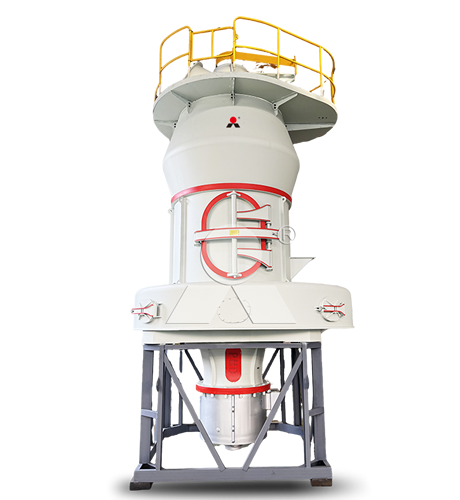
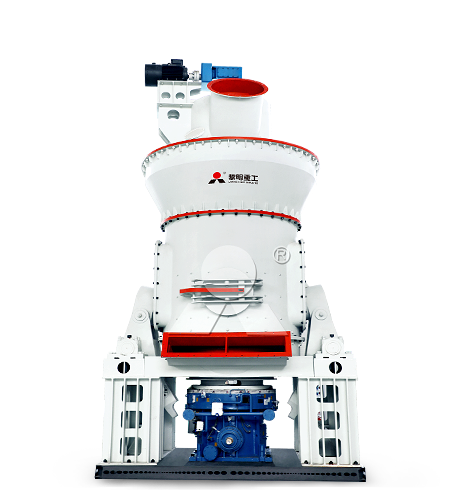
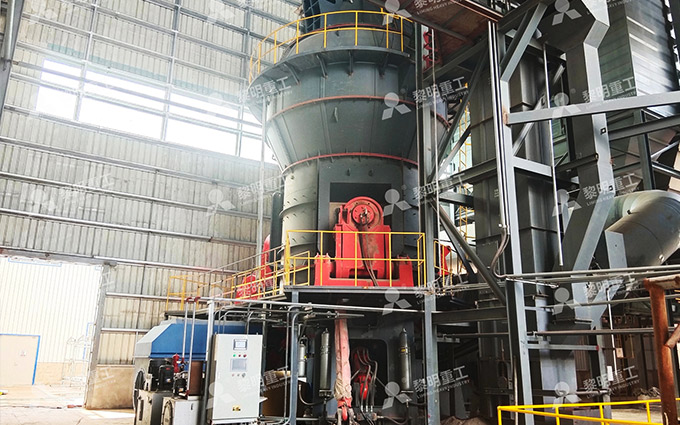
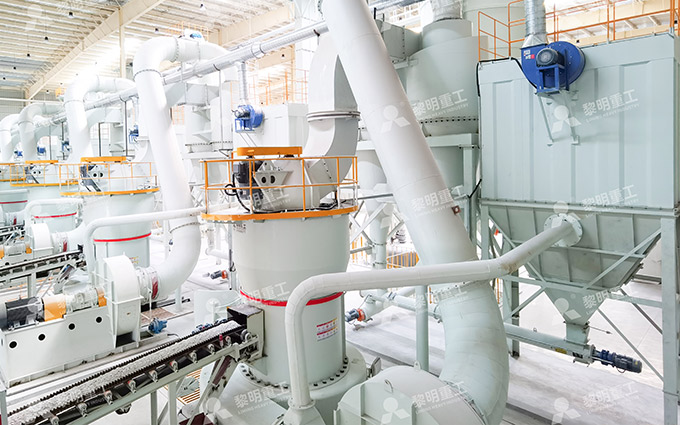
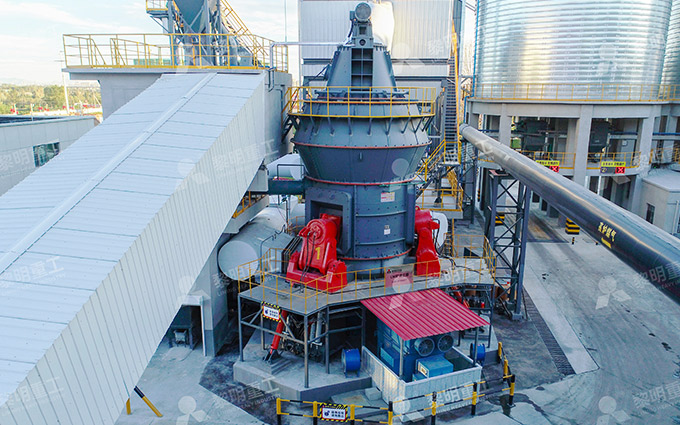
For a verified ultrafine requirement, the Liming Heavy Industry LUM Ultrafine Vertical Mill is an equipment option for evaluation. Its listed applications include ultrafine calcium carbonate, talc, dolomite, and other nonmetallic minerals used in building materials and coatings.
The proposed configuration should be assessed against the complete target distribution, coarse-residue limit, feed condition, and required output. Classification is central to the process: acceptable fine powder passes to collection, while rejected coarse material returns for further grinding.
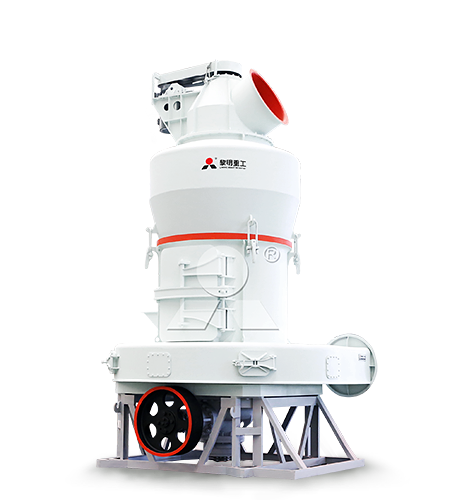
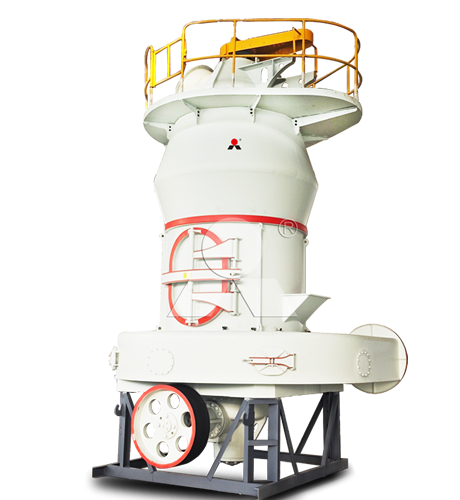
Where conventional fine powder already meets the putty specification, Liming Heavy Industry MTW European Trapezium Mills or LM Vertical Roller Mills may remain appropriate candidates. The equipment decision should follow the approved grade rather than create an unnecessarily fine specification.
A Clear Approval Test
Before adopting ultrafine powder, compare it with the approved filler under controlled conditions. Keep the initial recipe, mixing sequence, substrate, application thickness, and drying or curing conditions unchanged.
Record the particle distribution, coarse residue, moisture, and color of each powder.
Compare wetting, dispersion, mixing behavior, and initial consistency.
Document any water adjustment needed for comparable application.
Assess the specific surface defect or finishing requirement that prompted the trial.
Check sanding, surface cohesion, adhesion, and other specified finished-product properties.
Confirm that the result can be reproduced with production batches.
Approve the ultrafine grade only when it delivers the required benefit without unacceptable trade-offs. For a new processing project, provide Liming Heavy Industry with the raw-material sample, approved reference powder, trial results, target distribution, and hourly output requirement. These details establish whether ultrafine grinding is necessary and what the production system must achieve.