Industrial By-product Gypsum Solutions
Gypsum Grinding Mill vs. Gypsum Calcination: What Is the Difference?
2026-09-08 16:11:46
Gypsum grinding and gypsum calcination are different processes with different purposes. Grinding reduces particle size and controls powder fineness. Calcination uses controlled heat to remove part of gypsum’s chemically bound water and convert calcium sulfate dihydrate into calcium sulfate hemihydrate, commonly called stucco or plaster of Paris.
A gypsum grinding mill produces gypsum powder. A calcination system changes the chemical form of gypsum. Some industrial plants use grinding only, while others combine drying, grinding, calcination and classification to produce plaster, gypsum-board stucco or another calcined gypsum product.
The Main Difference
| Factor | Gypsum Grinding | Gypsum Calcination |
|---|---|---|
| Primary purpose | Reduce particle size and control powder fineness | Change gypsum from dihydrate to hemihydrate or another calcium sulfate phase |
| Material change | Mainly physical size reduction | Chemical and mineralogical transformation through controlled heating |
| Main input | Prepared gypsum, often dry or adequately conditioned | Gypsum dihydrate, often ground or pre-prepared |
| Main output | Gypsum powder with controlled particle size | Calcined gypsum, usually hemihydrate stucco or plaster of Paris |
| Water removed | May remove free moisture if drying is integrated | Removes part of the chemically bound water in the gypsum crystal |
| Typical use | Cement addition, gypsum powder, raw-material preparation and selected industrial uses | Plaster, gypsum board, gypsum blocks and other settable gypsum products |
| Key control variable | Fineness, feed rate, moisture, airflow and classification | Temperature, residence time, heat transfer, phase composition and final product quality |
What Is Gypsum Grinding?
Gypsum grinding is the mechanical reduction of gypsum particles into a defined powder size. The material passes through a mill, where grinding force and air classification control the final particle-size distribution.
Grinding can be used for natural gypsum, FGD gypsum, treated phosphogypsum and other suitable industrial gypsum sources. The final powder may be used directly, blended with other materials or sent to a later calcination stage.
Grinding does not normally change calcium sulfate dihydrate into another chemical form. The objective is to produce a powder with the required fineness, moisture, flowability and handling characteristics.
Typical grinding-process stages
Receive and store raw gypsum.
Sample the material and confirm chemical quality, moisture and feed condition.
Break lumps, crush oversized material or deagglomerate filter cake if needed.
Dry the material when free moisture is too high for stable handling or milling.
Grind gypsum to the required particle size.
Classify fine powder and return coarse particles for further grinding.
Collect, store and dispatch the finished gypsum powder.
For conventional industrial gypsum powder, the final fineness may commonly fall between approximately 20 and 400 mesh, depending on the application and grinding system. The correct target should be defined by the final user through sieve residue, laser particle-size distribution, D50, D90 or another measurable specification.
What Is Gypsum Calcination?
Gypsum calcination is a thermal process. It heats calcium sulfate dihydrate, CaSO4·2H2O, to remove part of its chemically bound water and create calcium sulfate hemihydrate, CaSO4·½H2O.
The reaction can be written as:
CaSO4·2H2O + heat → CaSO4·½H2O + 1½H2O vapor
The resulting hemihydrate is commonly known as plaster of Paris or gypsum stucco. When water is added later, it rehydrates and sets back into calcium sulfate dihydrate. This reversible reaction is the foundation of gypsum plaster, gypsum board and many gypsum-based building products.
Calcination is commonly conducted in a controlled temperature range that produces hemihydrate rather than excessive dehydration. Published gypsum references describe the conversion of ground gypsum to hemihydrate at approximately 120–150°C, while actual operating conditions vary with equipment type, feed condition, residence time and required calcium sulfate phase.
Free Moisture vs. Chemically Bound Water
The most important distinction is between free moisture and chemically bound water.
Free moisture
Free moisture is water on the surface of the gypsum, between particles or held in wet filter cake. It affects storage, feeding, conveying, grinding and powder caking. Drying before grinding mainly removes this free moisture.
For example, wet FGD gypsum filter cake may need dewatering or drying before it can be fed steadily to a conventional mill. This process improves handling but does not necessarily change the gypsum mineral from dihydrate to hemihydrate.
Chemically bound water
Chemically bound water is part of the gypsum crystal structure. Calcium sulfate dihydrate contains two water molecules within its chemical formula. Calcination removes part of this water through controlled heating and converts the mineral into hemihydrate.
Removing free moisture is drying. Removing chemically bound water is calcination. The two processes use heat, but they have different objectives and produce different products.
Grinding-Drying vs. Calcination
Some process systems can dry and grind gypsum at the same time. This is called grinding-drying. Hot gas removes free moisture while the mill reduces particle size and classifies the powder.
Grinding-drying should not be confused with calcination. If the product is intended to remain calcium sulfate dihydrate, the temperature, residence time and gas conditions must be controlled to avoid significant dehydration of the gypsum crystal.
In some production lines, grinding, drying and calcination are intentionally combined. Heated roller mills and impact mills can be designed to grind, dry, calcine and classify gypsum in a single process. Such systems are used when the desired product is calcined gypsum rather than dihydrate powder.
| Process route | What heat does | Typical output |
|---|---|---|
| Grinding only | No significant thermal treatment; material is mechanically reduced in size | Dihydrate gypsum powder |
| Drying + grinding | Removes free moisture while material is ground | Dry dihydrate gypsum powder |
| Grinding + calcination | Removes part of chemically bound water under controlled thermal conditions | Hemihydrate gypsum or stucco |
| Separate grinding, then calcination | Material is first prepared, then thermally converted in a calciner | Controlled calcined gypsum product |
| Calcination, then final grinding | Gypsum is converted first, then milled to final product size | Fine hemihydrate powder for plaster or other products |
When Is Grinding Only Enough?
Grinding without calcination is suitable when the required product is calcium sulfate dihydrate powder. This is common where gypsum is used as a sulfate source, a blending material or a feedstock for another process.
Cement production
Gypsum used as a cement setting regulator is commonly added as a calcium sulfate source during final cement grinding. The gypsum may need crushing, drying and grinding to achieve stable handling and dosing, but it does not necessarily need to be calcined.
The objective is to provide a controlled sulfate contribution that regulates the hydration of the aluminate phase in cement clinker. Unintended calcination can change the calcium sulfate form and affect sulfate solubility, handling and cement performance.
Industrial gypsum powder
FGD gypsum, treated phosphogypsum and other suitable industrial gypsum sources may be ground into powder for qualified cement, building-material or industrial uses. If the intended application requires dihydrate gypsum, the plant should avoid excessive thermal exposure during drying and grinding.
Feed preparation for a later process
Grinding can also prepare gypsum for a later stage, such as calcination, blending or chemical processing. In these cases, the grinding mill creates a consistent feed size that improves thermal control and product uniformity in the following process.
When Is Calcination Required?
Calcination is required when the product needs to become a settable gypsum binder, usually hemihydrate gypsum. This includes plaster, many gypsum-board production routes, gypsum blocks and certain prefabricated gypsum products.
Gypsum plaster
Plaster products commonly use calcium sulfate hemihydrate. After calcination, the hemihydrate powder is mixed with water at the construction site or in a manufacturing process. It rehydrates and hardens into gypsum dihydrate.
Gypsum board
Gypsum board production typically uses calcined gypsum. Natural gypsum or synthetic gypsum is heated to dehydrate the feedstock, then mixed with water and additives to form a slurry between paper liners. As the board moves along the production line, the calcium sulfate rehydrates and recrystallizes to form the solid board core.
Gypsum blocks and molded products
Gypsum blocks, decorative products and molded gypsum materials also commonly use calcined gypsum because the hemihydrate can be mixed with water and formed before it sets.
How Mill Selection Changes by Process Route
The mill selection depends on whether the plant needs only conventional powder grinding or a larger integrated process that includes moisture removal and calcination.
MTW European Grinding Mill
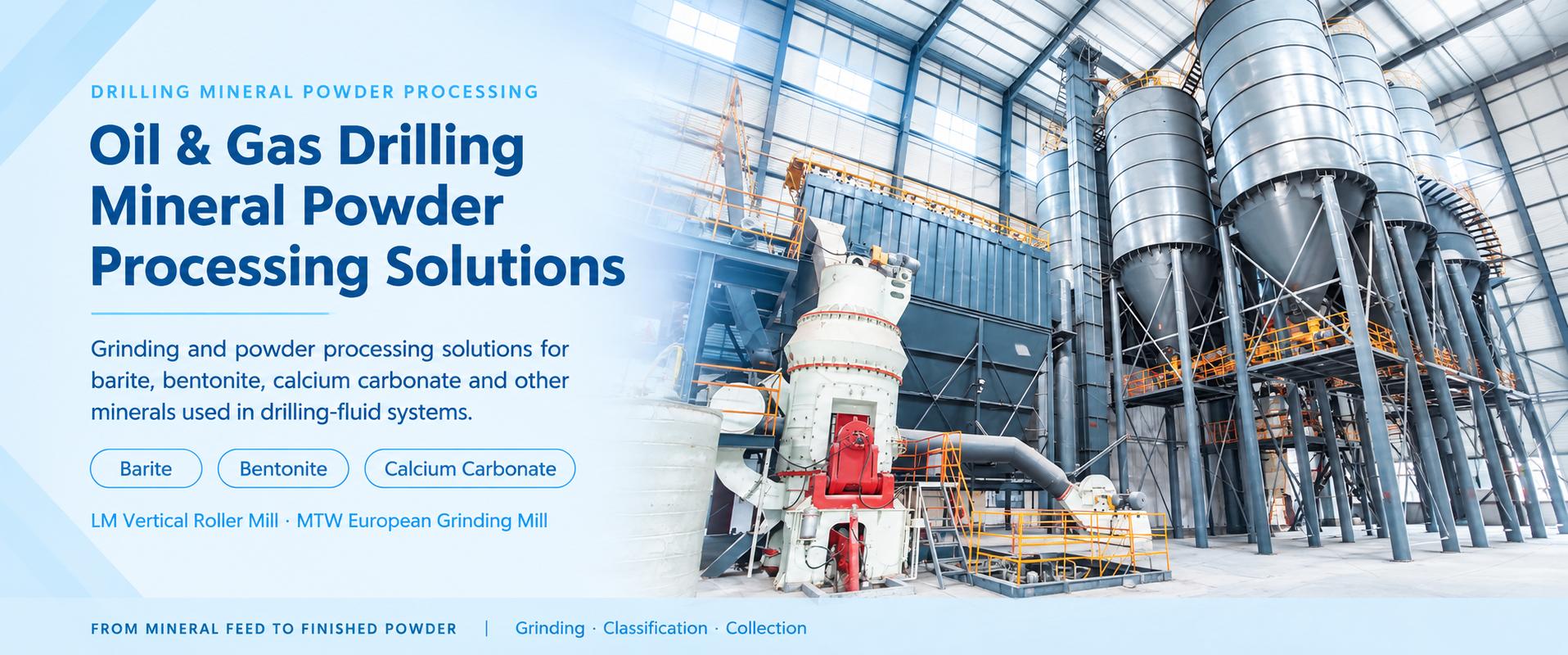
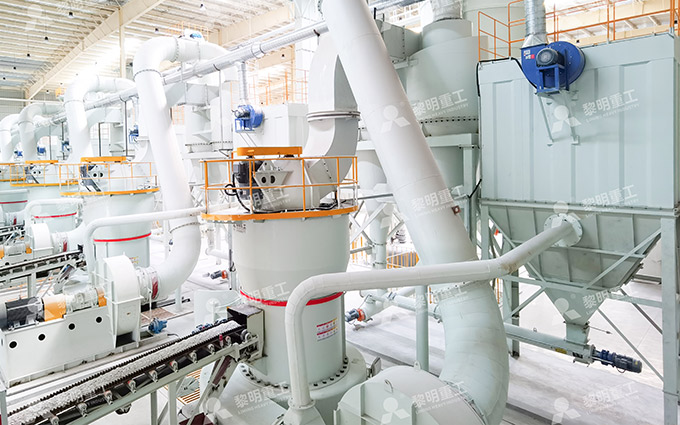
MTW European Grinding Mill is suitable for conventional gypsum powder production when the feed is properly prepared and moisture is controlled. It can be used for dihydrate gypsum powder intended for cement, industrial blending or feed preparation before a separate calcination stage.
If the feed is wet industrial gypsum, such as FGD gypsum filter cake, upstream dewatering or drying may be required before MTW grinding. MTW European Grinding Mill should not be used as a substitute for a dedicated calcination process when the required output is hemihydrate gypsum.
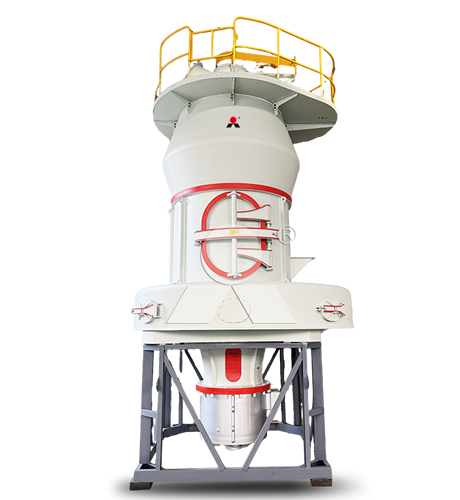
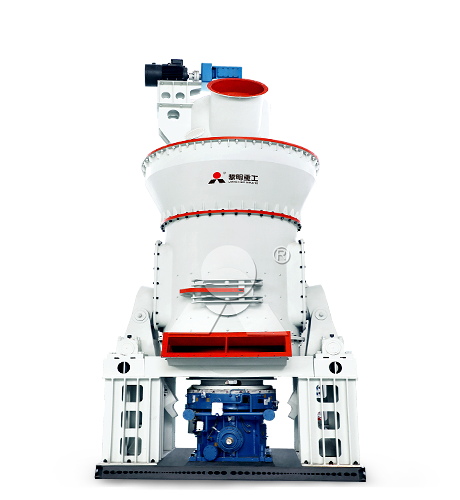
LM Vertical Roller Mill
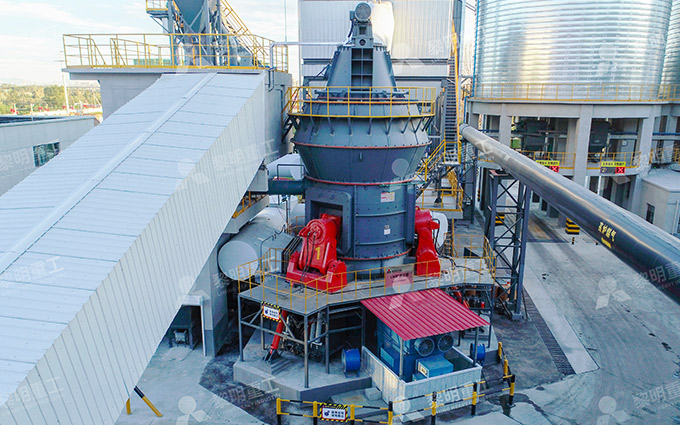
LM Vertical Roller Mill is suitable for higher-capacity gypsum grinding projects and can integrate drying, grinding and classification when the feed has moderate moisture. It can produce controlled dihydrate gypsum powder when drying conditions are managed to remove free water without significant dehydration.
Where a project intentionally combines grinding and calcination, the complete thermal process must be engineered for the desired calcium sulfate phase. The mill alone should not be assumed to deliver controlled plaster quality without proper temperature control, residence-time design and product testing.
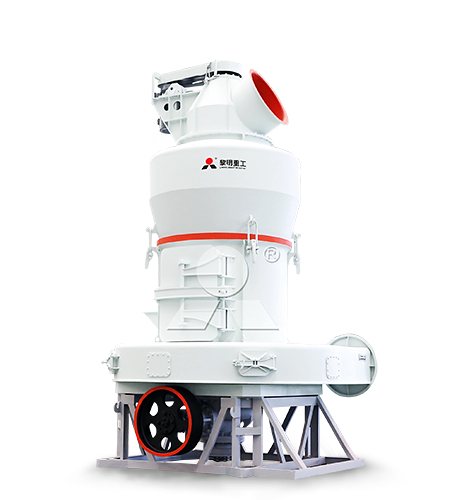
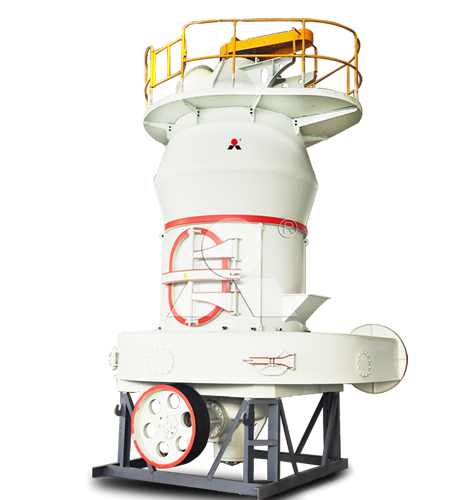
Raymond Mill
Raymond mill can be considered for conventional dry or pre-dried gypsum powder production with moderate capacity requirements. It is suitable for preparing dihydrate gypsum powder when major drying or calcination duty is not required inside the grinding system.
For wet gypsum or a process requiring a calcined hemihydrate product, upstream drying, separate calcination or a different integrated thermal process may be necessary.
Typical Equipment Differences
| Equipment area | Grinding-only plant | Calcination plant |
|---|---|---|
| Raw-material preparation | Receiving, lump breaking, optional drying and feeding | Receiving, preparation, drying and controlled feed to a calciner |
| Main process equipment | Grinding mill, classifier, fan and dust collector | Calciner, kettle, rotary kiln, heated mill or other thermal conversion system |
| Heat requirement | Only required if free-moisture drying is needed | Required to remove chemically bound water and control calcium sulfate phase |
| Product control | Fineness, moisture, powder flow and chemical quality | Fineness, moisture, hemihydrate content, phase composition, setting time and product reactivity |
| Energy demand | Mainly electricity, plus heat if drying is required | Electricity plus significant controlled thermal energy for calcination |
| Typical end product | Gypsum dihydrate powder | Stucco, plaster of Paris or another calcined gypsum product |
Common Mistakes to Avoid
Confusing drying with calcination
Drying removes free moisture. Calcination removes chemically bound water. A process designed to dry wet FGD gypsum should not unintentionally convert it into hemihydrate if the final product is intended to remain dihydrate gypsum.
Choosing equipment before defining the final product
The desired product must be defined first. A cement-grade gypsum powder line is different from a plaster or gypsum-board stucco plant. The first may require only grinding and moisture control; the second requires carefully controlled calcination.
Using temperature without controlling residence time
Calcination quality depends on both temperature and residence time. The same gas temperature can produce different results depending on feed size, moisture, material flow, equipment design and how long the gypsum remains in the heated zone.
Ignoring calcium sulfate phase composition
For calcined gypsum products, it is not enough to specify only powder fineness. The plant must control the proportion of hemihydrate, residual dihydrate and, where relevant, anhydrite. These phases influence setting time, strength, water demand and final product performance.
How to Choose the Correct Process
Use the final application to choose the route.
Define whether the customer needs calcium sulfate dihydrate powder or a calcined gypsum binder.
Test the raw gypsum for purity, moisture, impurities, feed condition and source-specific properties.
Set the required fineness, finished-powder moisture and production capacity.
For dihydrate powder, select a grinding-only or drying-and-grinding process.
For plaster, gypsum board or settable gypsum products, add a controlled calcination stage.
Confirm the required calcium sulfate phase through laboratory and production trials.
Select MTW European Grinding Mill, LM Vertical Roller Mill or Raymond mill for the appropriate grinding stage based on feed condition and capacity.
Design the drying or calcination system around the required thermal duty and final product quality.
Conclusion
Gypsum grinding and gypsum calcination serve different purposes. Grinding is a physical process that reduces particle size and produces controlled gypsum powder. Calcination is a thermal conversion process that removes part of the chemically bound water from calcium sulfate dihydrate and produces hemihydrate gypsum, commonly known as stucco or plaster of Paris.
Choose grinding only when the target product is dihydrate gypsum powder for cement, industrial blending or further processing. Choose calcination when the product must become a settable gypsum binder for plaster, gypsum board, blocks or molded gypsum products.
MTW European Grinding Mill, LM Vertical Roller Mill and Raymond mill can be used for the grinding stage according to capacity, feed moisture and required fineness. The calcination stage should be selected separately and controlled carefully when the final product requires hemihydrate gypsum.