Industrial By-product Gypsum Solutions
What Factors Affect the Cost of an Industrial Gypsum Grinding Plant?
2026-09-08 16:10:41
The cost of an industrial gypsum grinding plant is determined mainly by production capacity, feed moisture, target fineness, gypsum source, required pre-treatment, mill selection, auxiliary equipment, installation conditions and operating costs. The mill is important, but it is only one part of the total investment.
For industrial by-product gypsum, moisture and material quality often have a larger effect on total plant cost than the basic grinding machine. A dry, stable gypsum feed may need only receiving, feeding, grinding, classification, collection and storage. Wet FGD gypsum or phosphogypsum may require dewatering, drying, lump breaking, special handling, additional quality control and, in some cases, impurity treatment before grinding.
Capital Cost vs. Operating Cost
A useful cost evaluation separates the initial investment from the long-term operating cost. A lower-priced mill is not always the lower-cost project if it requires more drying equipment, more labor, higher maintenance or more frequent downtime.
| Cost category | Typical items | Main cost effect |
|---|---|---|
| Capital expenditure | Mill, dryer, feeder, crusher, classifier, fan, bag filter, silo, conveyor, electrical system, civil works and installation | Determines initial project investment |
| Energy cost | Electricity for mill drives, fans, conveyors and collectors; fuel or heat for drying | Usually a major long-term operating cost, especially for wet gypsum |
| Maintenance cost | Grinding rollers, rings, classifier components, filters, conveyors, lubricants, inspections and labor | Affects availability, spare-parts budget and lifetime cost |
| Material-handling cost | Receiving, stockpile management, covered storage, deagglomeration, transfer equipment and loading | Increases with wet, sticky or variable feed |
| Quality and compliance cost | Sampling, laboratory analysis, environmental monitoring, dust control and application-specific testing | More significant for industrial by-product gypsum, especially phosphogypsum |
1. Required Production Capacity
Production capacity is one of the largest cost drivers. A plant designed for 5 tonnes per hour needs smaller equipment, less structural steel, lower electrical load and smaller storage systems than a plant designed for 50 tonnes per hour or 100 tonnes per hour.
Capacity should always be defined as finished dry powder at the specified fineness and moisture level. Wet-feed tonnage can be misleading because part of the incoming material may be water that must be removed before the product is stored or sold.
For example, a plant receiving 30 tonnes per hour of FGD gypsum at 15% free moisture does not produce 30 tonnes per hour of finished dry powder. The plant receives 25.5 tonnes per hour of dry solids. If the finished powder must contain 2% moisture, the finished output is approximately 26 tonnes per hour, and the drying system must remove approximately 4 tonnes of water per hour.
As capacity increases, the project may require:
Larger grinding mill and classifier
Higher-power main drive and larger electrical system
Higher-capacity dryer or integrated drying arrangement
Larger hot-air generator and gas-handling system
Larger fans, ducts and dust collectors
More raw-material and finished-product storage
Higher-capacity packing or bulk-loading equipment
More complex automation and process control
2. Feed Moisture and Drying Duty
Feed moisture is often the most important cost factor for industrial by-product gypsum. Wet material requires more equipment and consumes more energy. FGD gypsum is often supplied as moist filter cake, while phosphogypsum may have high or variable moisture depending on recovery and storage conditions.
A dry, stable feed may be processed in a conventional grinding line. Wet gypsum may require mechanical dewatering, a thermal dryer, hot-air generation, additional fans, ducts, dust collection, insulated equipment and moisture-resistant handling systems.
Drying increases both capital expenditure and operating cost. The main operating cost is usually the energy needed to evaporate water. A gypsum-dryer cost analysis identifies fuel, electricity, installation, fans, ducting, conveyors, dust collection and controls as major components of total drying-system cost.
The cost difference between a feed at 3% moisture and one at 15% moisture can be substantial. Before selecting equipment, the project should confirm minimum, average and maximum free moisture, not only one laboratory value.
3. Gypsum Source and Material Quality
Different gypsum sources create different plant requirements. Natural gypsum, FGD gypsum and phosphogypsum can all require grinding, but their preparation costs may be very different.
| Gypsum source | Typical cost influence |
|---|---|
| Natural gypsum | May require crushing, grinding and possible drying; cost depends on rock size, moisture and quarry logistics. |
| FGD gypsum | Often requires dewatering, moisture control, covered storage, deagglomeration and possible drying before powder production. |
| Phosphogypsum | May require detailed material testing, moisture management, impurity treatment, compliance review and application-specific quality control. |
| Citrogypsum, titanogypsum, fluorogypsum or borogypsum | Source-specific testing and pre-treatment may be required depending on chemical composition and intended end use. |
Grinding does not remove unsuitable impurities. If the project requires washing, neutralization, filtration, separation, blending, thermal treatment or special disposal of process water, these steps can significantly increase total plant cost.
Phosphogypsum projects require particular care because the material can contain soluble phosphorus, fluoride-related compounds, residual acidity, trace elements and other source-specific constituents. The cost of testing, treatment and regulatory compliance should be included before a final investment decision is made.
4. Target Powder Fineness
Finer gypsum powder generally costs more to produce. As the target fineness increases, the mill must perform more grinding work, the classifier must make a finer separation and the airflow system must maintain more precise powder collection.
A plant producing conventional 100–200 mesh gypsum powder may have a lower grinding-energy requirement than a plant producing 325–400 mesh powder with a narrow particle-size distribution. Higher fineness can reduce finished-powder capacity, increase electricity consumption and require larger or more precisely controlled classification equipment.
Cost is influenced by:
Required average particle size
Maximum coarse-particle limit
Particle-size distribution width
Required screen residue or laser-analysis result
Specific surface area requirement
Consistency requirement between production batches
The correct approach is to define the minimum fineness needed for the final application. Producing powder that is finer than necessary increases cost without necessarily improving cement, gypsum board, plaster or dry-mortar performance.
5. Grinding Mill Selection
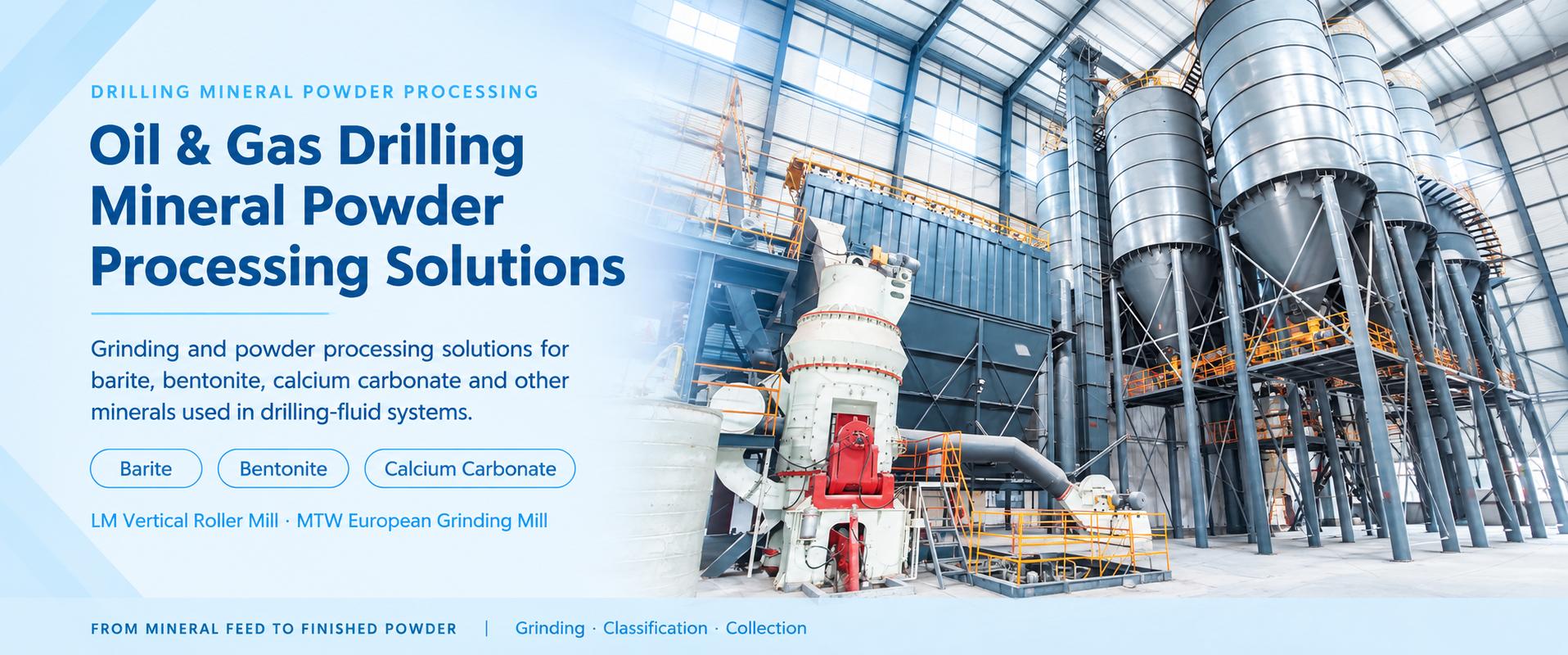
Mill selection affects both initial cost and total cost of ownership. For industrial gypsum, MTW European Grinding Mill, LM Vertical Roller Mill and Raymond mill are suitable options under different conditions.
MTW European Grinding Mill
MTW European Grinding Mill is suitable for prepared small-to-medium capacity gypsum powder projects. It can provide controlled conventional fineness with a compact process arrangement.
Its capital cost can be appropriate for projects with dry or adequately conditioned feed. However, if the gypsum has high moisture, the project may need separate dewatering and drying equipment before the mill. Those upstream systems must be included in the total cost comparison.
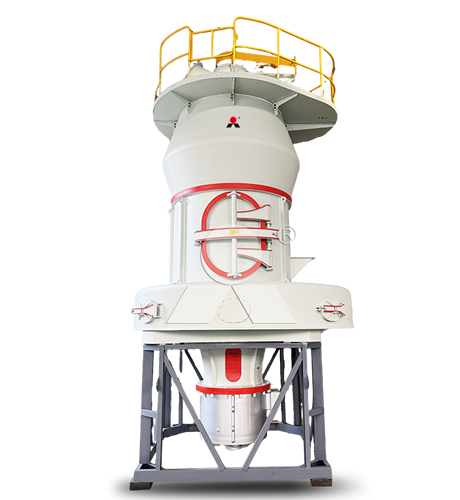
LM Vertical Roller Mill
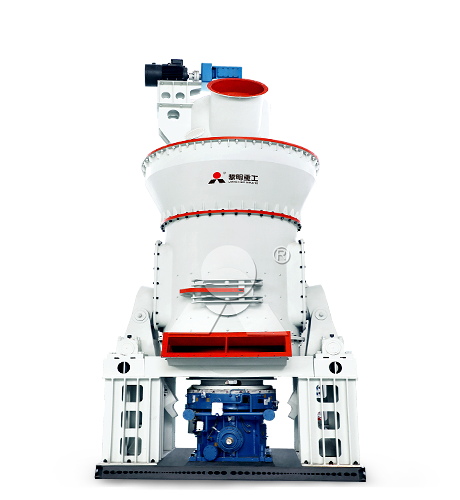
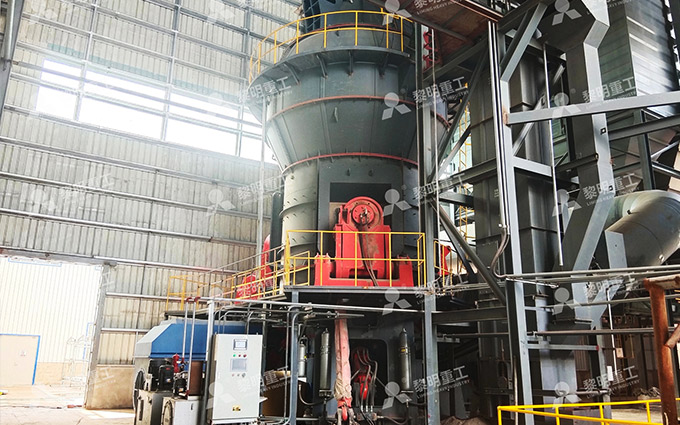
LM Vertical Roller Mill is suitable for high-capacity gypsum powder production and projects with meaningful drying demand. Its initial investment can be higher than a simple conventional grinding line, but it can integrate drying, grinding and classification in one process arrangement.
For large-scale FGD gypsum or phosphogypsum projects, this integration may reduce the number of transfer points, intermediate storage stages and separate equipment units. The economic case depends on capacity, moisture, available heat source, electricity price, fuel cost and required plant availability.
Published gypsum-processing comparisons describe vertical roller mills as suitable for larger-scale, moisture-containing gypsum because they can combine drying and grinding, while conventional Raymond-type systems may need pre-drying for moist feed.
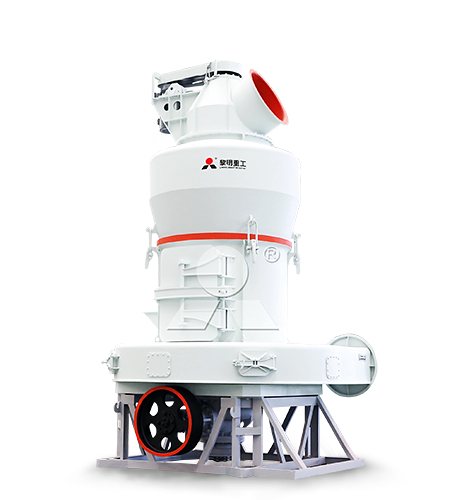
Raymond Mill
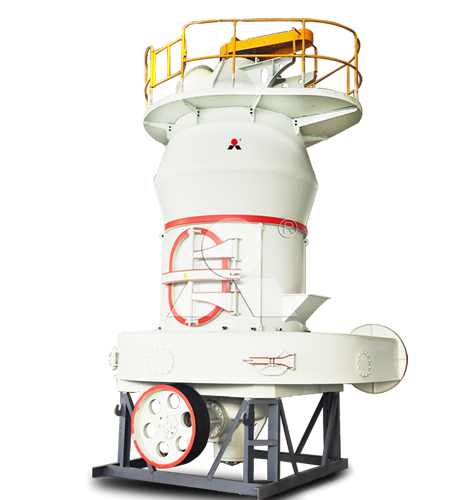
Raymond mill can be a practical option for moderate-capacity gypsum powder production with dry, stable and properly prepared feed. It can have a lower initial investment than a high-capacity integrated vertical grinding system.
However, Raymond mill is generally not the most economical choice for high-moisture gypsum unless an effective upstream drying system is already available. If the feed remains wet or sticky, the cost of downtime, cleaning, reduced output and additional drying may outweigh the lower initial mill price.
6. Drying System and Heat Source
When gypsum must be dried, the heat source becomes a major cost factor. The project may use natural gas, coal, biomass, electricity, waste heat or another approved energy source. Fuel price, supply reliability, local emissions requirements and available temperature all affect both capital cost and operating cost.
The drying system may include:
Hot-air generator, furnace or waste-heat connection
Dryer or integrated drying circuit
Fans, ducts and dampers
Temperature-control equipment
Dust collection and gas-cleaning equipment
Insulation and thermal protection
Fire and safety systems where required
Waste heat can improve project economics if it is stable, available at the required temperature and compatible with the process. However, the cost of connecting, controlling and maintaining a waste-heat system should also be considered.
Dry gypsum production routes can be more cost-effective than wet routes because they reduce or eliminate the need for additional drying. When drying is unavoidable, energy efficiency and heat-source selection become central to the project’s long-term economics.
7. Raw-Material Preparation and Handling
Material handling is often underestimated in a gypsum grinding project. Industrial gypsum may be fine but difficult to handle because it is wet, sticky, compacted or variable in moisture.
The required preparation equipment may include:
Covered receiving area and raw-material storage
Hoppers designed to reduce bridging and buildup
Apron feeders, belt feeders, screw feeders or other controlled feeding systems
Lump breakers or crushers
Screens and foreign-material removal equipment
Belt conveyors, screw conveyors, bucket elevators or pneumatic conveying
Blending systems for moisture or quality consistency
Mechanical dewatering equipment
Long transport distance from the gypsum source to the processing plant can also increase cost. Wet gypsum is more expensive to transport because part of the transported mass is water. Locating the drying and grinding plant close to the source or close to the final user should be evaluated as part of the project economics.
8. Environmental Control and Compliance
Dust control is required for powder-handling safety, product recovery and environmental compliance. A complete gypsum grinding plant usually needs bag filters, ductwork, fans, sealed transfer points and dust-collection systems.
Environmental requirements can influence cost through:
Dust-emission limits
Noise-control requirements
Fuel-combustion emission limits for dryers
Wastewater management if washing is used
Storage-area runoff control
Material testing and compliance reporting
Special handling requirements for phosphogypsum or other sensitive by-products
For phosphogypsum, the project may need additional chemical, environmental and radiological evaluation depending on the source material and local regulations. These costs should be included in feasibility planning, not added only after equipment has been selected.
9. Civil Works, Installation and Site Conditions
Site conditions can change total project cost significantly. A mill price does not include all civil, structural and installation work required to build a functioning plant.
Important cost items include:
Land preparation and drainage
Foundations for mills, dryers, fans, silos and structures
Steel structures, platforms, stairs and maintenance access
Buildings, weather protection and enclosed storage
Electrical distribution, transformers and cabling
Automation, instrumentation and control rooms
Compressed air, fire protection and utility connections
Installation labor, cranes, commissioning and operator training
Installation cost can increase where site access is difficult, local construction conditions are challenging, building-height limits apply or electrical and fuel infrastructure must be upgraded.
10. Finished Powder Storage and Dispatch
Finished gypsum powder must be stored dry and delivered without caking or contamination. Storage and dispatch equipment can represent a meaningful part of the project cost, especially for plants serving multiple customers or supplying bulk powder.
Possible equipment includes:
Finished-powder silos
Silo aeration and discharge equipment
Bagging machines or big-bag filling stations
Bulk tanker loading equipment
Weighing and sampling systems
Warehouse space and pallet handling
Dust control at loading points
The dispatch arrangement should be chosen according to customer requirements. A plant selling bulk powder to cement or building-material manufacturers may need silo storage and tanker loading. A plant supplying smaller users may need bagging equipment, warehouse space and more labor.
11. Automation, Maintenance and Spare Parts
Automation can increase initial cost but improve product consistency, reduce labor requirements and help maintain stable mill operation. The appropriate level depends on plant size, operating schedule, feed variability and customer quality requirements.
Useful automation functions may include:
Automatic feed-rate control
Moisture and temperature monitoring
Mill-load and grinding-pressure monitoring
Classifier-speed adjustment
Fan and airflow control
Dust-filter monitoring
Silo-level measurement
Alarm, interlock and shutdown protection
Maintenance cost should include wear parts, lubrication, filter bags, bearings, gearbox service, electrical components, planned shutdowns and labor. A plant with low initial cost but frequent production interruptions can have a higher total cost over its operating life.
How to Compare Two Gypsum Grinding Plant Proposals
When comparing proposals, use the same basis for both options. Do not compare only the price of the mill.
Each proposal should clearly state:
Gypsum source and assumed material properties
Feed moisture range
Required finished-powder capacity
Target fineness and testing method
Included pre-treatment and drying equipment
Heat-source requirement and estimated energy demand
Included dust-control and environmental equipment
Included raw-material and finished-product storage
Electrical load and installed power
Excluded civil works, installation and utilities
Expected wear-parts and maintenance requirements
Commissioning scope, operator training and warranty terms
A complete comparison should evaluate total cost of ownership over several years. This includes equipment investment, installation, fuel, electricity, labor, maintenance, spare parts, downtime, compliance and logistics.
Conclusion
The cost of an industrial gypsum grinding plant is driven by capacity, moisture, fineness, gypsum source, pre-treatment, equipment configuration, drying energy, site conditions and product-handling requirements. For industrial by-product gypsum, moisture control and material quality often determine whether the project remains simple or requires a more complex processing line.
MTW European Grinding Mill can be cost-effective for prepared small-to-medium capacity gypsum powder production. Raymond mill can be suitable for moderate-capacity projects with dry, stable feed. LM Vertical Roller Mill is often more suitable for high-capacity plants and materials that need integrated drying, grinding and classification.
The most reliable investment decision is based on a full process design and total cost of ownership, not the purchase price of the mill alone. Representative material analysis, realistic moisture data, a defined powder specification and a clear operating-cost estimate are essential before requesting a final plant quotation.