Industrial By-product Gypsum Solutions
Industrial Gypsum Grinding Process: From By-product to Gypsum Powder
2026-09-08 16:03:00
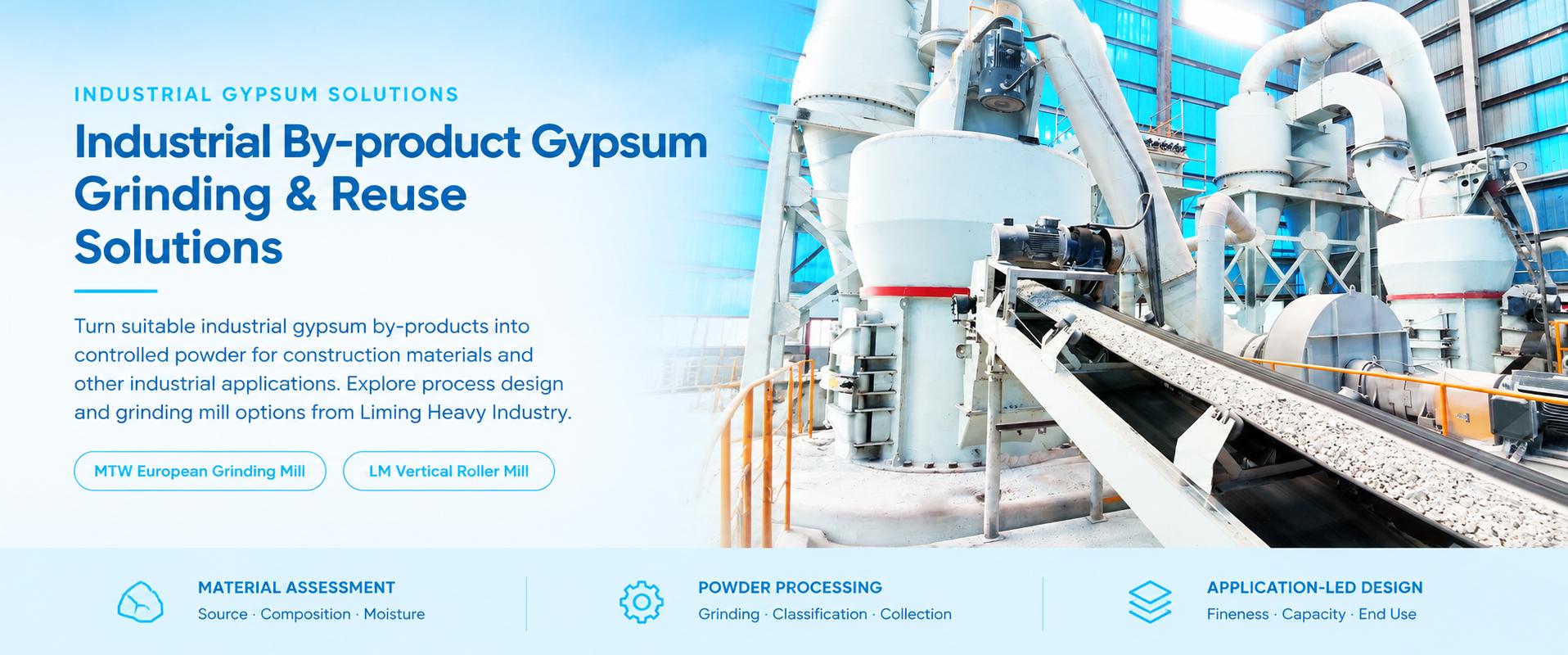
Industrial by-product gypsum can be processed into controlled gypsum powder through a system that matches the material source, moisture level, impurity profile, target fineness, required capacity and final application. The typical route includes material evaluation, receiving and storage, pre-treatment, dewatering or drying when required, feeding, grinding, classification, powder collection, storage and quality control.
The process should not begin with mill selection alone. FGD gypsum, phosphogypsum, citrogypsum, titanogypsum, fluorogypsum and borogypsum may all contain gypsum, but they can behave very differently during handling and grinding. The final process design must be based on representative material testing and the requirements of the intended end user.
From Industrial By-product to Usable Gypsum Powder
Industrial gypsum is generated as a secondary material in processes such as flue-gas desulfurization, phosphoric acid production, citric acid production, titanium dioxide production, fluorine-related chemical processing and borate processing. In suitable cases, this material can be redirected from storage or disposal toward cement, gypsum-based building materials, dry mortar, plaster and other qualified industrial applications.
However, industrial by-product gypsum is not automatically ready for reuse. It can be delivered as wet filter cake, slurry-derived material, moist powder, compacted lumps or weathered stockpile material. It may also contain soluble salts, residual process chemicals, fine particles, non-gypsum minerals or other impurities that affect its end-use suitability.
The purpose of the processing line is therefore broader than reducing particle size. A well-designed system should prepare the material for stable handling, control moisture, produce the required powder fineness and support consistent quality for the final application.
First Step: Material Evaluation
Before designing a grinding plant, collect representative samples from the actual production stream, storage area or transport route. For materials with variable quality, samples should be taken over different production periods rather than relying on a single laboratory sample.
The following information is useful for preliminary process design:
Industrial gypsum source and original production process
Gypsum content and calcium sulfate form
Free moisture, total moisture and expected moisture variation
Particle-size distribution, feed size and degree of agglomeration
Bulk density, flowability and tendency to bridge or compact
Soluble salts, chlorides, residual carbonate, phosphate or fluoride-related compounds where relevant
Organic matter, trace elements and other source-specific impurities where required
Required final powder fineness
Required production capacity
Final application and applicable product requirements
FGD gypsum often requires careful control of free moisture and dissolved salts. In wet flue-gas desulfurization systems, gypsum is initially produced as a slurry and is commonly dewatered through hydrocyclones and filtration equipment before it is transported or processed further.
Phosphogypsum requires additional attention because water-soluble phosphorus and fluorine-containing impurities can complicate reuse. Depending on the intended application, the material may require washing, neutralization, separation or another pretreatment method before grinding.
Typical Industrial Gypsum Grinding Flow
The following process represents a common route for converting suitable industrial gypsum by-products into controlled powder. Individual projects may add, remove or rearrange stages according to the material condition and end-use requirement.
Material receiving and controlled storage
Sampling and quality confirmation
Pre-treatment, deagglomeration or crushing when needed
Dewatering or drying when required
Stable feeding to the grinding system
Grinding and particle-size reduction
Classification and product-size control
Powder collection and dust control
Finished powder storage, packing or bulk loading
Ongoing quality control and end-use verification
1. Material Receiving and Storage
Industrial gypsum can arrive at the grinding plant in different physical forms. FGD gypsum may be supplied as a moist filter cake after washing and filtration. Phosphogypsum may be recovered from a production stream, storage stack or stockpile. Other industrial gypsum sources may arrive as powder, slurry-derived solids or compacted blocks.
The receiving system should be designed to maintain a consistent feed condition. Moisture variation, outdoor storage, rain exposure, long storage periods and material compaction can all affect the performance of downstream equipment.
For moist material, covered storage is often important. This reduces uncontrolled water absorption and helps prevent large differences between the moisture content of fresh material and older stockpile material. If the gypsum is stored for a long time, operators should check for hard lumps, caking, uneven moisture zones and poor flowability.
2. Sampling and Quality Confirmation
Sampling should not be treated as a one-time commissioning activity. Industrial by-product gypsum can change when the source process changes, when different raw materials are used or when storage conditions vary. Regular testing helps the plant identify material changes before they affect grinding output or finished-powder quality.
For projects supplying cement, gypsum board, plaster, mortar or other sensitive applications, quality-control procedures should define acceptable ranges for moisture, fineness, chemical composition and any application-specific parameters. The receiving customer’s product specification should be the final reference point.
3. Pre-treatment and Deagglomeration
Pre-treatment prepares industrial gypsum for stable feeding and grinding. Even when the original gypsum particles are fine, moist material can form lumps during filtration, transport and stockpiling. These lumps can block feeders, overload conveyors and create unstable mill operation.
Depending on the material, the pre-treatment stage may include:
Screening to remove oversize or foreign materials
Lump breaking or deagglomeration
Crushing of compacted gypsum blocks
Blending to reduce feed variation
Mechanical dewatering
Washing or other impurity-management steps where required
The objective is to create a more uniform feed. It is not necessary to produce final powder at this stage. Final fineness is achieved through the grinding and classification system.
4. Dewatering and Drying
Moisture control is one of the most important parts of industrial gypsum processing. High free moisture can cause bridging in hoppers, sticking on conveyors, buildup inside mills, reduced grinding efficiency, unstable airflow and caking of the finished powder.
For FGD gypsum, dewatering may begin at the source plant. Common methods include hydrocyclones, belt filters, vacuum filtration, centrifuges and other mechanical separation systems. The selection depends on the FGD process, required solids content and final use of the gypsum.
If the gypsum remains too wet for stable grinding, a thermal drying stage may be added. The dryer can be installed before the mill, or drying can be integrated with the grinding process when the selected mill system and heat source are suitable.
The drying target should be based on the actual process requirement. Excessive drying may increase energy consumption unnecessarily, while insufficient drying can cause material buildup, unstable operation and finished-powder storage problems.
When is drying required?
Drying may be required when the material has high free moisture, poor flowability, severe agglomeration or a final application that requires low-moisture powder. It is also important when the selected mill is designed for dry, stable feed.
Drying may be less demanding when the material is already well dewatered, the feed is stable and the end-use process can tolerate a higher moisture level. The final decision should be made through material testing and process calculation rather than by using one fixed moisture value for every gypsum source.
5. Stable Feeding to the Grinding System
Stable feed rate is essential for consistent grinding output and powder quality. When the feed rate fluctuates, mill load, airflow, classifier performance and final fineness can all become unstable.
The feeding system should be matched to the material condition. Free-flowing dry gypsum can be handled differently from moist, cohesive filter cake. Hoppers, screws, belt feeders, rotary valves and other equipment should be selected to minimize bridging, buildup and uncontrolled surges.
For industrial gypsum with variable moisture, the feeder should be designed for the most difficult normal operating condition rather than only for dry laboratory samples. This reduces downtime and improves the reliability of the entire powder line.
6. Grinding Industrial Gypsum
Grinding reduces gypsum particles to the required powder size and helps create a more consistent product for downstream processing. The target fineness depends on the application. Cement use may require stable dosing and blending performance, while gypsum-based mortar, plaster or other construction materials may require a particular particle-size distribution and powder flow behavior.
Grinding should be controlled rather than excessive. Over-grinding raises energy consumption and may change powder characteristics without improving the final product. Insufficient grinding can lead to poor uniformity, difficult blending or inconsistent performance in the customer’s process.
For conventional industrial gypsum powder, the mill should be selected according to feed moisture, target fineness, capacity, available installation space, heat-source availability and whether the project needs integrated drying.
Grinding Mill Options for Industrial Gypsum
MTW European Grinding Mill
MTW European Grinding Mill is suitable for small-to-medium capacity industrial gypsum powder production. It can be considered for prepared material with controlled moisture, stable feed conditions and a requirement for conventional powder fineness.
MTW European Grinding Mill is a practical option for projects that need controlled classification and a compact conventional grinding system. If the industrial gypsum is wet or sticky, upstream drying, dewatering or material conditioning may be needed before it enters the mill.
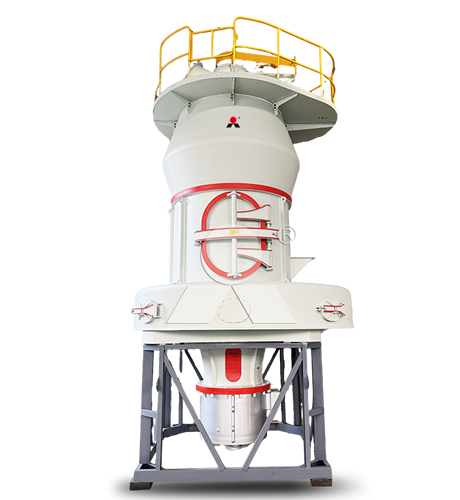
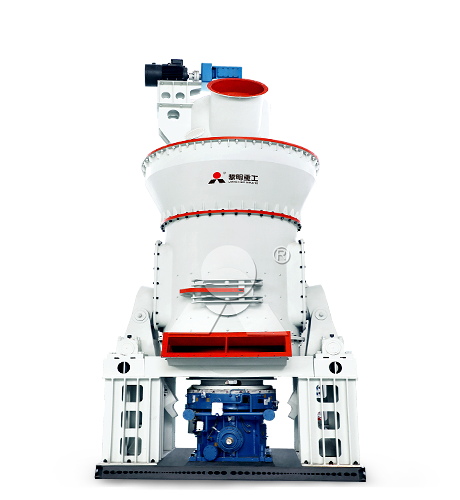
LM Vertical Roller Mill
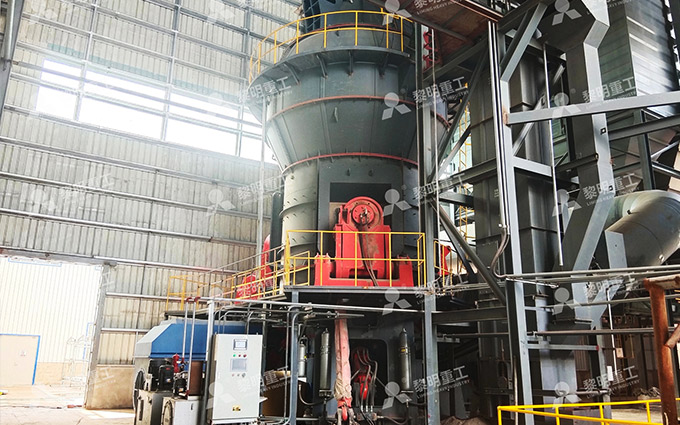
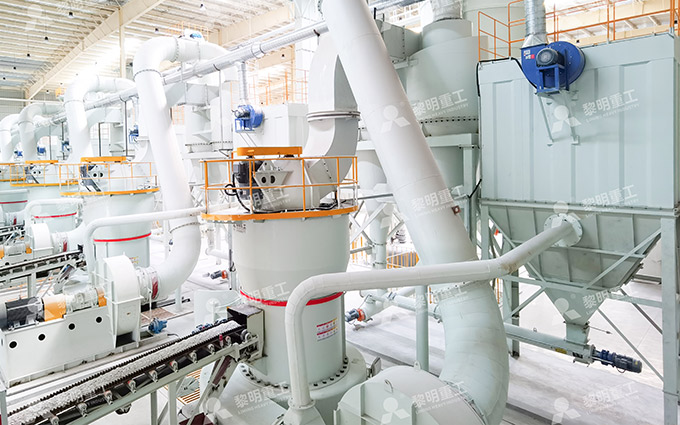
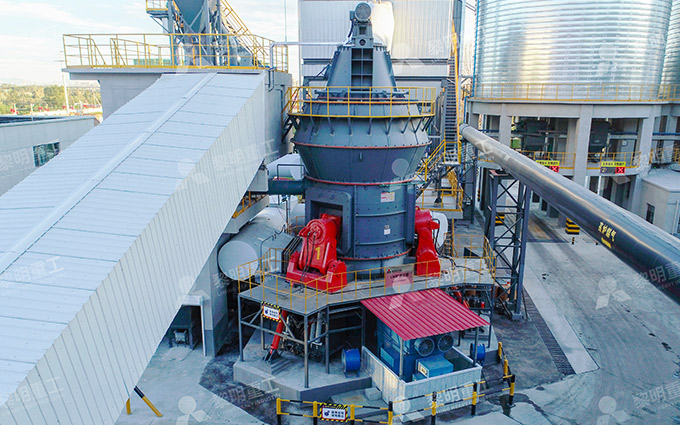
LM Vertical Roller Mill is suitable for high-capacity industrial gypsum grinding projects. It can combine grinding, classification and, when properly designed, drying within one process arrangement. This makes it particularly relevant for large continuous production lines and gypsum sources with moderate-to-high moisture.
The final LM Vertical Roller Mill configuration should be based on actual evaporation demand, moisture variation, available heat source, target powder fineness and required production rate. Integrated drying can simplify the overall process, but it must be matched carefully to the feed condition.
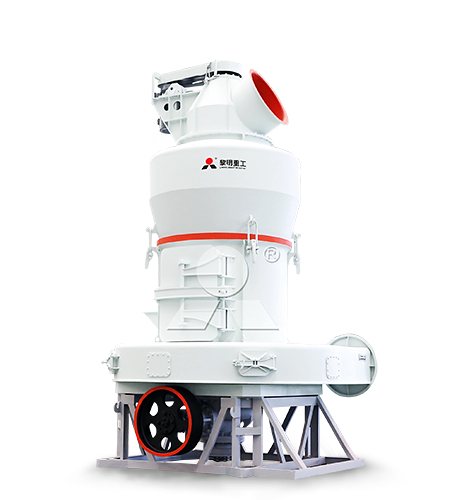
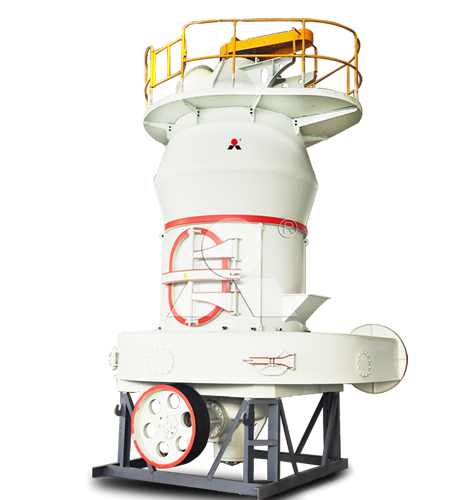
Raymond Mill
Raymond mill can be considered for conventional industrial gypsum powder processing with moderate capacity requirements and stable, adequately prepared feed. It is generally more suitable for dry or pre-dried gypsum than for highly wet filter cake or sticky material with significant moisture variation.
For a Raymond mill project, feed size, moisture, degree of agglomeration, target fineness and powder collection conditions should be confirmed before the final configuration is selected.
7. Classification and Fineness Control
Classification separates qualified finished powder from oversized particles. In a closed-circuit grinding system, coarse material is returned to the mill for further size reduction while fine powder proceeds to collection.
This stage is important because the average fineness alone does not fully describe powder quality. The particle-size distribution can influence powder flow, blending behavior, surface area, reaction rate and performance in cement or gypsum-based materials.
Classifier settings should be adjusted according to the final product specification. A stable classifier, matched with controlled feed and airflow, helps maintain consistent powder quality over long production periods.
8. Powder Collection and Dust Control
After classification, the finished gypsum powder is collected through a cyclone, bag filter or other dust-collection system and transferred to storage. Dust collection is necessary for material recovery, plant cleanliness and environmental control.
Airflow must be balanced carefully. Too little airflow can reduce conveying efficiency and cause material accumulation. Excessive airflow can carry coarse particles into the finished product or increase filter load. The collection system should be designed as part of the entire grinding circuit, not as a separate afterthought.
Dust-control equipment should be selected according to the powder characteristics, required capacity, local emissions requirements and operating environment. Regular inspection of filters, ducts, fans and seals helps maintain stable system performance.
9. Finished Powder Storage and Dispatch
Gypsum powder should be stored in dry, protected conditions after grinding. If the powder absorbs moisture, it can cake, lose flowability and become difficult to convey or dose accurately.
Finished powder may be transferred to storage silos, bulk tankers, big bags or smaller packaging units. The selected dispatch method depends on customer requirements, transport distance, local logistics and the final application.
For bulk cement or building-material customers, silo storage and pneumatic loading may be appropriate. For smaller users, bagging or big-bag systems may provide more flexible distribution. In every case, the transfer system should minimize contamination, moisture exposure and excessive powder loss.
10. Quality Control of Finished Gypsum Powder
Finished powder should be tested regularly to confirm that it meets the agreed specification. The quality-control plan should reflect the final application and the known variability of the industrial gypsum source.
Typical finished-powder checks may include:
Particle-size distribution and fineness
Moisture content
Gypsum content and chemical composition
Bulk density and flowability
Setting behavior where relevant
Soluble salts or other application-specific indicators
Impurity profile and compliance parameters where required
For phosphogypsum and other source-sensitive materials, quality control may need to include additional chemical, environmental or radiological parameters depending on local regulations and the target market. Grinding performance alone is not sufficient evidence that the material is suitable for end use.
Grinding vs. Calcination: Know the Difference
Grinding and calcination are different process stages. Grinding reduces particle size and controls powder fineness. Calcination heats gypsum to remove part of its chemically bound water and produce hemihydrate gypsum, often referred to as stucco or plaster of Paris.
A project supplying gypsum powder for cement may require grinding without calcination. A project producing gypsum plaster or certain gypsum-board raw materials may require grinding followed by calcination, depending on the final manufacturing route. The process should be selected according to the product specification rather than assuming that all gypsum powder must be calcined.
In gypsum board production, synthetic gypsum can be dried and calcined into stucco before being mixed with water and additives to form board. This illustrates why the final product route must be defined before the grinding system is designed.
Common Problems in Industrial Gypsum Grinding
High moisture and material buildup
Wet gypsum can stick to hoppers, chutes, conveyors and internal mill components. This reduces throughput and can create unplanned shutdowns. Improved dewatering, drying, feed conditioning and covered storage can help control this issue.
Inconsistent powder fineness
Fineness can vary when feed rate, feed moisture, airflow or classifier settings are unstable. Worn grinding components and poor feed uniformity can also affect the final powder. Operators should monitor the entire system rather than adjusting only the mill.
Powder caking in storage
Powder caking often occurs when residual moisture is too high or when finished gypsum absorbs humidity after collection. Dry storage, sealed transfer equipment, suitable powder temperature and controlled storage time are important for reducing this risk.
End-use quality failure
When a finished product fails customer testing, the cause may not be fineness. It may relate to chemical composition, soluble impurities, moisture, particle distribution, storage conditions or application compatibility. The solution may require improved source-material control, pretreatment, blending or a different reuse route.
Information Needed to Design an Industrial Gypsum Grinding Plant
For a preliminary grinding and processing evaluation, provide the following information:
Industrial gypsum type and source process
Representative chemical analysis and gypsum content
Moisture level and expected variation range
Feed size, lump size and physical condition
Required final powder fineness
Required production capacity
Planned final application
Need for drying or calcination
Available heat source and energy conditions
Plant layout, dust-control and storage requirements
Applicable quality, environmental and product requirements
Conclusion
Industrial gypsum grinding is a complete material-preparation process. It begins with source evaluation and testing, then uses suitable receiving, pre-treatment, moisture control, feeding, grinding, classification, collection and storage systems to produce consistent gypsum powder.
MTW European Grinding Mill is suitable for prepared small-to-medium capacity industrial gypsum powder projects. LM Vertical Roller Mill is suitable for high-capacity systems and projects that benefit from integrated drying, grinding and classification. Raymond mill can be considered for conventional gypsum powder production with dry, stable and properly conditioned feed.
The final process should always be designed around the actual industrial gypsum material and the needs of the intended application. When quality control, moisture management and equipment selection are properly coordinated, suitable industrial by-product gypsum can be converted into a useful and controlled powder resource.