Industrial By-product Gypsum Solutions
FGD Gypsum Grinding: Feed Size, Fineness and Production Capacity
2026-09-08 16:03:53
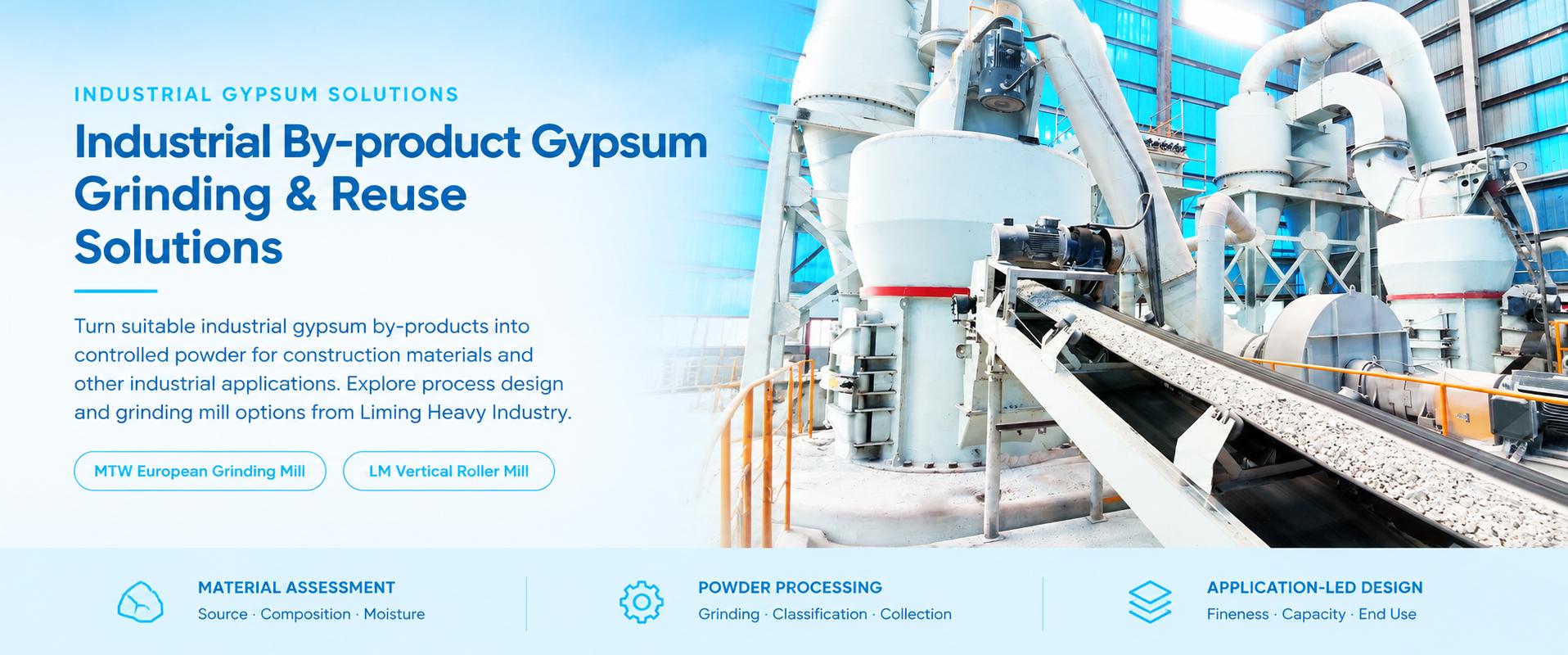
FGD gypsum grinding performance depends on three closely connected factors: feed size, feed moisture and required product fineness. Production capacity is not determined by the grinding mill nameplate alone. It changes with the physical condition of the FGD gypsum, the drying requirement, the target powder specification, classifier settings, airflow and the stability of the feeding system.
For industrial applications, FGD gypsum should be evaluated as a source-specific material. It is commonly produced as moist calcium sulfate dihydrate filter cake after flue-gas desulfurization, washing and dewatering. The material may already have fine primary particles, but it can form agglomerates during filtration, transport and stockpiling. The grinding system must therefore be designed for the actual feed condition rather than assuming that all FGD gypsum behaves like dry natural gypsum.
Why Feed Size Matters in FGD Gypsum Grinding
Feed size determines how easily material enters the mill, how steadily it can be conveyed and how much grinding work is needed to reach the target powder fineness. In FGD gypsum processing, the term “feed size” should include both the size of individual gypsum crystals and the size of lumps or agglomerates created during dewatering and storage.
FGD gypsum produced in wet desulfurization systems can have relatively fine primary crystals. Published process descriptions report FGD gypsum slurry crystals with mean particle diameters of approximately 35 to 80 micrometers. However, after filtration, the gypsum filter cake may contain much larger compacted pieces that require deagglomeration before stable feeding.
For this reason, a project can have fine gypsum crystals but still need a pre-treatment stage. The mill does not receive individual crystals only; it receives the actual material condition delivered from the filter, stockpile or transport system.
Typical FGD Gypsum Feed Conditions
FGD gypsum feed may be supplied in several forms. Each form creates different requirements for receiving, feeding, drying and grinding.
| Feed condition | Typical handling issue | Processing consideration |
|---|---|---|
| Fresh filter cake | High moisture, cohesive material and uneven lumps | Evaluate dewatering, drying, controlled feeding and deagglomeration |
| Washed and dewatered gypsum | Fine material may still compact during transport | Use covered storage and stable feeding; check residual moisture |
| Stored FGD gypsum | Hard lumps, moisture variation and surface contamination | Sample different stockpile zones; consider lump breaking and blending |
| Pre-dried gypsum | Dust generation and moisture absorption after drying | Use sealed conveying, controlled storage and dust collection |
| Prepared powder feed | Fineness variation or powder caking | Confirm particle-size distribution and storage conditions before final grinding |
The source plant’s dewatering performance strongly affects the grinding plant. In wet FGD systems, dewatering can use hydrocyclones, vacuum belt filters, centrifuges or other filtration equipment. Some commercial dewatering systems are designed to reduce residual gypsum moisture to below 10%, but the actual feed moisture must be measured for each project rather than assumed.
Feed Size Before the Grinding Mill
Before FGD gypsum enters a grinding mill, it should have a feed size and physical condition that allow steady, uninterrupted operation. Oversized lumps, wet compacted blocks and sticky filter cake can cause bridging in hoppers, overload feeding equipment and create unstable mill load.
A typical preparation sequence may include receiving, storage, lump breaking, screening, controlled feeding and drying when required. The exact arrangement depends on whether the material arrives as moist filter cake, stored gypsum, dry powder or another form.
Deagglomeration of filter cake
FGD gypsum filter cake can be composed of fine crystals that are bonded together by moisture. The purpose of deagglomeration is to break these larger masses into a more uniform feed. It does not necessarily need to create final powder; it only needs to ensure that the material enters the dryer or mill at a stable and manageable size.
For moist material, the pre-treatment equipment should be selected to avoid severe smearing or blockage. The feeding system should also be designed for cohesive gypsum rather than for free-flowing dry mineral powder.
Crushing of hard lumps
Stored FGD gypsum can form hard lumps because of compaction, moisture redistribution and repeated wetting and drying. When these lumps are too large for the mill feed system, crushing or lump breaking is required.
The required reduction ratio is usually lower than for natural gypsum rock because FGD gypsum is generally not delivered as large mined stone. The main objective is consistent feed, not heavy primary crushing.
Moisture Is Part of Feed Size Control
Feed size and moisture cannot be separated in FGD gypsum processing. A material with small primary particles may behave like a large, difficult feed if moisture causes it to agglomerate. High free moisture can increase the apparent lump size, reduce flowability and cause material to adhere to hoppers, conveyors and grinding components.
FGD gypsum moisture should be measured at the point where the material enters the processing line, not only at the source plant. Moisture can change during transport, stockpiling and rain exposure. Fresh filter cake, stored material and material from different areas of the same stockpile may have different water content.
Published FGD gypsum examples show how much physical behavior can change with moisture. One study described FGD gypsum as a fine powder at approximately 33% water content, while a filter cake sample with much higher water content behaved as a clay-like chunk material.
For grinding projects, the practical question is whether the gypsum can be fed, dried, ground, classified and collected reliably at its expected moisture range. This is more useful than relying on a single average moisture value.
How Fine Should FGD Gypsum Be Ground?
The required fineness depends on the industrial application. There is no universal powder size that is correct for every FGD gypsum project. The target should be defined by the receiving process, product formulation and customer specification.
For conventional gypsum powder production, fineness is commonly expressed through mesh, residue, particle-size distribution or specific surface area. The project should use the measurement method that matches the final customer’s quality-control system.
FGD gypsum for cement production
In cement production, gypsum is used to help control setting time. The FGD gypsum powder should be fine enough for stable blending and dosing in the cement grinding process. The target fineness should be agreed with the cement producer because the preferred particle-size distribution may depend on clinker grinding conditions, cement type and the plant’s existing gypsum-handling system.
Excessive fineness is not always beneficial. Over-grinding increases energy consumption and may create very fine particles that affect powder flow or handling. The correct target is the fineness that provides consistent cement performance and efficient processing.
FGD gypsum for gypsum board and wallboard
FGD gypsum can be used in wallboard manufacturing when its quality meets the receiving plant’s requirements. The production route may differ from a simple gypsum-powder line. In some board processes, the FGD gypsum filter cake is dried and calcined before it is ground to the required surface area for stucco production.
For this reason, a grinding project intended to supply a board plant should confirm whether the customer requires dihydrate gypsum, calcined hemihydrate material, a specific surface area, a particular particle-size distribution or another product form. The board manufacturer’s process specification should determine the fineness target.
FGD gypsum for plaster, mortar and other building materials
Gypsum-based plaster, dry mortar and building-material applications may require controlled fineness to support powder flow, mixing consistency, water demand and setting performance. Product trials are important because different formulations can respond differently to the same powder-size distribution.
The correct fineness should be selected through application testing. The goal is not to produce the smallest possible particles, but to create a consistent powder that performs reliably in the final formulation.
Relationship Between Fineness and Production Capacity
As target fineness becomes higher, the grinding system usually requires more energy and capacity can decrease. This is because more material must remain in the grinding circuit until it reaches the required particle size. Classification becomes more demanding, and the airflow system must maintain stable separation between fine product and coarse return material.
Capacity should therefore be calculated at the required final fineness, not only at a coarse test condition. A mill that produces a certain output at one powder size may produce a different output when the customer requires a finer product or a narrower particle-size distribution.
The main factors influencing FGD gypsum grinding capacity include:
Feed moisture and drying load
Feed size and degree of agglomeration
Required final fineness and particle-size distribution
Gypsum purity and non-gypsum impurities
Feed-rate stability
Grinding pressure and mill operating condition
Classifier setting and airflow balance
Available heat source when drying is integrated
Dust-collection and conveying performance
Maintenance condition of grinding and classification components
How to Define Required Production Capacity
Production capacity should be defined in tonnes per hour of finished powder, not only in tonnes per hour of wet feed. When the incoming FGD gypsum contains free moisture, part of the incoming mass is water that must be removed during drying. The finished dry powder output will therefore be lower than the wet-feed rate.
For example, if a plant receives 20 tonnes per hour of FGD gypsum at 15% free moisture and produces powder at 2% moisture, the grinding and drying system must remove approximately 2.6 tonnes of water per hour before accounting for other losses or material variation. The required dry-material capacity should be calculated from the actual solids content, not from the wet-feed tonnage alone.
This distinction is especially important when comparing equipment options. A system that appears to meet the wet-feed capacity may not have enough drying capacity or grinding capacity to produce the required tonnes per hour of finished powder.
Mill Selection Based on Feed Size, Fineness and Capacity
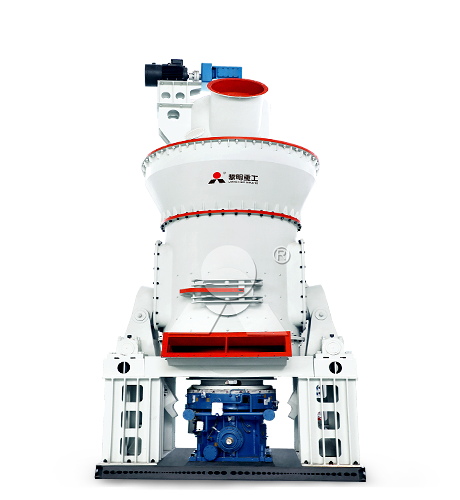
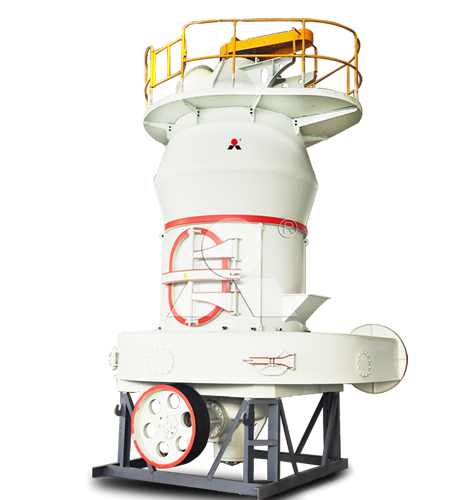
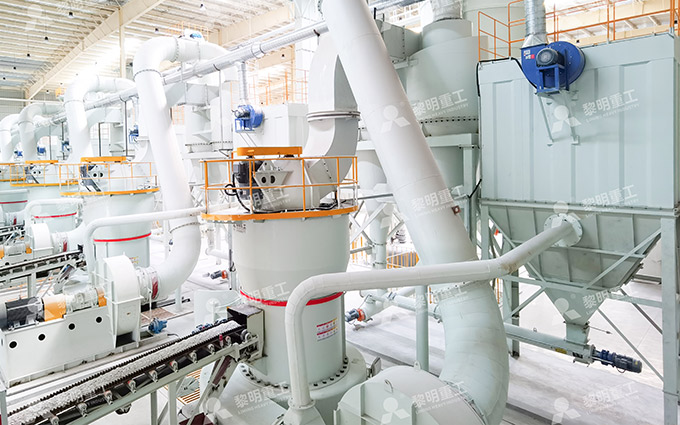
MTW European Grinding Mill, LM Vertical Roller Mill and Raymond mill can be considered for FGD gypsum powder production. The most suitable choice depends on the prepared feed condition and the complete production requirement.
MTW European Grinding Mill
MTW European Grinding Mill is suitable for small-to-medium capacity FGD gypsum grinding projects with controlled feed moisture and stable feed conditions. It can produce conventional industrial gypsum powder with reliable classification when the material has been deagglomerated, prepared and dried as needed.
For projects with wet filter cake, an upstream drying and conditioning stage may be necessary before the material enters an MTW European Grinding Mill. The mill should be selected according to the required finished-powder capacity at the target fineness, not according to wet-feed tonnage.
LM Vertical Roller Mill
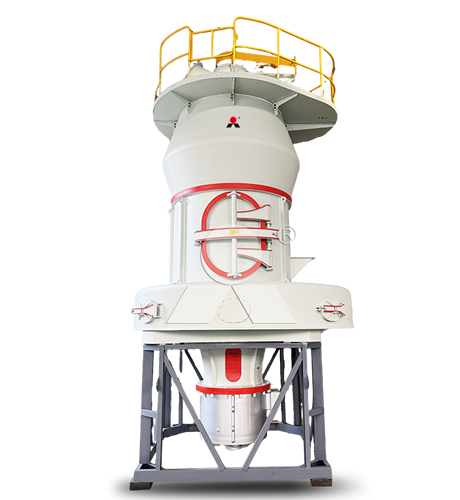
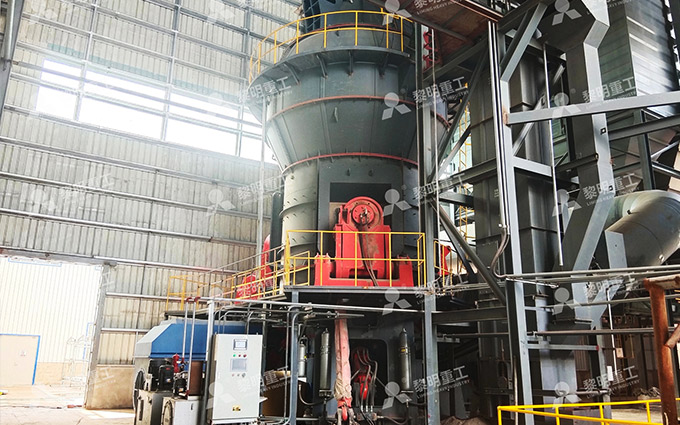
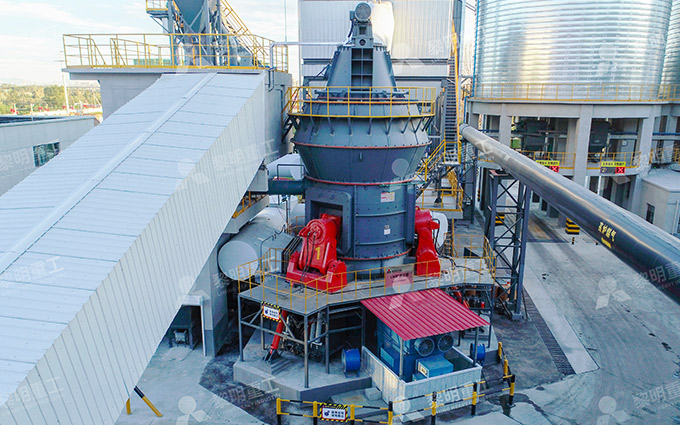
LM Vertical Roller Mill is suitable for larger-capacity FGD gypsum processing systems. It can integrate grinding, classification and drying when the material conditions, heat source and process design support this arrangement.
This makes LM Vertical Roller Mill especially relevant when FGD gypsum has moderate-to-high moisture, when feed moisture varies significantly or when the project requires high continuous output. The final system must be designed around actual evaporation duty, feed size, target fineness and finished-powder capacity.
Raymond Mill
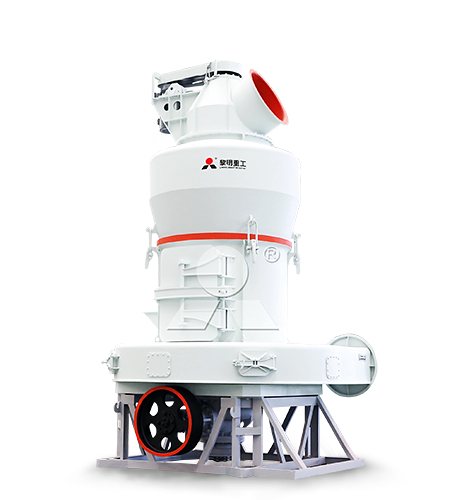
Raymond mill can be considered for conventional FGD gypsum powder production with moderate output requirements. It is generally best suited to dry or pre-dried material with stable feed size and good flowability.
When feed moisture is high or the gypsum arrives as sticky filter cake, a Raymond mill project usually requires effective upstream dewatering, drying and deagglomeration. If major drying duty is required, LM Vertical Roller Mill may provide a more integrated process route.
Feed Size and Capacity Comparison
| Project condition | Primary process concern | Suitable mill direction |
|---|---|---|
| Prepared, dry FGD gypsum with moderate output requirement | Stable fineness and efficient conventional powder production | MTW European Grinding Mill or Raymond mill |
| Prepared FGD gypsum with small-to-medium capacity target | Controlled classification and product consistency | MTW European Grinding Mill |
| High-capacity continuous FGD gypsum production | Throughput, integrated grinding and stable operation | LM Vertical Roller Mill |
| Moist FGD gypsum with drying requirement | Evaporation capacity, material flow and drying integration | LM Vertical Roller Mill or a separate drying stage before MTW European Grinding Mill or Raymond mill |
| Stored gypsum with hard lumps and uneven moisture | Pre-treatment, deagglomeration and feed stabilization | Prepare feed first; select mill after confirming moisture and fineness target |
How to Improve Capacity Without Sacrificing Powder Quality
Increasing feed rate is not always the best way to increase finished-powder output. If the mill receives more material than the classifier, drying system or dust collector can handle, product fineness may become unstable and the system may lose efficiency.
Capacity improvement should focus on the complete process:
Maintain consistent feed moisture and avoid mixing extremely wet and dry gypsum without control.
Break large agglomerates before they reach the mill.
Use stable, adjustable feeding equipment.
Match drying capacity to the highest normal moisture condition.
Set the classifier according to the required fineness rather than the highest possible throughput.
Maintain airflow, ducts, filters and fans to support reliable powder transport and collection.
Inspect grinding components and replace worn parts before they reduce output or product consistency.
Protect finished powder from moisture absorption during storage and dispatch.
Information Needed for an FGD Gypsum Grinding Evaluation
To select a mill and estimate realistic production capacity, provide the following information:
FGD gypsum source and wet desulfurization process description
Representative chemical analysis and gypsum content
Minimum, average and maximum feed moisture
Feed form, including filter cake, loose powder, lumps or stored material
Largest lump size and degree of agglomeration
Required final powder fineness and test method
Required finished-powder capacity in tonnes per hour
Planned final application
Need for calcination, drying or both
Available heat source if thermal drying is required
Finished-product storage, packing or bulk-loading requirements
Conclusion
FGD gypsum grinding capacity is controlled by the entire process, not only by the mill. Fine primary crystals do not eliminate the need for preparation because moist filter cake and stored gypsum can form large agglomerates that affect feeding and drying. Feed size, moisture and flowability must be controlled before the gypsum enters the grinding system.
The required fineness should be defined by the final application, whether the powder is intended for cement, gypsum board, plaster, mortar or another industrial use. As fineness increases, grinding energy demand rises and finished-powder capacity may decrease.
MTW European Grinding Mill is suitable for prepared small-to-medium capacity FGD gypsum powder projects. LM Vertical Roller Mill is suitable for high-capacity systems and projects with significant drying demand. Raymond mill can be considered for conventional powder production with dry, stable and adequately prepared feed.
The most reliable design begins with representative feed testing and calculates capacity based on finished dry powder, required fineness and real moisture variation. When these factors are defined correctly, the FGD gypsum grinding system can deliver stable output and consistent powder quality for industrial applications.